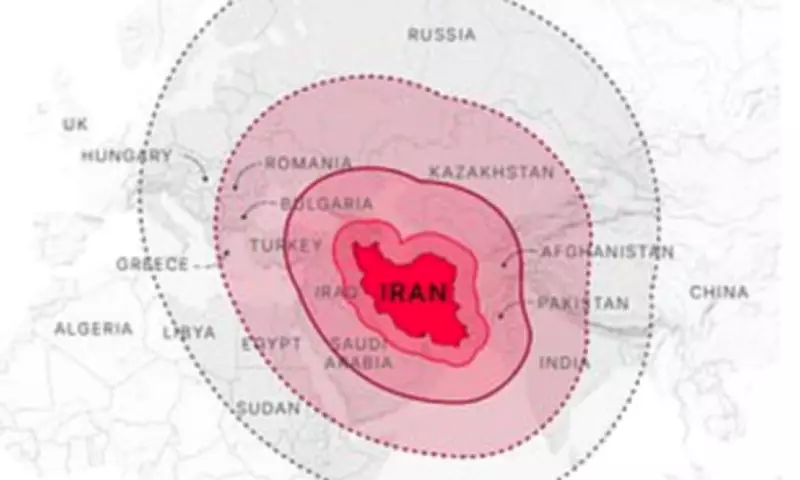
Iran's Missile Arsenal Severely Depleted in Ongoing Middle East Conflict
A new report from the Israeli think tank Alma Research Centre indicates that Iran's missile arsenal has been significantly reduced, with the country now holding only about 1,000 projectiles. This marks a dramatic decline from an estimated 2,500 missiles at the outset of the conflict, highlighting the intense military pressure Tehran faces as it continues to target Israel and Gulf Arab states.
Striking Decline in Firing Rate and Stockpile
At the beginning of the war, Iran was launching dozens of missiles daily, but this rate has plummeted to approximately 10 strikes per day against Israel. This reduction suggests Tehran's capacity for retaliatory actions has weakened as the conflict nears its one-month milestone. The Alma Research Centre's findings underscore the toll that sustained hostilities have taken on Iran's military resources.
However, Iran has demonstrated remarkable resilience in the past. Experts note that after a 12-day war last year, Tehran's stockpile was left at around 1,500 missiles, yet within eight months, it managed to manufacture an additional 1,000. Lieutenant Colonel Sarit Zehavi, an IDF reservist and head of the centre, expressed surprise at Iran's rapid recovery post-conflict, stating, 'If the people of Iran do not finish the job, then the Islamic Republic will stay in power, and they will do whatever they can to rebuild those capabilities.'

Impact on Israeli Defences and Regional Stability
Iran's use of ballistic missiles has challenged Israel's confidence in its air defence systems' impenetrability. Recent attacks saw dozens injured in Israel after Iranian missiles struck cities like Dimona and Arad, with Israeli defences failing to intercept them. These dual attacks occurred near Israel's main nuclear centre, marking the first time Iranian missiles penetrated air defences in that sensitive area.
Rescue workers reported widespread damage in Arad, with at least 10 apartment buildings affected, three of which were severely damaged and at risk of collapse. Meanwhile, in Tel Aviv, a missile with a 100-kilogram warhead breached defences, hitting a central street, shattering windows, and causing smoke to billow from a nearby apartment building.
Gulf States Face Escalating Threats
The conflict has extended beyond Israel, with Gulf Arab states also under fire. In Kuwait, power lines were damaged by air defence shrapnel, leading to partial electricity outages for several hours. Bahrain experienced missile alert sirens, and Saudi Arabia's Defence Ministry claimed it destroyed 19 Iranian drones targeting its oil-rich Eastern Province, illustrating the broad regional impact of Tehran's aggression.
Diplomatic Tensions and Denials
Amid the ongoing strikes, President Donald Trump asserted that the U.S. was engaged in talks with Iran to end the war, even delaying a deadline for Iran to open the strategic Strait of Hormuz to avoid airstrikes on its power stations. This move briefly lowered oil prices and boosted stocks, offering a temporary reprieve from threats that could have disrupted electricity and desalination plants vital to millions in Iran and the Gulf.
However, Iran has firmly denied any negotiations with the U.S. Iranian parliament Speaker Mohammad Bagher Qalibaf posted on social media, 'No negotiations have been held with the US,' accusing such claims of being fake news aimed at manipulating financial and oil markets. Israeli Prime Minister Benjamin Netanyahu reinforced Israel's stance, vowing to continue strikes on Iran and Lebanon despite U.S. ceasefire considerations, warning, 'There's more to come.'