The recent downing of an Iranian drone by the US carrier fleet in the Arabian Sea marks a significant escalation in regional tensions, raising fears of a broader military confrontation. This incident underscores the precarious balance in the Middle East, where diplomatic resolutions appear increasingly unlikely.
Rogue Elements and the Risk of Uncontrolled Escalation
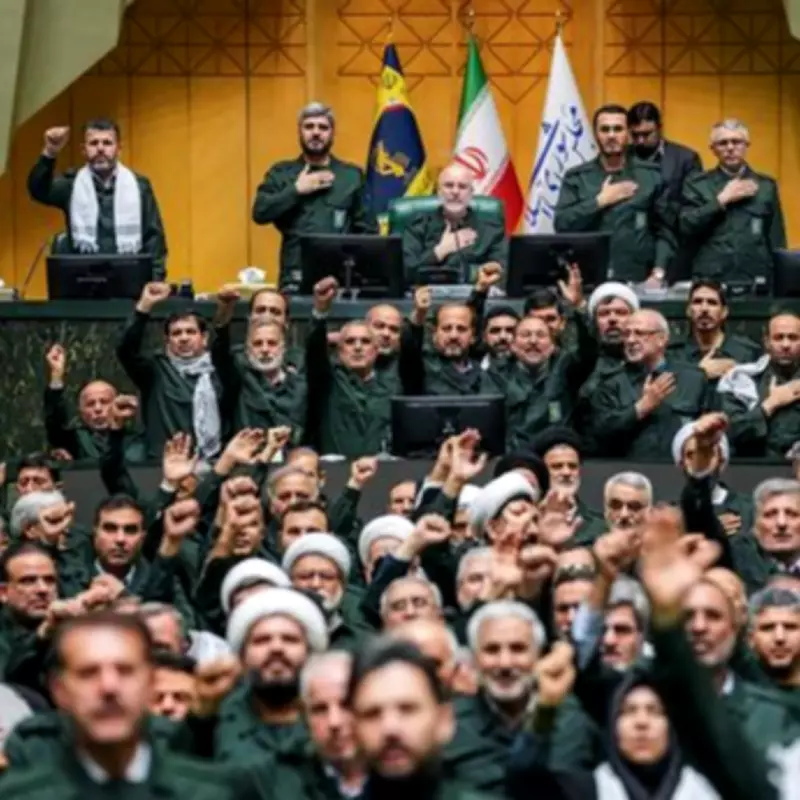
Semi-autonomous officers within Iran's Islamic Revolutionary Guard Corps (IRGC) pose a particularly dangerous threat. These US-hating zealots could potentially act independently of the central regime, sparking incidents that might rapidly spiral into conflict. The risk of rogue actions adds a layer of unpredictability to an already volatile standoff.
Military Posturing and Potential Scenarios
The United States has significant military assets in the region, notably the USS Abraham Lincoln strike force positioned approximately 500 miles off the Iranian coast. This presence provides the capability for a potential American attack. However, the situation is further complicated by Israel's stance. Sources indicate that even if the US opts for restraint or a maritime blockade, Israel is considered highly likely to undertake its own military actions against Iran.

In Washington, President Donald Trump faces a critical decision. His administration has reportedly examined options ranging from restricted, sub-war-threshold strikes to more decisive, devastating operations aimed at dismantling the Tehran regime. Trump's previous warnings to the regime, including promises of help for the opposition and threats against Iran's nuclear programme, have muddied the diplomatic waters.
Iran's Cornered Regime and Internal Strife
The Iranian regime finds itself in an increasingly isolated and precarious position. Its influence in the Middle East has waned significantly since the Gaza War, and it faces existential threats both externally and from within. The regime is reportedly disliked and distrusted by neighbouring powers like Saudi Arabia and Qatar, as well as by a significant portion of its own populace.
Internal dissent remains a critical issue. Despite a bloody clampdown that has reportedly killed over 7,000 protesters in recent weeks—with estimates suggesting a further 10,000 unverified deaths—sporadic demonstrations are believed to persist. Tragically, the welfare of these protesters risks becoming a sidelined issue as international military tensions take centre stage.
Strategic Stalemate and Nuclear Demands
The core diplomatic impasse revolves around the US demands, which Tehran finds unacceptable. These include a complete halt to nuclear enrichment on Iranian soil, the removal of all enriched uranium, and severe restrictions on Iran's ballistic missile programme. For Iran, the missile programme is not merely a military asset but is viewed as a crucial pillar of national sovereignty and a protector of the remnants of the 1979 revolution. This leaves little to no room for manoeuvre for either side, creating a dangerous stalemate.
Iran's international setbacks have compounded its troubles. The arrest of former Venezuelan leader Nicolás Maduro was a significant blow, disrupting a key South American hub where Iran's proxy, Hezbollah, allegedly conducted money-laundering operations and provided new identities for operatives. This event is part of a series of reversals following the Gaza War, including the degradation of Hamas and Hezbollah's capabilities in Lebanon.
Regime Vulnerabilities and Contingency Plans
Facing potential collapse, the regime, hampered by an aggressive IRGC leadership still devoted to its revolutionary ideology, appears to have no clear diplomatic off-ramp. Reports suggest that contingency plans are being made, including the possibility of Ayatollah Khamenei and his inner circle seeking exile in Moscow should Tehran fall. It is further alleged that hundreds of millions of dollars have already been moved out of the country as part of these fallback preparations.

The convergence of rogue military elements, inflexible geopolitical demands, regional proxy conflicts, and profound internal unrest creates a tinderbox scenario. The path forward remains fraught with risk, where a single miscalculation or unauthorised action could trigger a conflict ranging from a limited missile exchange to a full-scale regional war.