US Official Warns Iran's Missiles Could Target London in White House Meeting
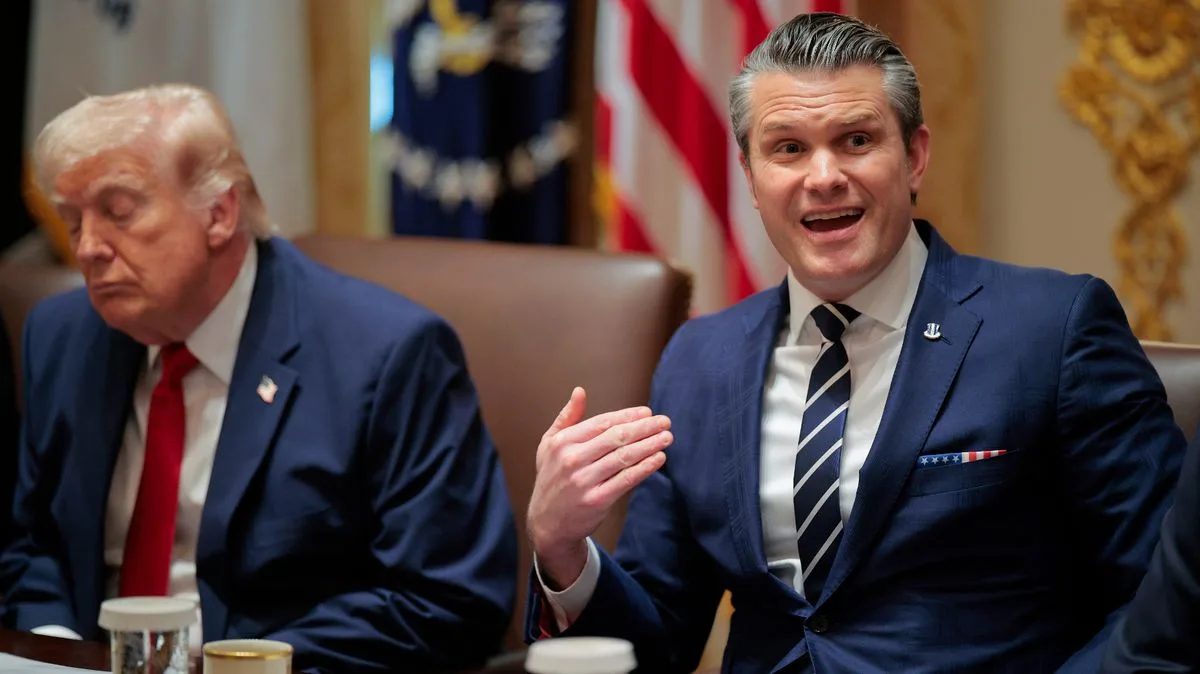
Iran possesses the capability to strike London with ballistic missiles, according to a stark warning issued by US Secretary of War Pete Hegseth during a White House cabinet meeting. This alarming assessment highlights what Hegseth described as a global threat emanating from Tehran, with direct implications for British national security.
Diego Garcia Attack Raises Concerns
The warning follows a recent incident where two Iranian missiles were launched towards the joint UK-US military base on Diego Garcia in the Indian Ocean. Located approximately 4,000 kilometres from Iran, the island was targeted last Friday. While the UK Government confirmed both missiles fell short of their intended target, the event has intensified concerns regarding Iran's expanding missile range and its potential threat to Britain itself.
"Two days ago they shot two failed missiles on a target 4,000km away," Hegseth stated, without explicitly naming Diego Garcia. "For years, they told the world that their missiles could only range two thousand kilometres. Surprise. Yet again, Iran lie."
UK Defence Response and Capability Questions
Previously, UK Defence Secretary John Healey declined to confirm whether Tehran had the technical capability to strike Britain, though he stressed that officials did not believe an attack was imminent. "We have the resources, the alliances in place to be able to protect Britain," Healey asserted, reflecting a cautious but prepared stance from the British government.
The Israeli military has previously claimed that Iranian missiles could achieve a range of around 4,000 kilometres, placing numerous countries across Europe, Asia, and Africa at risk. Hegseth emphasised this point by noting, "London is 4,000km from Iran."
Escalating Tensions and Diplomatic Standoff
Amid these escalating tensions, neither side appears willing to de-escalate in the Middle East. The US continues to bolster its combat forces in the region, while Iran maintains its strategic control over the Strait of Hormuz, a vital shipping route for global oil and gas supplies.
On the diplomatic front, Mr Trump's envoy, Steve Witkoff, confirmed that the US had presented a 15-point "action list" to Iran, delivered via Pakistan, as a potential framework for a peace deal. However, President Trump made it clear he was not actively pursuing an agreement, stating, "They're begging to make a deal, not me. They are negotiating, by the way, and they want to make a deal so badly, but they're afraid to say it because they figure they'll be killed by their own people."
This assertion was directly contradicted by Iran's foreign minister, Abbas Araghchi, who told state television that his government had not engaged in talks to end the conflict, adding, "and we do not plan on any negotiations." This diplomatic stalemate underscores the deepening rift and the complex geopolitical dynamics at play.
The situation remains volatile, with Hegseth's warning serving as a potent reminder of the evolving security challenges facing Western nations. As Iran continues to develop its missile technology, the potential for long-range strikes on European capitals like London becomes an increasingly pressing concern for defence planners and policymakers on both sides of the Atlantic.






