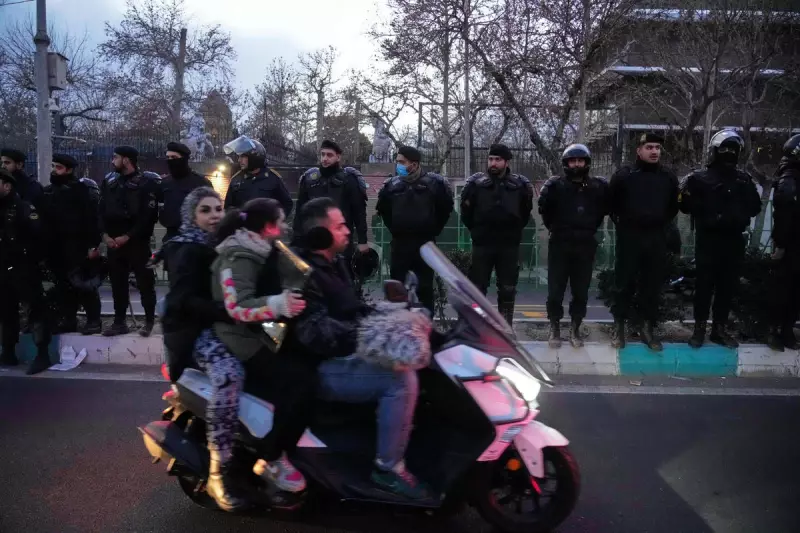
The United Kingdom has evacuated its embassy in Tehran and Iran has closed its national airspace, as tensions escalate dramatically following threats of US military action over the regime's violent suppression of popular protests.
Diplomatic Withdrawals and Military Preparations
On Wednesday, 14 January 2026, British officials confirmed the ambassador and all staff had been withdrawn from the embassy in the Iranian capital. A UK government spokesperson stated the embassy would operate remotely, citing the need to prioritise staff safety amid the deteriorating security situation. This move coincided with the US and UK also pulling personnel from the Al-Udeid air base in Qatar, the largest US military facility in the Middle East.
The crisis was triggered by a brutal government crackdown on nationwide demonstrations. US President Donald Trump has threatened for days to launch strikes against Iran in response. Tehran has issued a stark warning to neighbouring countries, stating it would retaliate against them if the US took military action.

Airspace Closure and Market Turbulence
In a significant escalation, Iranian authorities issued a Notice-to-Airmen (NOTAM) closing the country's entire airspace to all flights without prior permission from the Iranian Civil Aviation Organisation. The closure caused immediate regional disruption, although flight tracking data later suggested some domestic services were tentatively resuming as the initial NOTAM expired.
The geopolitical turmoil rattled global markets. Oil prices, which had hit multi-month highs, retreated on Thursday 15 January after President Trump attempted to calm fears. Safe-haven gold also eased from a record peak following his remarks. Meanwhile, a selloff in technology stocks spread to Asian markets, continuing a trend from Wall Street.
Political Statements and Regional Diplomacy
In an interview with Reuters on Wednesday, President Trump offered a slightly de-escalatory tone, claiming he had been informed that "killings in Iran's crackdown... were subsiding" and he believed there was currently no plan for large-scale executions. However, he reiterated that he was "ready to push the button" on strikes if executions began.
Trump also commented on the potential for regime change, noting "any regime can fail," and offered lukewarm remarks about exiled opposition figure Reza Pahlavi, saying he "seems very nice" but questioning his domestic support. Pahlavi, meanwhile, met with US Senator Lindsey Graham, claiming the Iranian people were "so close" to victory.
Other nations are scrambling to respond. Poland and Italy have urged their citizens to leave Iran. France is considering sending Eutelsat satellite terminals to help bypass internet blackouts imposed by Tehran. Pakistan's Prime Minister, Shehbaz Sharif, emphasised his country's role in maintaining regional peace during a call with Qatar's Emir.
The situation remains highly volatile, with diplomatic missions withdrawn, military forces on alert, and global markets nervously watching for the next development in this fast-unfolding international crisis.