US Defence Secretary Claims Iran Could Target London with Missiles
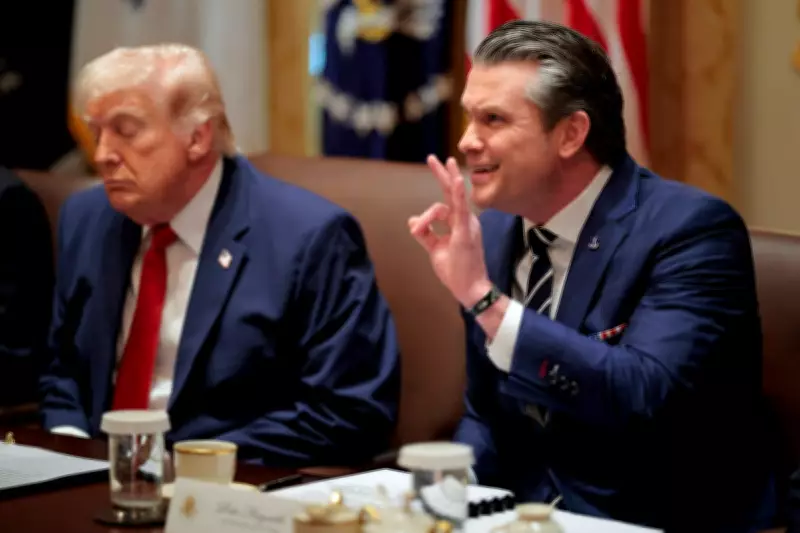
US Defence Secretary Pete Hegseth has issued a stark warning, asserting that Iran possesses the capability to strike London with missiles. His remarks were delivered during a White House cabinet meeting, highlighting what he described as a significant global threat emanating from Tehran.
Incident at Diego Garcia Base Sparks Concerns
The comments followed a recent incident where two missiles were fired at the joint UK-US military base on Diego Garcia, an island in the Indian Ocean located approximately 4,000 kilometres from Iran. While the UK Government confirmed that both missiles fell short of their intended target, the event has heightened anxieties about potential threats to Britain from Iranian forces.
UK Defence Secretary John Healey earlier declined to confirm whether Tehran has the ability to hit Britain but emphasised that officials do not believe an attack is imminent. He stated, "We have the resources, the alliances in place to be able to protect Britain."

Hegseth's Direct Accusations and Global Implications
Without explicitly naming Diego Garcia, Mr Hegseth referenced the attack, saying, "Two days ago they (Iran) shot two failed missiles on a target 4,000km away. For years, they told the world that their missiles could only range two thousand kilometres. Surprise. Yet again, Iran lie." He further connected this to broader security concerns, noting, "And to the world, I say London is 4,000km from Iran. Washington DC is 3,300km from Venezuela, another country President Trump did something about, partnered for a long time with Iran. So you’re telling us that Iran is not a threat to the world or to the US, President Trump knows better."
The Israeli military has previously asserted that Iranian missiles could achieve a range of around 4,000 kilometres, potentially placing numerous countries across Europe, Asia, and Africa at risk.
Escalating Tensions and Diplomatic Standoff
Amid these escalating tensions, neither side appears willing to de-escalate in the Middle East. The US continues to bolster its combat forces in the region, while Iran maintains its strategic control over the Strait of Hormuz, a vital shipping route for oil and gas.
Mr Trump’s envoy, Steve Witkoff, confirmed that the US had presented a 15-point "action list" to Iran, delivered via Pakistan, as a potential framework for a peace deal. However, Mr Trump made it clear he was not actively pursuing an agreement, stating, "They’re begging to make a deal, not me. They are negotiating, by the way, and they want to make a deal so badly, but they’re afraid to say it because they figure they’ll be killed by their own people."
This assertion was directly contradicted by Iran’s foreign minister, Abbas Araghchi, who told state TV that his government had not engaged in talks to end the conflict, adding, "and we do not plan on any negotiations."