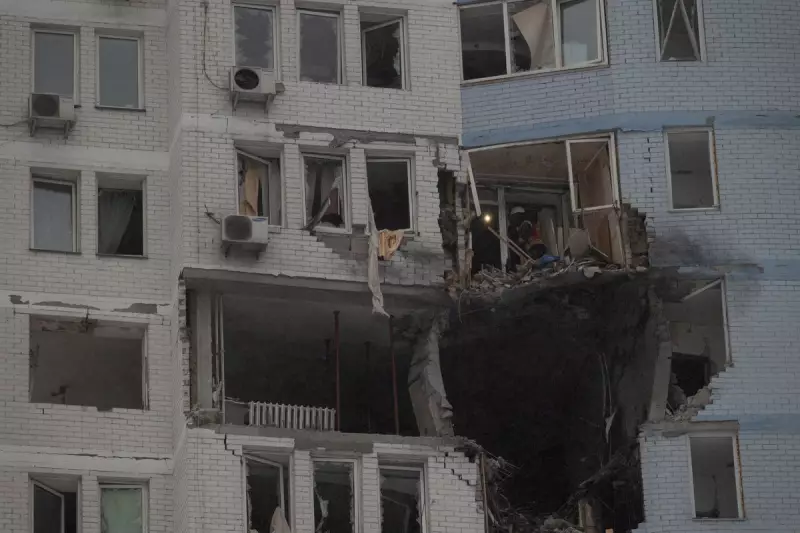
Russia has unleashed a devastating large-scale overnight assault on Ukraine, deploying drones and a barrage of missiles including advanced hypersonic weapons. The attack, which Ukrainian President Volodymyr Zelensky had warned was imminent, has resulted in significant casualties and widespread damage to critical infrastructure.
Wave of Strikes Targets Key Cities
The offensive, which took place in the early hours of Friday 09 January 2026, saw Ukrainian air defences engaged across the country. At least 36 missiles were fired by Russian forces, alongside numerous attack drones. The capital, Kyiv, and the western city of Lviv were among the primary targets.
In a significant escalation, one of the weapons used was a suspected hypersonic missile, believed to be an Oreshnik-type weapon, which struck vital infrastructure in Lviv. These missiles travel at speeds exceeding Mach 5, making them extremely difficult to intercept with existing air defence systems.

Civilian Toll and Infrastructure Damage
The human cost of the bombardment has been severe. At least four people were killed in Kyiv, with a further 19 individuals reported injured across the affected areas. The strikes have also plunged hundreds of thousands into darkness.
Officials confirmed that the attacks caused major disruptions to the energy grid, with over 600,000 households losing power in the Zaporizhzhia and Dnipropetrovsk regions. President Zelensky had previously accused Russian leader Vladimir Putin of "weaponising winter" by targeting energy supplies, a tactic now repeated in this latest offensive.
Geopolitical Repercussions and Warnings
Moscow justified the strikes, claiming they were aimed at Ukrainian energy infrastructure and facilities involved in drone manufacturing. The Kremlin stated this was a direct response to an alleged Ukrainian drone attack on a residence used by Vladimir Putin.
The attack coincides with heightened geopolitical tensions concerning Western involvement. UK Labour leader Keir Starmer recently signed a deal outlining the potential deployment of British troops to Ukraine following a future peace agreement. In a stark warning, Russian officials stated that any NATO troops on Ukrainian soil would be considered legitimate military targets.
This major assault underscores the continued intensity of the conflict and the severe challenges faced by Ukraine as it defends against Russia's evolving military tactics, including the use of advanced hypersonic weaponry.