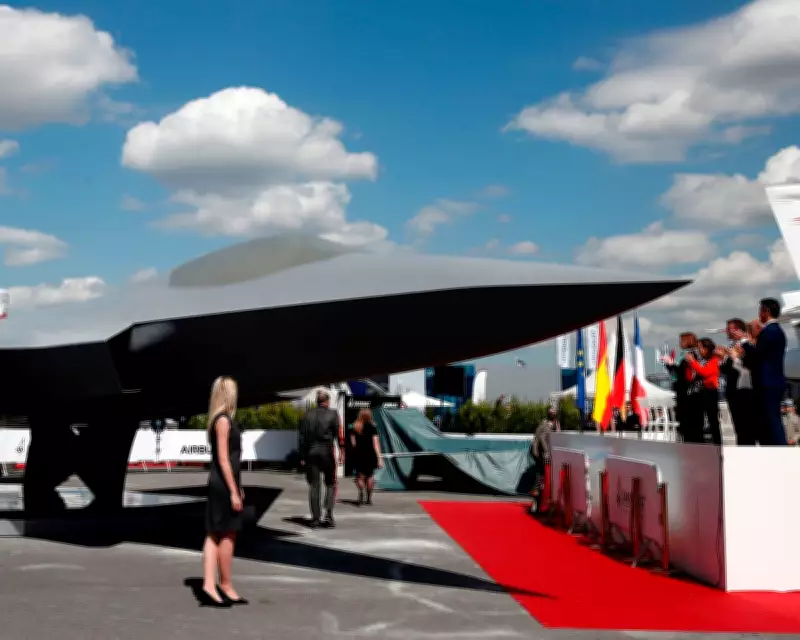
Franco-German Future Fighter Jet Project FCAS Implodes Amid Leadership Dispute
The ambitious €100 billion Future Combat Air System (FCAS) programme, a cornerstone of European defence cooperation, is teetering on the brink of collapse. Announced with great fanfare in 2017 by French President Emmanuel Macron and then German Chancellor Angela Merkel, this initiative aimed to develop a next-generation fighter jet equipped with stealth capabilities, a swarm of drones, and a real-time combat communications cloud. However, deep-seated disagreements over leadership and technical specifications have brought the project to a critical impasse, exposing rifts between France and Germany at a high-stakes moment for European security.
Technical and Political Rifts Threaten Programme
German Chancellor Friedrich Merz recently declared that the FCAS programme no longer works for Germany, insisting the issue is technical rather than political. France requires a jet capable of carrying nuclear weapons and launching from aircraft carriers, needs that Germany does not share. Yet, the problems extend far beyond these specifications. The core dispute revolves around who should lead the fighter jet component of the project. Dassault Aviation, France's renowned jet maker, adamantly insists on maintaining control, while Airbus's German-based defence arm pushes for a more collaborative approach. This stalemate has persisted for years, undermining progress and cooperation.
Historical Tensions and Export Success Fuel Conflict
The friction between Dassault and Airbus is not new. Dassault previously walked away from the Eurofighter programme in the 1980s due to leadership disputes, and its current stance is bolstered by the Rafale fighter's robust export success, with orders extending into the mid-2030s. Éric Trappier, Dassault's chief executive, has publicly stated that the company can develop jets independently from A to Z, highlighting its leverage. Meanwhile, Airbus teams in Germany have historically viewed Dassault as a competitor rather than a partner, complicating collaboration. Defence analyst Francis Tusa notes that while Dassault has the proven capability to design a fighter alone, such an attitude hampers essential European unity.

Growing Defence Divide Between France and Germany
The FCAS crisis reflects a broader political rift between France and Germany on defence matters. Germany has become more assertive following Russia's invasion of Ukraine, committing to spend €150 billion on defence by 2029—nearly double France's budget. This shift challenges France's long-standing leadership role in European defence. Johann Wadephul, Germany's foreign minister, has criticised France for insufficient military spending, underscoring tensions. As Tusa observes, Germany is no longer deferential to France, creating a power dynamic that complicates joint projects like FCAS.
Potential Outcomes and European Fragmentation
If FCAS collapses, Europe could face a fragmented defence landscape with multiple competing fighter programmes. Alternatives include Germany joining the British-Italian-Japanese Global Combat Air Programme (GCAP), known as Tempest, or pursuing separate national jets. Airbus CEO Guillaume Faury has suggested a two-fighter solution, where France and Germany develop distinct jets linked through shared systems. However, failure to resolve the dispute may result in three or four separate next-generation fighter projects across Europe, diluting resources and weakening collective security. The project's fate is further clouded by Macron's presidency ending in 2027, with potential successors possibly abandoning it entirely.
In summary, the FCAS programme's implosion highlights critical challenges in European defence cooperation. Without resolution, the continent risks losing a unified approach to future security threats, emphasising the urgent need for compromise and collaboration among key stakeholders.