For decades, the bedrock of Western security was an unshakeable certainty: the unwavering leadership and reliability of the United States within the NATO alliance. That foundational assumption has now shattered, according to a stark warning from a former senior NATO commander.
The End of American Reliability
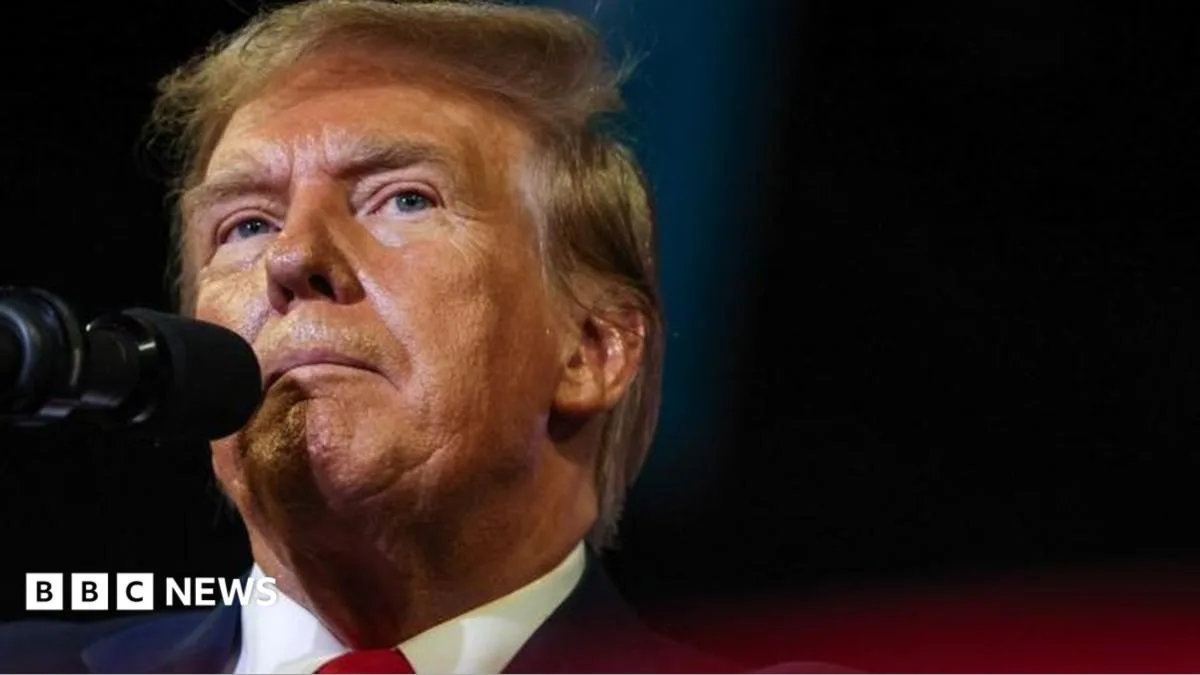
General Sir Richard Shirreff, who served as NATO’s Deputy Supreme Allied Commander Europe between 2011 and 2014, states that the era of depending on Washington is conclusively over. The catalyst is the presidency of Donald Trump. This is not merely about provocative rhetoric, Shirreff argues, but about demonstrable intent. When President Trump expresses desires for Greenland, labels Canada a potential "51st state," or threatens allies with tariffs and coercion, these statements must be taken as genuine policy directions, not as bluster or negotiation tactics.
The situation presents a profound and unprecedented danger because the threat is now emanating from within the alliance itself. NATO was constructed on trust, shared democratic values, and the sacred principle of collective defence enshrined in Article 5. This principle relies on the belief that no member would ever threaten another. Yet, the alliance's lead nation is now openly questioning the sovereignty of Denmark, a loyal member that suffered significant per-capita casualties supporting US-led operations in Afghanistan.
The Dire Consequences of Inaction and Appeasement
Shirreff paints a grim picture of the potential fallout. A US military move on Greenland, a Danish territory, would not be a symbolic gesture. It would be an act of aggression against a NATO ally, forcing other members like the UK into an impossible position. Such a scenario would render NATO unworkable and achieve Russian President Vladimir Putin’s strategic goal: a divided and paralysed West.
The general is scathing in his criticism of the current European response, describing appeasement as dangerous. Europe’s tepid reaction to punitive US tariffs and reported British attempts to seek exemptions send exactly the wrong signal. Trump’s strategy thrives on creating division; if individual nations break ranks to save themselves, the unity that defines and empowers NATO will collapse entirely.
A Blueprint for a European-Led Future
So, what is to be done? Shirreff proposes a clear, multi-step plan for contingency. First, defence establishments across Europe and Canada must accept the new reality and begin serious war-gaming of scenarios involving US aggression against a NATO ally. To ignore this possibility is a dereliction of duty.
Second, Europe and Canada must present a unified front without any ambiguity or hesitation. Solidarity itself becomes a form of deterrence against threats and intimidation.
Third, and most crucially, NATO must undergo a process of "Europeanisation." This does not mean dismantling the alliance but fundamentally rebalancing it to end decades of strategic dependency on Washington. European defence spending must increase immediately and be spent wisely, shifting focus from legacy systems to the modern realities of warfare demonstrated in Ukraine: drones, artificial intelligence, and resilient logistics.
Finally, Shirreff calls for the preparation of a formal Canada-Europe defence pact. This pact would operate within NATO's existing framework but would exclude the United States for as long as Trump remains in power. Leadership should fall to nations willing to commit real resources and stand firmly by threatened allies, with Britain, France, Germany, Poland, and Canada forming its core.
There will be institutional resistance, Shirreff acknowledges, from those for whom closeness to Washington is an article of faith. But that reflex is now a liability. The values upon which NATO was founded can only survive through unity without illusion. The alternative is to discover, too late, that broken trust cannot be mended by summits or speeches.






