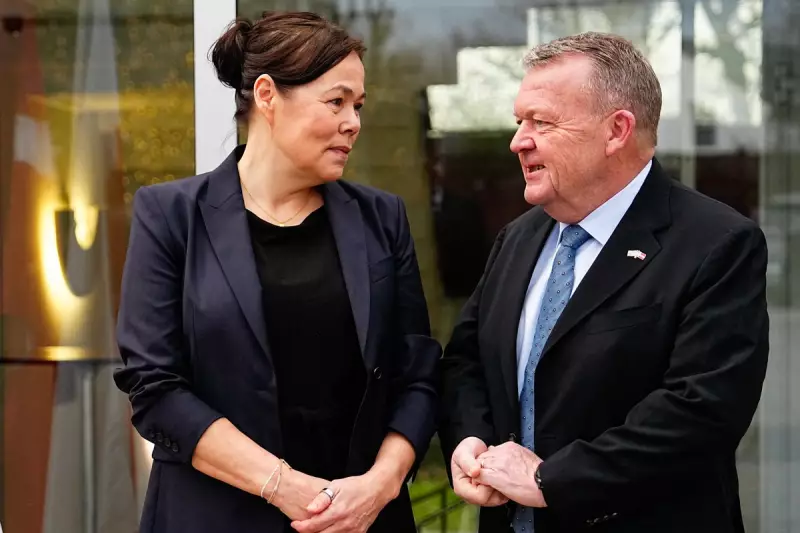
Denmark has publicly declared a "fundamental disagreement" with the United States over the future of Greenland, following high-stakes talks with senior US officials. The diplomatic rift emerges as President Donald Trump intensifies his campaign for the US to assume control of the strategically vital Arctic territory.
Military Buildup in the Arctic
The statement, released jointly by the Government of Greenland and the Danish Ministry of Defence on Wednesday, 14 January 2026, warned that "geopolitical tensions have spread to the Arctic." In response, they announced a significant and sustained increase in military activity on the island, conducted in close coordination with NATO allies.
The plan includes expanded fighter jet exercises, naval taskings, hosting allied troops, and enhanced security for critical infrastructure. Danish Defence Minister Troels Lund Poulsen confirmed Denmark would maintain a "bigger military footprint" and a "more permanent presence on Greenland going forward."

This bolstered posture has already triggered allied reinforcements, with Swedish Prime Minister Ulf Kristersson confirming a deployment of military officers to the Arctic at Denmark's request. Reports also suggest the United Kingdom is considering sending backup.
A Working Group Amidst Unyielding Positions
The diplomatic standoff was the focus of a meeting in Washington involving Danish Foreign Minister Lars Løkke Rasmussen, Greenland's Foreign Minister Vivian Motzfeldt, US Vice President JD Vance, and Secretary of State Marco Rubio. Despite the profound disagreement, both sides agreed to establish a working group to navigate the crisis.
Mr Rasmussen stated the group should focus on addressing American security concerns "while at the same time respecting the red lines of the Kingdom of Denmark." He firmly dismissed the prospect of a US acquisition of Greenland as "absolutely not necessary," highlighting Denmark's status as America's oldest ally.
However, the US position remains uncompromising. President Trump has declared that securing full control of Greenland is vital for American "national security" to prevent Russian or Chinese dominance in the region, asserting that "anything less than that is unacceptable." In a Truth Social post, he argued NATO would become "far more formidable and effective with Greenland in the hands of the UNITED STATES."
European Solidarity Against US Aspirations
Trump's ambitions have galvanised a firm response from European leaders. European Commission President Ursula von der Leyen reiterated the EU's close ties with Greenland, stating they "respect the wishes of the Greenlanders." French President Emmanuel Macron offered full solidarity with Denmark, warning that affecting the sovereignty of a European ally would have "unprecedented" knock-on effects.
Perhaps the starkest warning came from European Commissioner Andrius Kubilius, who suggested a US takeover could spell the "end of NATO." These reactions underscore the deep transatlantic rift the Greenland issue has provoked.
As the newly formed working group prepares for its difficult task, the immediate reality is a militarised Arctic. With Denmark and its allies fortifying their position and the US administration showing no sign of retreating from its maximalist demands, the frozen north has become the latest flashpoint in a rapidly shifting global order.