Taiwan's military has reported a significant incursion by a Chinese surveillance drone into the airspace of the strategically vital Pratas Islands, condemning the action as a serious threat to regional stability.
Details of the Airspace Violation
According to an official statement from Taiwan's defence ministry, the incident occurred in the early hours of Saturday, 17 January 2026. A Chinese reconnaissance drone entered the airspace of the Pratas Islands, also known as the Tungsha or Dongsha Islands, at 5:41 am local time. The aircraft remained for approximately eight minutes, operating at an altitude that placed it outside the effective range of Taiwan's anti-aircraft weaponry on the atoll.
The defence ministry stated that its forces issued broadcast warnings on international channels, after which the drone departed the area at 5:48 am. Officials labelled the manoeuvre a "provocative and irresponsible" act by China's People's Liberation Army (PLA).

Strategic Significance of the Pratas Islands
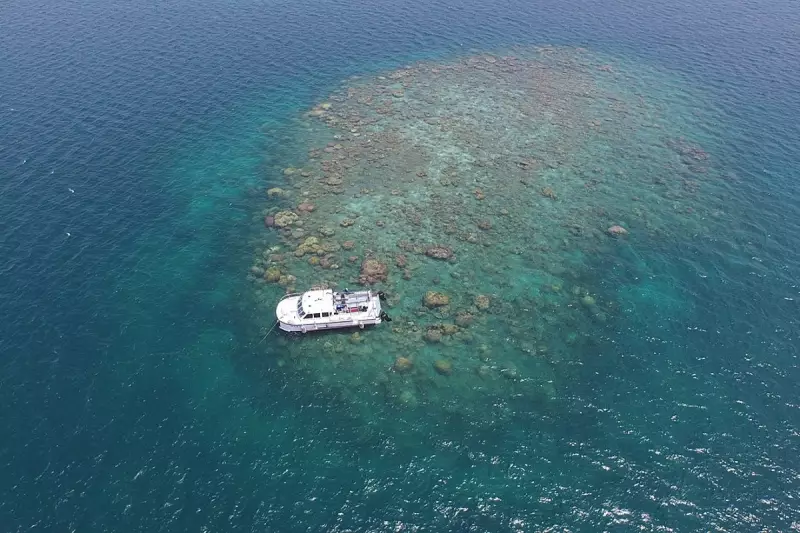
The Pratas Islands are a coral atoll administered by Taiwan as part of the Cijin District in Kaohsiung. Despite being designated a Taiwanese national park and hosting only a light military and coast guard presence, its location is of immense strategic value. The atoll lies roughly 170 nautical miles southeast of Hong Kong and over 400 kilometres from mainland Taiwan.
This distance makes the islands a potential vulnerability, with some security analysts suggesting they could be a target in any future conflict. The islands are situated in the northern part of the hotly contested South China Sea, a region where China has made expansive territorial claims.
Broader Context of Rising Tensions
This aerial provocation did not occur in isolation. It comes at a time of heightened friction between Taipei and Beijing, particularly following the signing of a new trade agreement between Taiwan and the United States. The deal lowers US tariffs on Taiwanese goods to 15% in exchange for $250 billion in new Taiwanese investments in the American tech sector.
China's foreign ministry has expressed firm opposition to the agreement, stating it opposes any country with diplomatic ties to Beijing signing official pacts with Taiwan. China views Taiwan, a democratically governed island of 23 million people, as an inalienable part of its territory. While officially advocating for "peaceful reunification," Chinese law also reserves the right to use "non-peaceful means" to prevent what it terms Taiwan's "secession."
Taiwan's defence ministry has vowed that its armed forces will maintain strict vigilance and respond to any further incidents in accordance with established combat readiness rules. As of now, Beijing has not publicly commented on the specific drone incident reported by Taiwan.