China Advances Compact Microwave Weapon Development, Targeting Starlink Satellites
Chinese researchers have achieved a significant breakthrough in developing a compact, ultra-powerful energy generator, marking a major step toward next-generation weapons capable of targeting satellite swarms such as SpaceX's Starlink constellation. This innovation could reshape military strategies in space, offering a low-cost alternative to conventional missiles with minimal debris creation.
High-Power Microwave Weapons Gain Strategic Importance
High-power microwave weapons have garnered increasing attention in recent years due to their near-unlimited firing capacity and cost-effectiveness compared to traditional armaments. Nations including the United States, Russia, and China have been actively exploring this technology for directed-energy applications aimed at disrupting satellite operations. The strategic advantage lies in their ability to disable satellites while generating minimal orbital debris, allowing for plausible deniability in conflicts.
These weapons function by storing electrical energy and releasing it in a powerful pulse, akin to a Tesla coil. The resulting power surge can operate microwave generators to interfere with electronic systems. Historically, prototypes have been bulky, often exceeding 10 metres in length and 10 tons in weight, limiting their integration into smaller platforms.

Breakthrough in Miniaturisation and Efficiency
In a recent study published in the journal High Power Laser and Particle Beams, scientists from the Northwest Institute of Nuclear Technology (NINT) utilised a specialised liquid insulating material called "Midel 7131." This material enhances energy storage density, improves insulation, and reduces energy loss, leading to a more efficient and compact device.
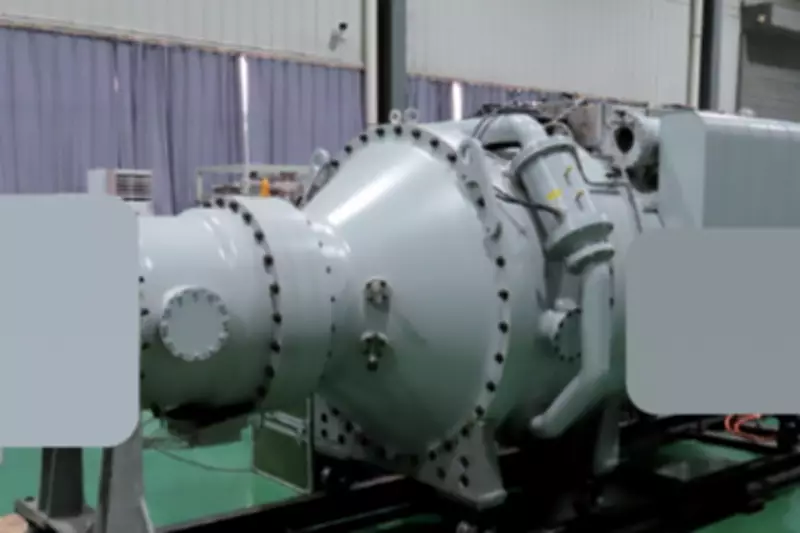
The researchers achieved miniaturisation by adopting a high-energy-density liquid dielectric and a dual-width pulse-forming line, integrating the Tesla transformer and pulse-forming system. The resulting device, designated TPG1000Cs, measures just four metres long and weighs five tons, making it the world's first compact driver for a high-power microwave weapon.
Versatile Deployment and Operational Capabilities
The compact size of TPG1000Cs allows for mounting on various platforms, including trucks, aircraft, and even satellites. During testing, the system demonstrated stable operation over continuous one-minute durations, accumulating approximately 200,000 pulses with consistent performance. According to reports, it can achieve electrical pulses reaching 20 gigawatts, far exceeding the 1 gigawatt output needed to severely disrupt Starlink satellites in orbit.
China's Strategic Focus on Satellite Disruption
China has published multiple studies emphasising the need to counter Elon Musk's Starlink satellites, citing their potential military applications highlighted during the Russia-Ukraine conflict. Researchers from Nanjing University of Aeronautics and Astronautics noted the intensifying militarisation of space as a significant threat to China's space security, underscoring the importance of tracking and monitoring such constellations.
In a related development, scientists from the Beijing Institute of Technology, which contributes to China's defence research, simulated methods to disrupt Starlink satellites over an area comparable to Taiwan's size. This aligns with broader efforts to safeguard national interests in an increasingly contested space domain.
The advancement of compact microwave weapons represents a pivotal shift in defence technology, with implications for global satellite infrastructure and space security. As nations continue to innovate, the balance of power in orbit may hinge on such directed-energy capabilities.