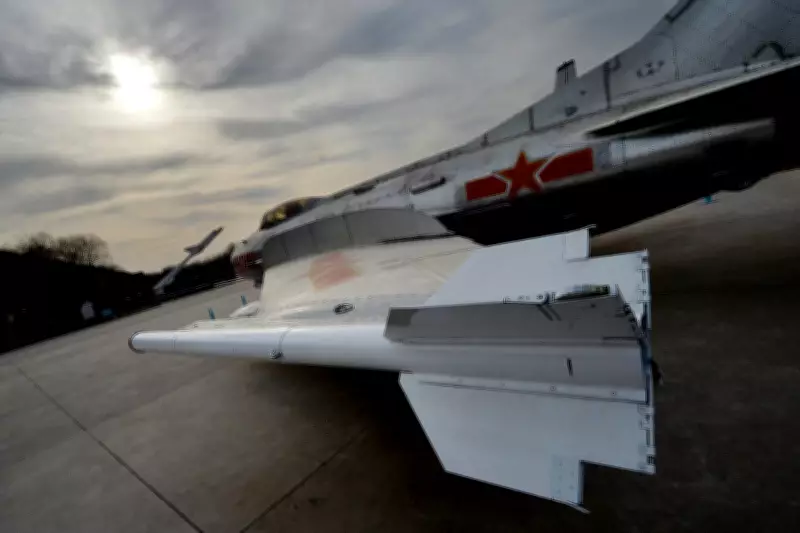
China Stations Converted Warplane Drones Near Taiwan Strait
China is converting its obsolete supersonic warplanes into attack drones and deploying them at air bases close to the Taiwan Strait, according to a new report from the Mitchell Institute for Aerospace Studies. This move represents fresh signs of Beijing's preparedness for a potential military escalation against Taiwan, with satellite imagery revealing lines of modified J-6 fighters at multiple locations.
Details of the Drone Conversion Programme
The report titled "China Airpower Tracker" indicates that J-6 fighters, first flown with the Chinese air force in the 1960s, have been modified into attack drones visible at five bases in Fujian province and one in Guangdong. These twin-engined aircraft, derived from the 1950s-era Soviet MiG-19 fighter, formed the core of China's fighter fleet until the mid-1990s before being retired.
J Michael Dahm, senior fellow at the Arlington-Virginia based think tank, explained that more than 500 of these aircraft have been converted to drones, with an estimated 200 or more currently deployed at airfields near the Taiwan Strait. The drone version is designated the J-6W, and these revamped aircraft function more like cruise missiles than traditional autonomous or remote-controlled unmanned aerial vehicles.

Strategic Purpose in Potential Conflict
According to experts monitoring China's military progress, these converted drones would play a crucial role in the opening phase of any assault on Taiwan. "They will attack Taiwan, US, or allied targets in large numbers, effectively overwhelming air defences," Mr Dahm stated. He emphasised that "the idea is to launch all the drones in the first hours of a PLA operation" against Taiwan.
A senior Taiwan security official highlighted the tactical challenge these drones present, noting their primary purpose is "to exhaust Taiwan's air defence systems in the first wave of an attack." This creates a cost-efficiency dilemma for Taiwan's defenders, who would face difficult decisions about using expensive missiles to intercept numerous low-cost drone threats.
Broader Military Context and Regional Tensions
These converted drones form part of Beijing's growing arsenal of airpower weapons, which includes bombers with stand-off missiles, modern fighters, ballistic and cruise missiles, and swarms of modern drones. The deployment occurs against the backdrop of China's longstanding claim of sovereignty over Taiwan, which Beijing seeks to "reunite" with the mainland by force if necessary.
Taiwan consistently rejects China's sovereignty claims, maintaining that only the island's people can decide its future. In response to the growing drone threat, Taiwan's defence ministry has shared plans with parliament to rapidly acquire a new generation of counter-drone systems.
While the US intelligence community recently retracted earlier claims that China was gearing up to fully invade Taiwan by 2027, stating Beijing is not currently planning such an invasion, Taiwan continues to warn that other Asia-Pacific countries would be next if China successfully invades the self-governed island.
The airfields closest to the Taiwan Strait where J-6 drones are based would themselves be vulnerable to counter-attack from Taiwan and its allies in any conflict scenario, creating a complex strategic dynamic in the region.