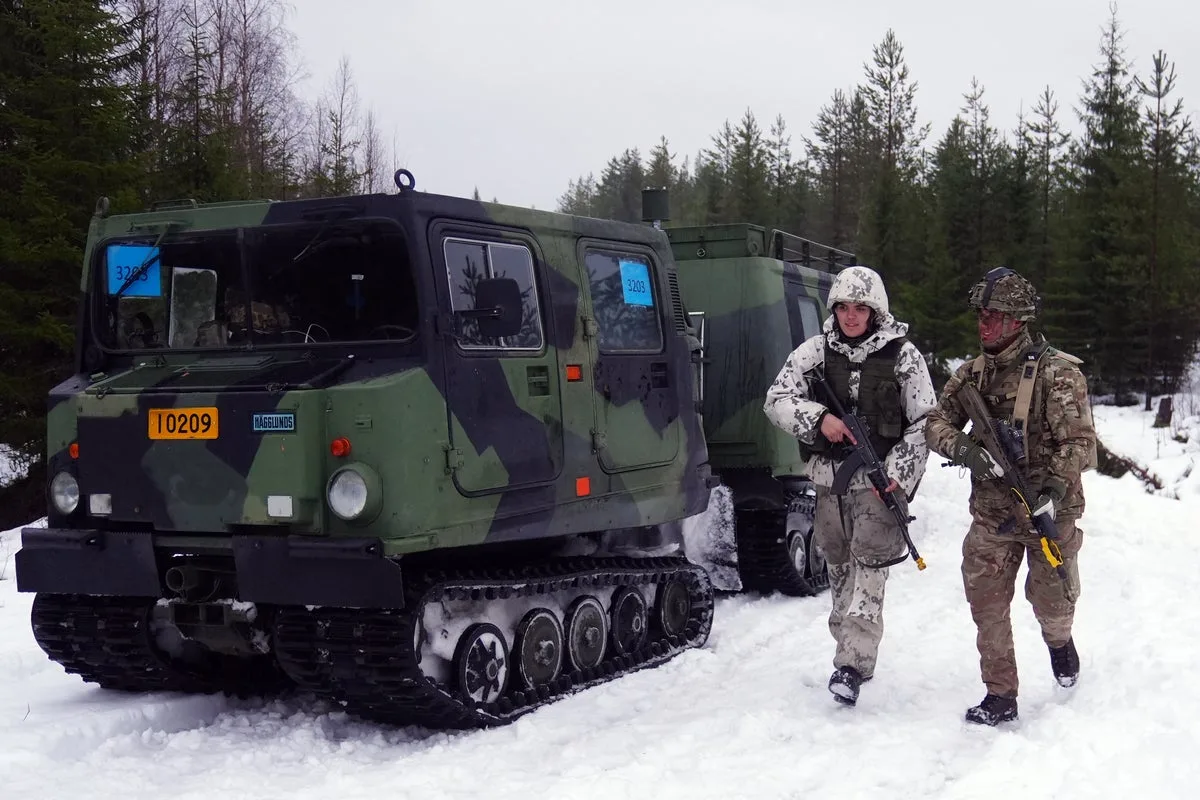
British soldiers have completed a rigorous six-week Arctic warfare training exercise in Finland, honing their skills for sub-zero combat alongside Nato's newest member on the alliance's extended border with Russia.
Surviving and Fighting in Extreme Cold
Approximately 50 soldiers from C Company, 3 Rifles, based in Edinburgh, traded previous hot-weather training in Kenya and Morocco for the challenges of Finland's far north. The exercise, which took place in temperatures plunging to minus 28 degrees Celsius, was a stark contrast. The troops learned critical survival techniques, including how to cope with sudden immersion in icy water, prevent frostbite, and operate effectively in deep snow, even practising marksmanship while on skis.
Joining Forces with Finland's Determined Defence
Following their initial training, the British reconnaissance specialists integrated with the Finnish Army's Kainuu Brigade for Operation Northern Ax. This major five-day simulated battle unfolded in the dense forests of Vuosanka, a location strategically situated just 20 miles from the Russian border and roughly 400 miles north of Helsinki.
The exercise involved around 3,000 Finnish conscripts, reservists, and regulars. It was designed to rigorously test defence, delaying actions, night combat, and attack tactics, with commanders monitoring troop movements in real-time to assess performance.
A Nation Prepared: Finland's Strategic Posture
The training comes with a serious backdrop. Finland, which ended decades of neutrality to join Nato in 2023, shares an 800-mile border with Russia. The war in Ukraine has heightened concerns in a country that fought a brutal Winter War against Soviet invasion in 1939-40 and only gained independence from Russia in 1917.
Finnish defence is built on a foundation of mandatory conscription for men, who then remain in the reserves until age 50. This system means the nation of 5.5 million could mobilise a wartime army of up to 900,000 personnel, a fact not lost on the visiting British troops.
Major Henry Wootton, leading the British company, expressed admiration for Finland's comprehensive defence orientation. "It is really impressive to see a country that is orientated for defence," he said. "They have a set-in-stone defence plan and everyone contributes to that with their conscript service when they are 18."
He noted that while his professional soldiers had more time to practise core skills, the Finns' innate knowledge of the local environment was a crucial advantage. Rifleman Aaron Hunter, 21, from Wakefield, highlighted the palpable sense of threat, stating the potential for Russian aggression was "a big talking point for the Finns" who see it as "a very high-level threat that could be around the corner".




