
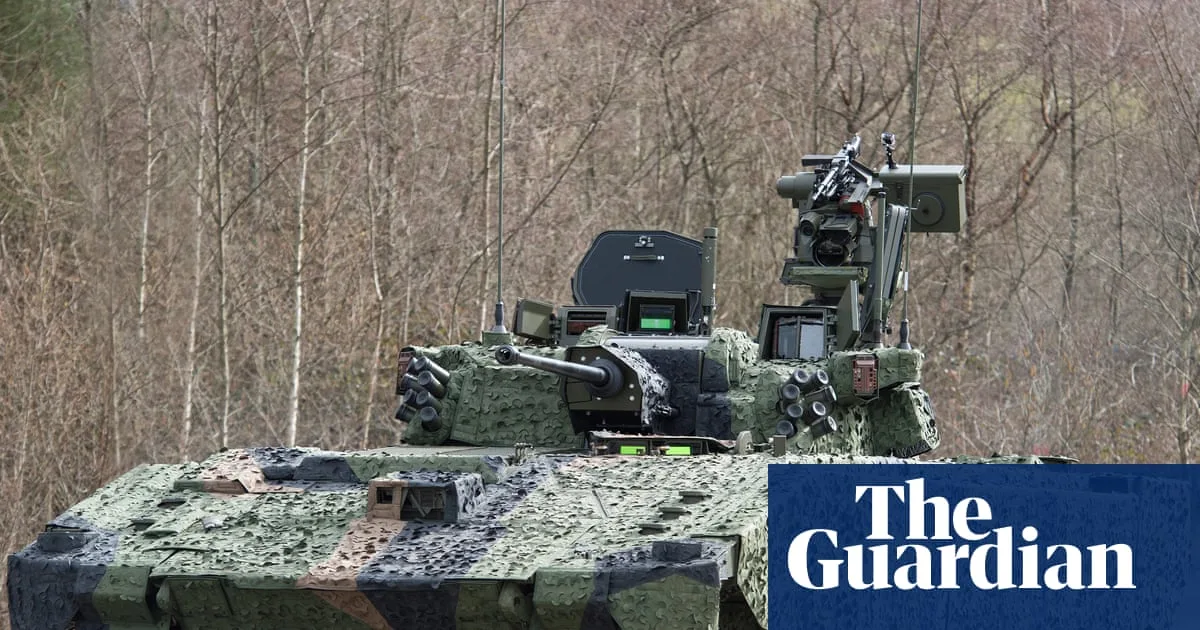
Soldiers required medical treatment for hearing problems this summer during final testing of the British Army's new Ajax armoured vehicle, despite the £5.5 billion programme being classified as fit for deployment in September. The Ministry of Defence (MoD) confirmed that a small number of troops reported noise and vibration concerns and were processed at a military medical centre, though it stated no systemic issues were found.
Junior defence minister Luke Pollard declared at a launch event on Wednesday that Ajax's noise and vibration problems were "firmly in the past" and that the vehicle was safe for frontline troops. However, an MoD spokesperson later acknowledged that concerns raised over the summer were investigated, with no evidence of systemic problems. The MoD declined to specify how many soldiers were treated but said there were no reports of tinnitus or motion sickness.
Ajax, a 40-tonne tracked vehicle with a top speed of 40mph, has faced years of delays due to noise and vibration issues. A 2021 review found that 11 of 310 testers had long-term noise exposure restrictions, and 17 required specialist outpatient care. During a recent tour of the General Dynamics factory in Merthyr Tydfil, a mobile phone meter recorded 90 decibels from a few metres away, exceeding the 85-decibel threshold where employers must provide hearing protection.
The MoD stated that crew and passengers are provided with dual protection—earplugs and headphones—and that safety limits are maintained even after six hours of movement. Ajax was originally due in service in 2017, but trials were halted in June 2021 over safety fears. A former Conservative defence minister criticised the army for prioritising cost over safety during the delays.




