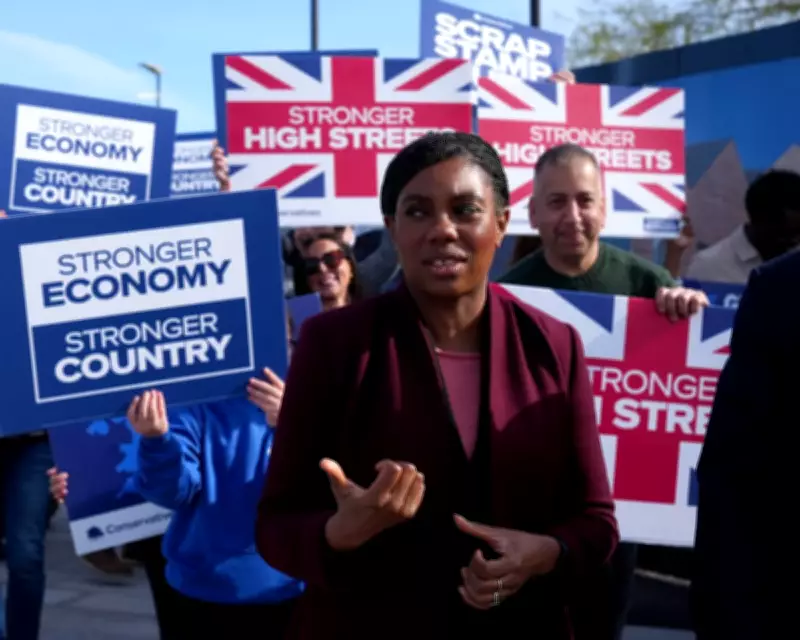
Badenoch Commits to Historic Rearmament Funded by Benefit Cap Reinstatement
Conservative Party leader Kemi Badenoch has announced a bold plan to reinstate the two-child benefit cap, redirecting the savings to finance what she describes as "the biggest peacetime programme of rearmament in our country's history." Speaking at a defence conference in London, Badenoch criticised the current government for Britain's "lack of readiness" for war, a vulnerability she claims has been exposed by recent global events.
Defence Spending Pledge and Funding Strategy
Badenoch outlined a comprehensive defence strategy that includes recruiting 6,000 full-time soldiers and 14,000 reservists, marking the largest net increase in British troops since the Second World War. The Tories estimate this venture will cost £20bn, which they plan to raise by reinstating the two-child benefit cap and reallocating funds from net zero projects. "We must look beyond this conflict in the Middle East and develop the resources we need to respond to this new era of threats," Badenoch stated, emphasising the need to reassert Britain as a global power.
Criticism of Current Government and International Relations
Badenoch has faced criticism from Labour, who accuse her of prematurely advocating for UK involvement in Donald Trump's war with Iran, a conflict that has escalated into an international crisis. She expressed concern over Trump's public remarks about the UK prime minister, noting, "I do find the nature of his public remarks very disconcerting, because everybody's watching... Iran is watching, China is watching, Russia is watching." She warned that such comments could weaken Western alliances, which she believes should be prevented.

Labour's Defence Commitments and Historical Context
In response, the Labour government has defended its decision to limit British involvement in the Iran war to defensive actions, refusing to allow the US to launch widespread attacks from UK bases. Prime Minister Keir Starmer has argued this approach serves the national interest. Labour has committed to spending 2.5% of GDP on defence by 2027, increasing to 3% in the next parliament, but faces pressure to publish a detailed defence spending plan amid reported tensions between the Ministry of Defence and the Treasury.
Labour ministers have countered by blaming years of underinvestment under previous Conservative governments, accusing them of "hollowing out" the armed forces. Defence spending under the Conservatives fell by 22% between 2010 and 2017, though it has since risen steadily and returned to 2010 levels.
Broader Implications and Political Reactions
Badenoch's proposal highlights a significant shift in Tory policy, linking social welfare cuts to national security enhancements. This move is likely to spark debate over priorities in public spending and the ethical implications of funding defence through benefit reductions. As the next general election approaches, this pledge positions the Conservatives as advocates for a stronger military, while Labour focuses on cautious international engagement and addressing historical underfunding.