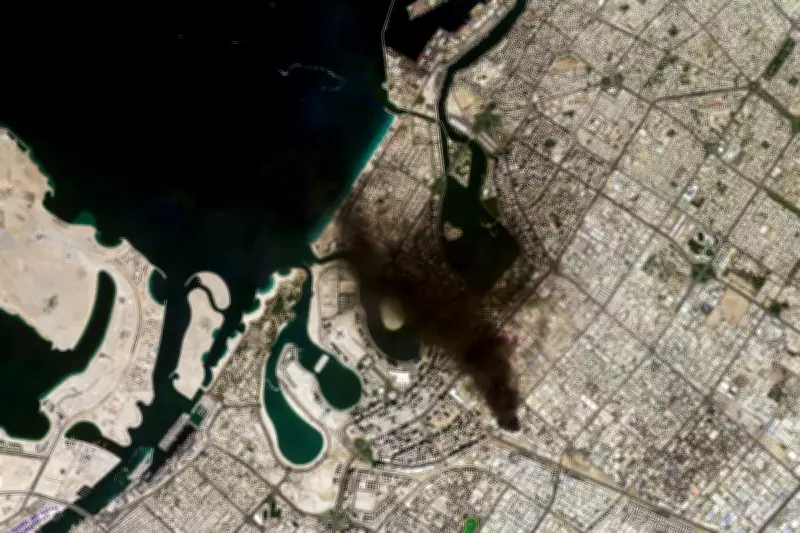
Australia has confirmed that its Al Minhad air base in the United Arab Emirates was targeted by Iranian drones over the weekend, though all Australian personnel have been reported as safe and accounted for. The incident underscores escalating tensions in the region, with Defence Minister Richard Marles reaffirming Australia's support for US and Israeli military actions aimed at preventing Iran from acquiring a deployable nuclear weapon.
Widespread Damage and Retaliation
Beyond the strike on Al Minhad, Iranian retaliatory attacks have caused significant damage in Dubai, including its international airport and the iconic Burj Al Arab hotel. Explosions were also reported on Palm Jumeirah, highlighting the broad scope of the assault. In a related development, a suspected Iranian drone struck the US embassy in Riyadh, Saudi Arabia, resulting in minor damage, following an earlier attack on the US embassy in Kuwait.
Global Economic Impact
Iran's widespread retaliation has extended to critical infrastructure, targeting Amazon data centres in the UAE and Bahrain, as well as energy facilities in Qatar and Saudi Arabia. Additionally, ships in the Strait of Hormuz have been attacked, leading to a sharp increase in global oil and natural gas prices. This disruption threatens to exacerbate inflationary pressures worldwide, affecting markets and consumers alike.

The US military has responded by blowing up an Iranian ship in the Gulf of Oman, further intensifying the conflict. As the situation develops, international observers are closely monitoring the potential for further escalations and their implications for regional stability and global security.