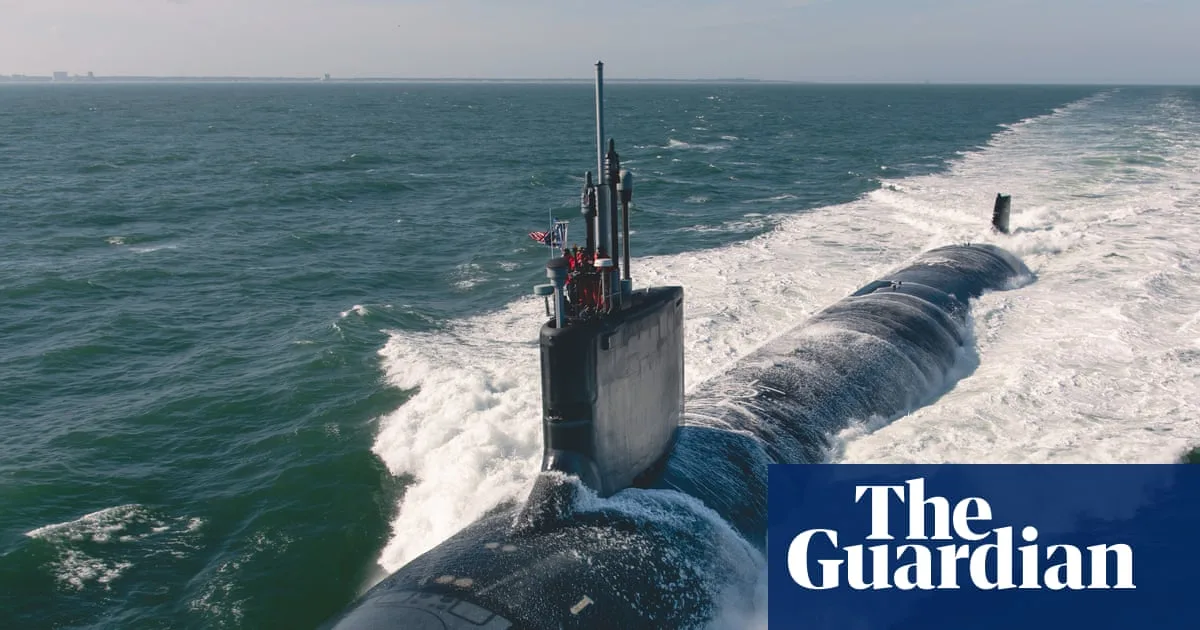
Australia Faces Submarine Void if Aukus Deal Collapses, Defence Official Warns
Australia Faces Submarine Void if Aukus Deal Collapses

Australia's Submarine Fleet at Risk if Aukus Pact is Abandoned

A senior Australian defence official has issued a stark warning that the nation could be left without any operational submarines if it walks away from the Aukus security pact with the United States and the United Kingdom. The caution comes amid intense scrutiny over the $368 billion agreement to acquire eight nuclear-powered submarines, which has faced criticism for its opacity and reliance on foreign shipbuilding capabilities.

No Alternative Plan as Defence Focuses Solely on Aukus

Hugh Jeffrey, the defence department deputy secretary for strategy, policy and industry, stated unequivocally that there is no publicly acknowledged backup plan if the promised Virginia-class and subsequent Aukus-class submarines fail to materialise. "Defence has been directed to pursue Aukus and we are pursuing Aukus and that's our plan. I would not venture into the space about 'Plan B' or 'Plan C'," Jeffrey told a Sovereignty and Security Forum in Canberra.

This declaration underscores the high-stakes gamble Australia is taking with its naval defence strategy. The country has already committed more than $2 billion of a promised $9 billion to bolster US and UK industrial capacities for submarine production, yet there are no guarantees of delivery. Jeffrey emphasised that this effort represents the fourth attempt since the 1980s to replace the ageing Collins-class submarines, with previous initiatives derailed by domestic politics.

Wide Pickt banner — collaborative shopping lists app for Telegram, phone mockup with grocery list

Former Prime Minister Raises Critical Questions

Malcolm Turnbull, the former Australian prime minister whose own submarine deal with French company Naval Group was scrapped in favour of Aukus, challenged Jeffrey on the viability of the current plan. Turnbull questioned what would happen if the United States, facing its own production shortages, cannot provide Virginia-class submarines, or if legislative restrictions prevent their sale to Australia.

"What is the government's Plan B if we do not get any Virginia [class submarines] at all because the Americans are not producing enough for their own needs?" Turnbull asked. "What is the Plan B if we end up with no new subs and we're left with the creaking hulls of the Collins?"

Expert Calls for Reconsideration Amid Delivery Doubts

Retired rear admiral Peter Briggs added to the scepticism, arguing that neither the US nor the UK can deliver the promised submarines on schedule. He advocated for Australia to abandon Aukus and "turn back" to explore alternative options. However, Jeffrey countered this perspective, warning that such a move could leave Australia completely devoid of submarine capabilities.

"If you really want to be in a position where we have no submarines then 'turn back'. I do think, speaking as an apolitical public servant, we need to get out of this relentless politicisation of defence capabilities," Jeffrey asserted. He expressed cynicism towards questions about alternatives, stressing the need to "get on with business" and avoid further delays.

Political and Industrial Challenges Loom Large

The Aukus agreement has been mired in controversy since its inception, with concerns over:

  • The lack of transparency in the multi-billion dollar deal
  • Slow shipbuilding rates in both the United States and the United Kingdom
  • Potential legislative barriers in the US that could block submarine sales
  • The extended service life of the existing Collins-class submarines, which are already operating beyond their forecasted lifespan

Jeffrey highlighted the historical pattern of failed submarine replacement programs, urging a break from the cycle of politicisation that has hampered Australia's defence planning. As the debate continues, the nation faces a critical juncture in securing its underwater defence capabilities for decades to come.

Pickt after-article banner — collaborative shopping lists app with family illustration




