Australia Appoints First Female Army Chief in Historic Military Milestone
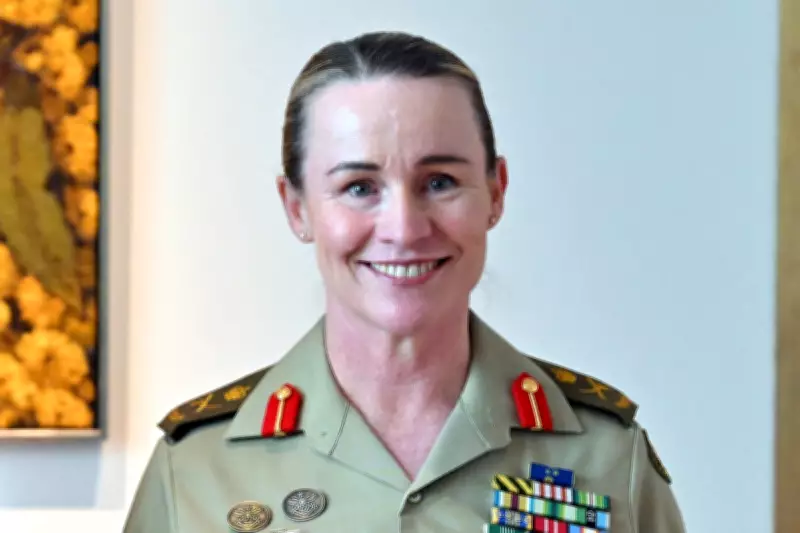
Australia has announced a groundbreaking appointment in its military history, with Lieutenant General Susan Coyle set to become the first woman to lead the Australian Army. The 55-year-old officer, currently serving as chief of joint capabilities, will assume the role of chief of army in July, replacing Lieutenant General Simon Stuart. This decision marks a profound shift for an institution that has operated for 125 years without a female commander at its helm.
A Deeply Historic Moment for the Australian Defence Force
Prime Minister Anthony Albanese confirmed the appointment, stating that from July, Australia will witness its first female chief of army in the service's long history. Defence Minister Richard Marles described the move as a "deeply historic moment," emphasising its symbolic importance with the phrase, "You cannot be what you cannot see." He further noted that Coyle's achievement will resonate deeply with women currently serving in the Australian Defence Force and those considering future military careers.
The appointment comes at a critical juncture for Australia's military, which is undergoing substantial transformation while grappling with systemic issues of sexual harassment and discrimination. Recent years have seen numerous allegations tarnish the military's reputation, including a class action lawsuit filed last October alleging failure to protect female officers from systematic abuse. Concurrently, the army is modernising its capabilities, investing in long-range firepower, drones, and advanced combat tools to meet contemporary security challenges.

Lieutenant General Susan Coyle's Distinguished Career
Lieutenant General Coyle brings over three decades of military experience to her new role. Enlisting in 1987, she graduated from the Australian Defence Force Academy in 1992 and has since held numerous senior command positions. Her operational deployments include service in the Solomon Islands, Afghanistan, and the Middle East, where she commanded Task Group Afghanistan. Prior to her current position, she served as head of information warfare and commander of Joint Task Force 633.
Since July 2024, Coyle has led as chief of joint capabilities, overseeing space and cyber domains along with National Support for Defence. Her expertise in both traditional army platforms and modern technological warfare makes her uniquely positioned to guide the military through evolving conflicts. Jennifer Parker, an expert associate at the Australian National University, remarked that this appointment "had been a long time coming and is well overdue," highlighting Coyle's comprehensive background as ideal for contemporary military leadership.
Beyond her professional accomplishments, Coyle is also a mother of three, sharing her family life with her husband, who likewise serves in the military. Her personal and professional journey underscores the changing dynamics within Australia's armed forces.
Broader Military Appointments and Gender Representation Goals
In addition to Coyle's promotion, the government announced other key military appointments. Vice Admiral Mark Hammond, the current chief of the navy, will become the head of the Australian Defence Force, succeeding Admiral David Johnston. Hammond played a pivotal role in the 2021 Aukus defence pact between the US, UK, and Australia, designed to counter China's growing influence in the Pacific. Defence Minister Marles praised Hammond's involvement in acquiring nuclear-powered submarines under the pact and his performance as navy chief since 2022.
Rear Admiral Matthew Buckley, the current deputy chief of navy, will step into Hammond's previous role as head of the navy. These changes reflect a broader strategic realignment within Australia's defence hierarchy.
Currently, women constitute approximately 21 percent of the Australian Defence Force and 18.5 percent of senior leadership roles. The ADF has established an ambitious target to increase overall female participation to 25 percent by 2030. Coyle's appointment as the first woman to lead any service branch of the military is seen as a significant step toward achieving this goal, potentially inspiring greater gender diversity and addressing longstanding cultural issues within the institution.