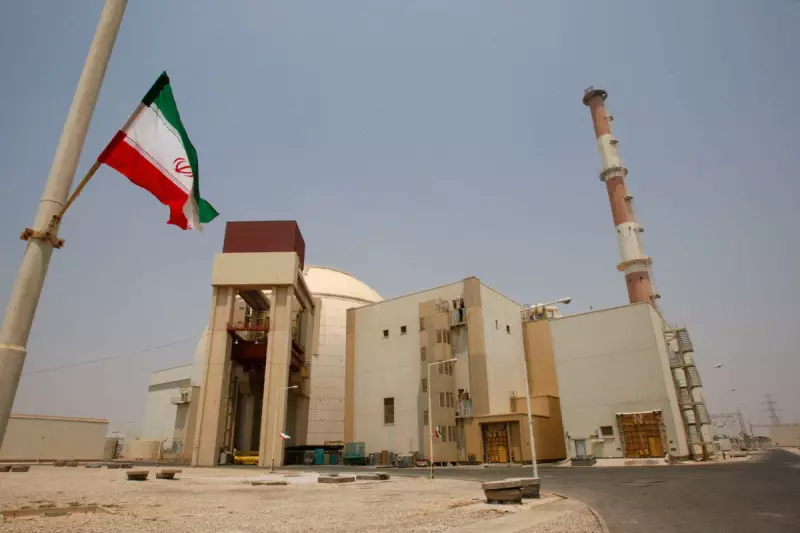
International analysts are raising urgent alarms that the escalating crisis in Iran, fuelled by internal upheaval and heightened tensions with the United States, carries significant nuclear proliferation risks. They warn that a collapse of government control could see dangerous nuclear materials fall into the wrong hands.
Chaos Could Compromise Nuclear Security
In the wake of spiralling tensions over Tehran's violent crackdown on protests, experts caution that the stability of the Iranian theocracy is under severe strain. While U.S. President Donald Trump recently appeared to step back from military action, he explicitly called on Saturday 17 January 2026 for an end to Supreme Leader Ayatollah Ali Khamenei's nearly four-decade rule. This followed Khamenei branding Trump a "criminal" for supporting Iranian demonstrators.
Amidst this volatile climate, the movement of a U.S. aircraft carrier through the Strait of Malacca, potentially towards the Middle East, adds another layer of geopolitical pressure. Analysts stress that this environment directly threatens the security of Iran's nuclear assets.

David Albright, a former nuclear weapons inspector and founder of the Institute for Science and International Security, stated that internal chaos could cause the Iranian government to "lose the ability to protect its nuclear assets." He highlighted Iran's stockpile of highly enriched uranium as the primary concern, noting the possibility of theft.
The Precarious Status of Iran's Uranium Stockpile
The International Atomic Energy Agency (IAEA) reports that Iran maintains a stockpile of 440.9 kilograms of uranium enriched to 60% purity—a short technical step from weapons-grade levels of 90%. Alarmingly, the UN watchdog confirmed in a November 2025 report that it has been unable to verify the status and location of this material since the June war involving U.S. and Israeli strikes.
A diplomat close to the IAEA confirmed on Monday 19 January 2026 that the agency still lacks information on the whereabouts of this stockpile. Albright explained this uranium would fit in roughly 18 to 20 transport cylinders, each weighable by two people, making it potentially vulnerable.
Kelsey Davenport, of the Arms Control Association, warned the stockpile "could be diverted either to a covert program or stolen by a faction of the government or the military." She emphasised this risk grows as the Iranian regime feels more threatened or destabilised, raising the spectre of materials being smuggled out or sold to non-state actors.
Reactor Sabotage and Weaponisation Possibilities
Beyond stolen materials, analysts point to other dangers. Albright warned that Iran's sole commercial nuclear power plant, the Bushehr reactor located 750km south of Tehran, could be sabotaged during internal chaos to cause havoc. He cited the 1982 ANC attack on South Africa's Koeberg station as a precedent, noting a major accident at Bushehr could see fallout reach the UAE, Saudi Arabia, and Oman within hours.
On the potential for weaponisation, experts note a bomb could theoretically be built using Iran's 60% enriched uranium, though it would be bulkier and less suited for missile delivery. Eric Brewer, of the Nuclear Threat Initiative, suggested the material is likely buried and inaccessible following U.S. strikes, and that the Supreme Leader has shown a "very high bar" for any decision to weaponise. However, the theoretical possibility remains a grave concern within the current climate of instability.