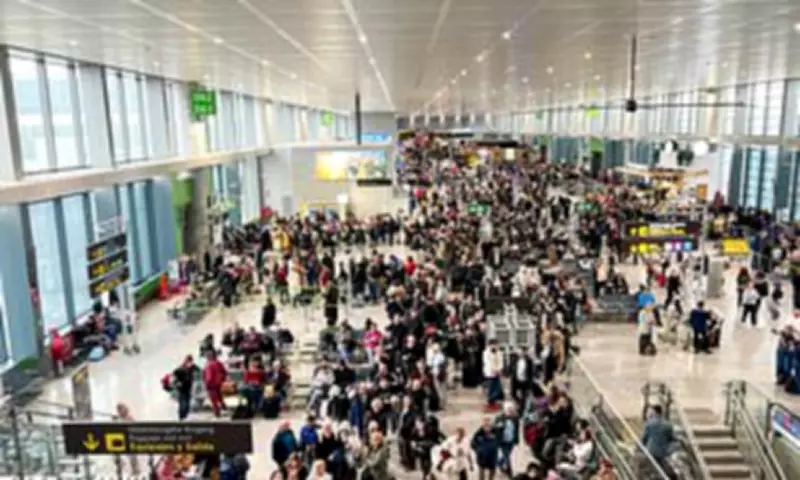
Since the full introduction of the Entry/Exit System (EES) earlier this month, travellers have faced long airport queues and some have even missed flights. In response, Spanish airports have implemented new measures to alleviate the chaos for families and individuals with disabilities.
New Rules at Spanish Airports
AENA, the Spanish airport authority, has requested that staff assist vulnerable passengers and families with young children in bypassing the queues. According to The Sun, holidaymakers in these categories will be allowed to skip the biometric machines if the queue exceeds 25 minutes, proceeding directly to passport control instead.
Impact of the EES
The new EES requires many UK passengers to register biometric details, such as fingerprints and facial recognition images, when entering the Schengen Area. These additional checks have slowed processing times at some of Europe's busiest airports, leading to significant queues.

Alicante Airport, one of Spain's busiest hubs, has been pushed to 'breaking point' due to the EES system and staff shortages, according to the Olive Press. Similarly, Málaga Airport has experienced disruptions. Last week, British holidaymaker Michelle Maguire, 38, and her daughter missed their flight from Málaga to Liverpool, eventually returning home 24 hours later at a cost of £1,000. Maguire described the airport as chaotic, with anxious travellers and crying children, and no staff assistance.
Passengers at Barcelona-El Prat Airport have reported lengthy queues during peak hours. On Reddit, one parent shared that they waited over three hours with crying children, with airport staff doing nothing to help.
Adolfo Suárez Madrid-Barajas Airport, which rolled out the EES system in October 2025, appears to have more controlled queues. Many passengers report short wait times and priority lines for children, though some machines are described as 'sensitive', requiring firm pressure on passports and fingertips.
Greece's Exemption
Elsewhere, Greece has temporarily suspended fingerprinting and facial scans to help holidaymakers avoid chaos. Eleni Skarveli, director of the Greek National Tourism Organisation in the UK, stated that the decision would 'ensure a smoother and more efficient arrival experience in Greece' and 'significantly reduce waiting times' while easing airport congestion. This move is seen as strategic to protect Greece's vital tourism sector, which relies heavily on British visitors to destinations like Corfu, Crete, and Rhodes, which can receive over 2,000 UK arrivals daily during peak season.
With no confirmed end date for the exemption, speculation is mounting that other Mediterranean countries may follow suit. Travel experts suggest the change may already be influencing holiday plans. An ABTA spokesman noted that due to the war in the Middle East, Europe is seeing increased interest as a holiday destination this year. ABTA expects Greece to rank as the fifth most popular destination for Britons this summer, behind Spain, France, Italy, and the United States. The spokesman added that it is too early to determine the impact on visitor numbers, as decisions involve multiple factors.