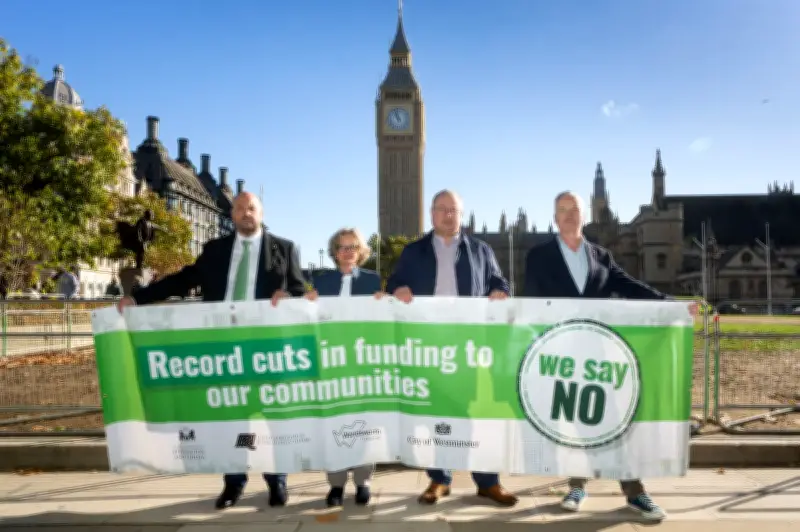
Leaders of four London councils have formally challenged Government reforms that could wipe out up to two-thirds of their funding. Wandsworth, Richmond, Kensington and Chelsea, and Westminster leaders handed alternative financial plans to the Treasury on Thursday and called on ministers to re-evaluate the overhaul of local government funding.
Three of the councils are run by the Conservative Party, while a fourth, Richmond, is Liberal Democrat-led. As many as 1.7 million Londoners are facing a hike to their council tax to plug the expected shortfall.
Funding Cuts by Borough
According to Conservative-led Wandsworth Council, the proposed measures will cut its central funding by £84 million annually, equivalent to a 40% reduction by 2030. The changes, known as the Fair Funding Review, aim to shift more cash towards areas with higher deprivation.
But Wandsworth’s administration said the reforms will force it to slash services and raise council tax. The authority is proposing to raise council tax by 94% from April, in addition to making sweeping cuts. The service reductions include shutting its cost-of-living reserve, with its £6.2 million of unspent funds. It also plans to replace the former Labour administration’s Access for All, which offered discounted access for eligible residents to local leisure, sports, cultural, and council services, with a much smaller concessionary scheme.
Impact on Other Councils
Kensington and Chelsea in west London is set to lose £108 million – or more than 40% – of its central funding over the next four years under the reforms. Resources at flagship authority Westminster City Council are due to drop by about £100 million – just over 45%. The central London authority announced this week it will lay off 520 people in the town hall’s most brutal ever staff cuts. The 15% reduction in its workforce was blamed on the “unprecedented” reduction to its budget.
Richmond, in west London, is set to be stripped of £26 million, 58% of its core funding, by 2030. Thousands of residents responded to consultations asking for feedback on the councils’ plans to challenge the reforms, which they said they are pressing ahead with to protect vital services.
Formal Challenge and Reactions
The authorities have now formally submitted their revised funding proposals, under the Sustainable Communities Act, pressing the Government to reconsider its decision. Robert Morritt, Conservative leader of Wandsworth Council, said: “Residents should not have to pick up the bill for changes imposed by Whitehall. This proposal takes our case directly to Government. We are using every route available to fight for a fairer deal and protect Wandsworth taxpayers.”
Gareth Roberts, Lib Dem leader of Richmond, said the cuts risked “pushing this council towards a financial cliff edge”. He said: “We will not stand by while Whitehall forces our residents to pay the price for a deeply flawed formula. We are taking this fight directly to Government and using every route available to demand a settlement that protects services and gives Richmond a fair deal.”
Elizabeth Campbell, Tory leader of Kensington and Chelsea, said: “I will use every tool at my disposal to fight these cuts, stand up for our residents and secure the fair deal our borough deserves.”
Labour Council's Stance and Government Response
Hammersmith and Fulham, the only Labour-led authority in London impacted by the funding shake-up, declined to join in with the action. The council said this week that it had lobbied ministers in a bid to persuade them to reconsider the funding reduction. Councillor Rowan Ree, cabinet member for finance and reform at the west London borough, said, should the cuts be delivered as proposed, it would “take extraordinary action to mitigate these changes”.
Ministers have argued that local authorities with “historically low” council tax levels will have the cash they receive from Whitehall reduced following the Fair Funding Review, forcing them to bring bills into line with national averages to make up shortfalls. In a previous statement, a spokesman for the Ministry of Housing, Communities and Local Government said: “We have consulted extensively on reforming the outdated council funding system to ensure money goes where it is most needed, following on from a long-standing consensus. We’re also protecting councils through transitional arrangements so no area faces a cliff edge.”