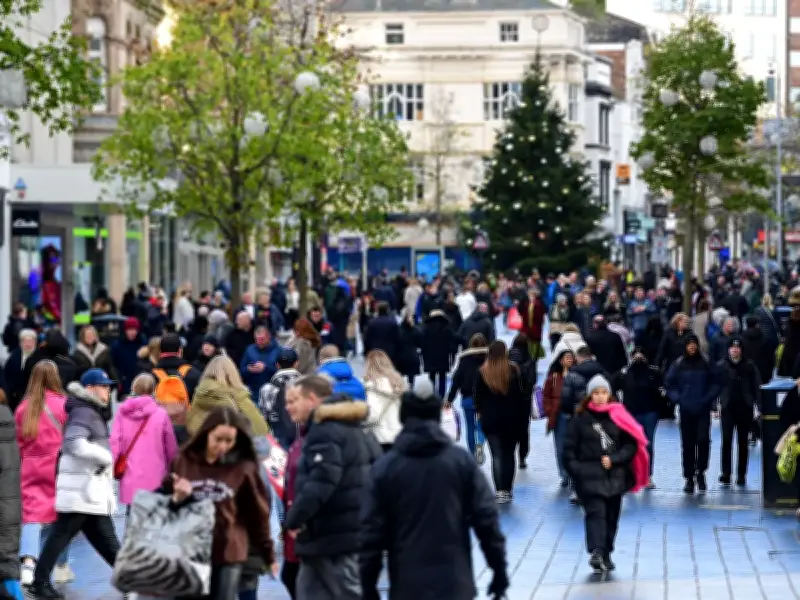
Liverpool's population declined in the year to mid-2025, as UK population growth slowed to its lowest rate in almost 30 years, new Office for National Statistics (ONS) figures show.
The UK's total population reached an estimated 69.5 million people in mid-2025, an increase of nearly 228,000 over 12 months, an annual rise of just 0.33%. Excluding 2020, when the Covid-19 pandemic virtually halted cross-border movement, this is the slowest rate of growth since 1998.
Sharp drop in net migration
The slowdown follows consecutive years of major population growth. In 2024, the population grew by 668,000 people (0.97%), three times as fast as in 2025. In 2023, it increased by 908,000 (1.34%), and in 2022, by 702,000 (1.05%).
The slowdown was mainly due to a fall in net international migration, which dropped from 652,000 in 2024 to 223,000. Natural population growth - the difference between births and deaths - contributed little to the overall rise. Last year, 652,400 births were recorded across the UK, the lowest number in more than 40 years.
Over the same period, there were 647,500 deaths, meaning that net natural change added just 4,900 to the UK population.
Merseyside picture
The picture was slightly different in Merseyside, where there were 2,217 fewer births than deaths, a natural population decline. However, that was offset by a net gain of 4,826 people who migrated to Merseyside from overseas, and of 4,728 who moved from other parts of the UK.
Liverpool was the only area of Merseyside to see a population decline, of 287 people (0.06%). Knowsley was Merseyside's fastest-growing area, with a population boost of 2,009 people (1.24%).
Sefton saw an increase of 2,285 residents (0.80%), St Helens of 1,493 people (0.79%), and Wirral of 1,687 (0.51%).
National trends
Of the 361 local authorities across the UK, 257 (71%) saw their populations grow, while 104 (29%), including Liverpool, recorded a decline.