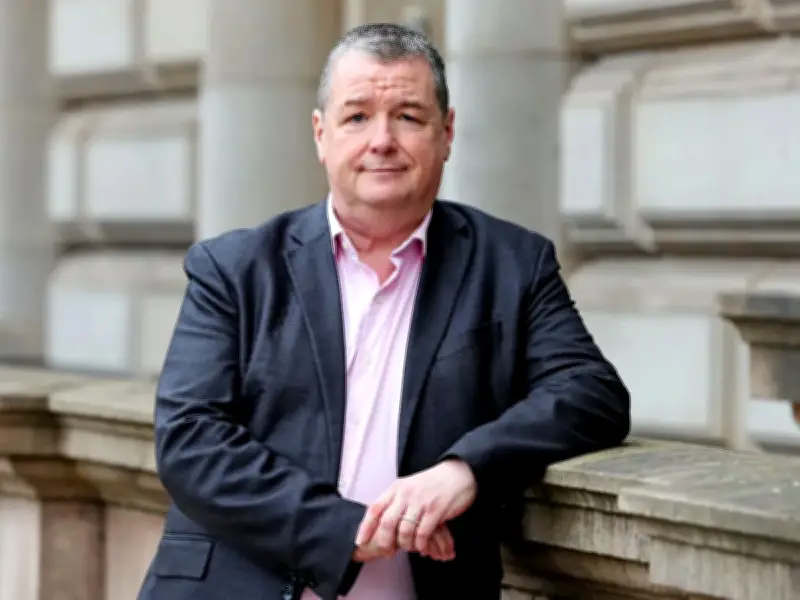
Glasgow is "not a city in decline" and will not go bust, its new council leader has insisted. Ricky Bell, who took over as leader of Scotland's largest local authority two months ago, acknowledged the council faces serious financial pressures from an ongoing homelessness crisis and an unresolved equal pay dispute.
In an interview with the Record, Bell dismissed some social media criticism about the condition of the city centre as "nonsense" but accepted it had to be made safer to help businesses and grow the night time economy. Bell, who was born in Govan, succeeded Susan Aitken and admitted the job of running the city is "challenging".
Financial Pressures and Homelessness
The council is dealing with a growing multi-million pound annual bill for temporary accommodation, driven in part by refugees arriving in Glasgow from elsewhere in the UK and a wider lack of affordable rental properties. The SNP Government has committed to paying part of the costs, with details expected to be confirmed at the Holyrood budget on December 3.
A report by the Accounts Commission in September warned Glasgow's finances were in a "critical" position due to "rising homelessness, growing demand for services, persistent high poverty levels and unresolved equal pay claims". Bell, who has a background in business, insisted the city was not on the verge of going bust. "We are not in that space at all," he said.
City Centre Reputation and Safety
The city centre's reputation was dented by a recent BBC Scotland Disclosure documentary which followed some of the many street protests that took place over the summer, as well as persistent anti-social behaviour in and around St Enoch and Argyll Street. Bell said this had to be tackled in the short term to achieve his ambition of growing the city's economy.
"My view is the council should be there to enable business, to get out the road and let them get on with it," he said. "Businesses growing helps the city and its economy. No government, either Scottish or UK, is going to be in a position any time soon to give councils lots of money. So we need to think of other ways, and part of that is growing the economy and making the city more successful."
Bell said he is talking to the Government about business rates, particularly for hospitality. Asked how the council could make life easier for businesses, he said: "Obviously, making the city centre a safer place. There is a real discussion about that just now - but I think some of what is being said is nonsense. We are not a city in decline. We are not being overrun."
Night Time Economy and Future Plans
Bell accepted work was required around the city-centre junction where Argyle Street, Union Street, and Jamaica Street meet. "Four Corners is an obvious one," he said. "But when I was a young man, Four Corners was somewhere you didn't go often - unless you went to Boots to meet somebody. So it's been a challenge for the city. We are trying to work with the police and various different people. Even if there is a perception the city centre is not safe, it means folk might decide not to come into town on a Friday or a Saturday night."
"Glasgow has a fantastic night time economy. We need to protect that and make sure those businesses are looked after," he added. "This is a challenging job, but I was deputy leader for four years, so I didn't go in blind. I knew exactly what I was getting into."