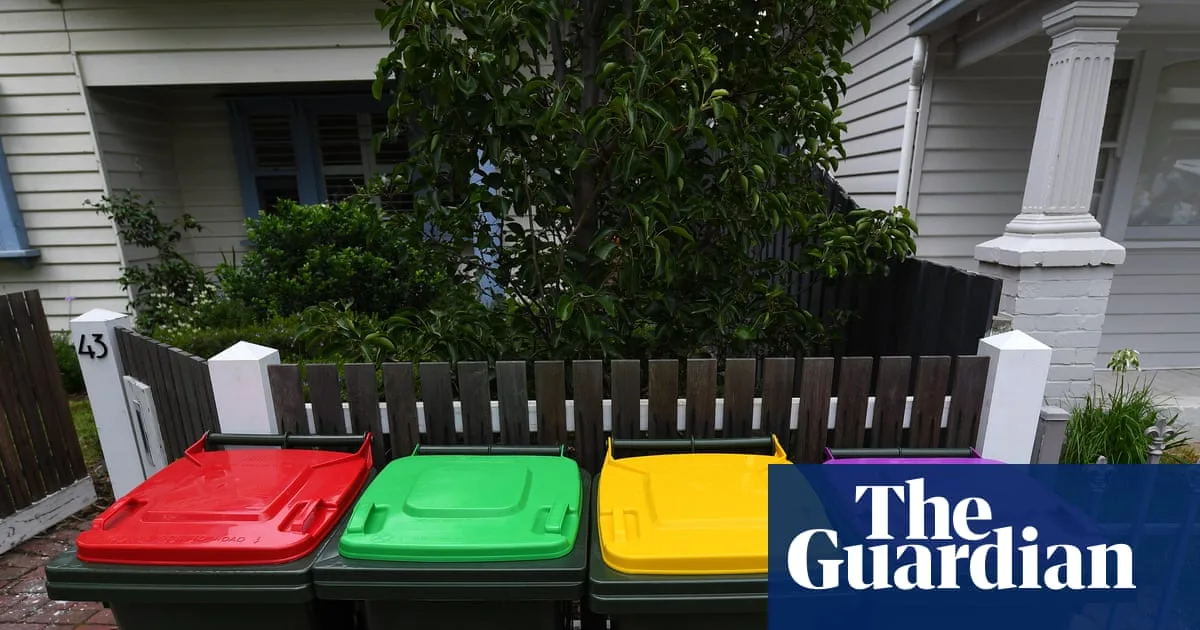
More than three dozen Victorian councils are urging the state government to reconsider the mandatory rollout of a four-bin household waste system, citing high costs and concerns over practicality. The system, which includes a purple-lidded bin for glass, was introduced in 2020 with the aim of reducing landfill waste. However, local governments now argue that the additional service may be unnecessary, especially given the existing container deposit scheme.
The deadline for all 79 councils to implement the four-bin system is July 2027, but 35 councils have formed a coalition to demand a pause. They want the government to explore alternatives, such as expanding the container deposit scheme to accept a wider range of glass items. The coalition has commissioned independent research estimating that the purple bin service could cost a typical council $4 million to implement and $1.4 million annually to operate.
Criticisms from residents and councils include a lack of space for four bins, low usage of glass bins in areas where they have already been introduced, and the environmental impact of additional collection trucks. Several councils, including Boroondara and Stonnington, have voted to delay the rollout despite the legal requirement. Manningham mayor Jim Grivas called on the state government to listen to these concerns and postpone the deadline.

Victoria's recycling reforms were launched after waste export restrictions and the closure of major recycling company SKM Recycling. Currently, 42 councils have implemented separate glass recycling. The national glass recycling rate is about 61%, with Victoria achieving 71%. South Australia leads at 73%. Jeff Angel, director of the Total Environment Centre, noted that separating glass from other recyclables reduces contamination and improves recovery, but argued that container deposit schemes offer cleaner material and added incentives.
Victoria's container deposit scheme, launched in 2023, currently accepts glass bottles but not wine bottles or food jars. Other states like Queensland have expanded their schemes to include wine and spirit bottles, and several others plan to follow. The coalition of councils believes expanding the deposit scheme could be more effective than a mandatory four-bin system.