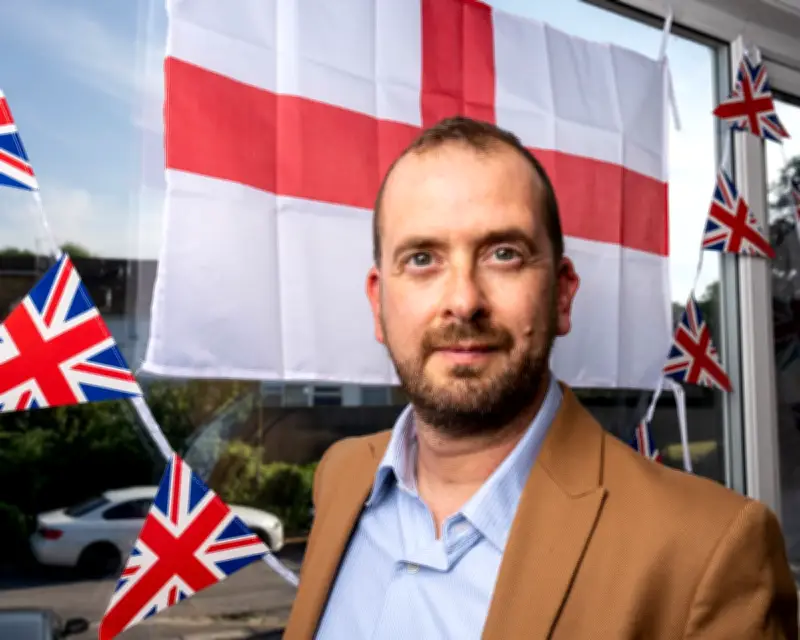
Tim Bearder, the leader of Oxfordshire County Council, has secured a landmark high court injunction against activists hanging English flags from lampposts without permission. He described the ruling as 'a blueprint for other councils wishing to stop this irresponsible behaviour.'
Legal Victory Amid National Debate
The case, heard at the Royal Courts of Justice, centred on whether unauthorised flag displays on public infrastructure should be allowed. The court decided against activists from the Raise the Colours group, who had been hanging St George's crosses and union jacks along roadsides. The group's actions had sparked a wider debate about patriotism and public safety.
Bearder, a Liberal Democrat councillor, said the council had a legal duty to maintain a safe highways network. 'They were doing it in very dangerous situations on busy roundabouts with just a ladder,' he told the Guardian. The council had spent about £50,000 removing flags before seeking the injunction.
Escalating Tensions
Tensions between the council and Raise the Colours began in summer 2023 when the group launched a 'nationwide campaign to cover Britain in flags.' The movement started in Birmingham and spread to Worcester, Greater Manchester, and Newcastle. Oxfordshire council initially took a light-touch approach, hoping the campaign would 'blow over,' but later deemed it untenable.
In its high court claim, the council said contractors removing flags faced 'hostility and obstruction,' including two incidents where they were 'obstructed, harassed and intimidated.' Contractors were followed to their yard, and vehicles were used to block their working platform. Bearder said some staff refused to take down flags, while others did so at night wearing balaclavas and using unmarked vans to avoid confrontations.
Injunction and Aftermath
The council issued a formal legal notice in March, calling the flag displays 'an act of intimidation and division.' Residents reported feeling 'distressed, unwelcome and unsafe in their own neighbourhoods.' After sending pre-action letters to named individuals in May, the council sought an injunction as the most cost-effective solution.
At the hearing, four people—Ryan Bridge, Trudy Wells, and Ben Cullen—agreed to stop hoisting flags on lampposts and not to encourage others to do so. The judge granted the council a high court injunction.
Bearder said he had received hundreds of abusive emails and messages since the ruling, which he attributed to misinformation that the council banned all flags. 'We are very explicitly not about banning people who want to fly the flag on their own private property,' he said. 'We fly the flag on our own council buildings and we're very proud to do so.' He added that he had displayed the St George's flag at home during the World Cup.
Broader Implications
The case has drawn national attention, with Reform UK MP Richard Tice accusing the Liberal Democrats of hating England, and former Premier League manager Harry Redknapp criticising 'stupid councillors.' Bearder dismissed the culture war framing: 'It's not a culture war... We're very explicitly trying to maintain a neutral space for our residents, a safe space for our residents.'
Bearder confirmed that other councils had contacted Oxfordshire to learn from their approach. Birmingham City Council said it would remove unauthorised flags and consider legal action. In a video after the hearing, Bridge called the injunction 'horrendous' and said he was being 'shut down.'