

Apple's Defining Year: 2026 Could Reshape the Tech Titan's Destiny
Apple is poised to embark on what may become the most consequential year in its recent history. The imminent launch of its first significant products in early March 2026 could set the stage for a decade of profound transformation, potentially altering the company in unforeseen ways. This pivotal moment arrives as Apple grapples with internal shifts, technological pressures, and evolving public perceptions.
The March Launch: More Than Just New Products
During the first week of March, Apple will unveil a suite of new devices, rumored to include a more affordable iPhone, updated iPads, a range of new Mac computers, and innovative displays. While the exact lineup remains uncertain, the event symbolizes something far greater than mere product announcements. It marks the commencement of a year that might irrevocably shape Apple's future direction.
The launch week itself will be unconventional. Breaking from its traditional live events, Apple is hosting press gatherings in New York City, London, and Shanghai. Speculation suggests products could debut via website announcements prior to these events, reflecting a shift in strategy. This unusual approach kicks off what promises to be a transformative year at the midpoint of a tumultuous decade.

Contradictions and Criticisms: Apple's Current Crossroads
Throughout the 2020s, Apple has solidified its financial dominance, achieving record profits and establishing itself as a formidable force in American corporate history. Yet, recent years have witnessed growing discontent. Critics argue the company prioritizes control and profits over product excellence, particularly regarding its restrictive App Store policies and developer fees.
Prominent commentator John Siracusa highlighted these concerns in his essay "Apple Turnover," suggesting the company has lost its innovative edge. Similarly, John Gruber, a longtime Apple supporter, penned a blog post titled "Something is rotten in the state of Cupertino," warning of potential collapse if mediocrity persists. These critiques extend beyond technical issues to fundamental questions about Apple's corporate identity.
Executive Shakeup and AI Challenges
Recent months have seen significant executive changes, signaling possible internal restructuring. Jennifer Newstead joined as general counsel, while environmental head Lisa Jackson retired without replacement. Most notably, John Giannandrea, head of artificial intelligence and machine learning, departed amid growing scrutiny of Apple's AI capabilities.
Despite Tim Cook's insistence that machine learning has long been central to Apple, the company has faced perception challenges. While competitors like Google's Gemini and OpenAI's ChatGPT generated excitement, Apple's "Apple Intelligence" features, announced in summer 2024, arrived late and underwhelmed, reinforcing narratives of technological lag.
Leadership Uncertainty and Political Entanglements
Speculation intensifies regarding Tim Cook's future as CEO. Having led Apple since 2011 following Steve Jobs' death, Cook's tenure saw the company become history's most valuable public entity, with successful launches like the Apple Watch and AirPods. However, recent setbacks—including the canceled car project, disappointing Vision Pro headset reception, and perceived AI underinvestment—have revived concerns about innovation stagnation.
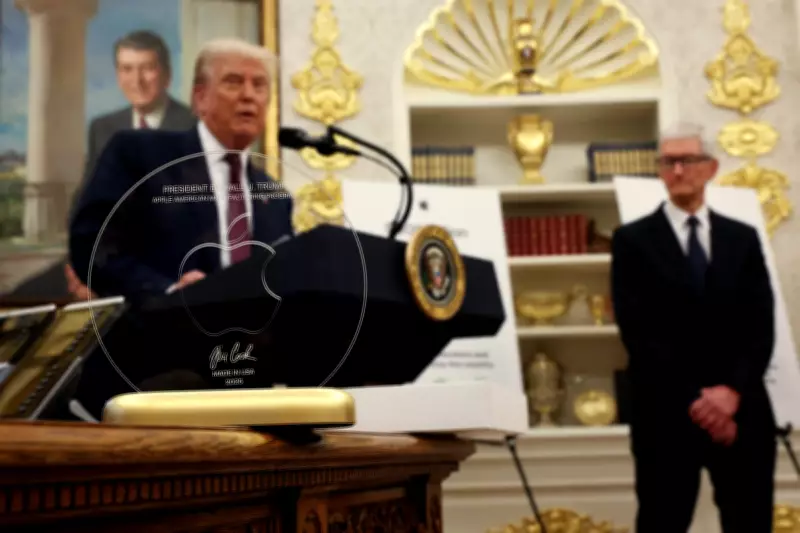
Cook's political positioning adds complexity. Traditionally advocating for environmentalism and privacy, he has recently cultivated closer ties with Donald Trump's administration. A notable example was presenting Trump with a commemorative glass trophy celebrating Apple's American manufacturing plans, a move interpreted as political flattery. This alignment yielded tariff exemptions but created discomfort for a company proud of its human rights stance.
The Succession Question and Historical Parallels
John Ternus, Apple's hardware chief, emerges as a potential successor. Overseeing successful product launches and the transition to custom-designed chips, Ternus enjoys internal and analyst respect despite limited public visibility. His potential ascension coincides with Apple's broader shift toward pre-recorded events and diverse staff representation.

Apple's current challenges recall its near-bankruptcy in 1997, before Steve Jobs' return sparked a renaissance culminating in the iPod's 2001 release. That turnaround defined modern Apple, yet the company retains operational leanness, avoiding Silicon Valley perks like free employee lunches. This frugality reflects an enduring awareness of past vulnerabilities.
As 2026 unfolds, Apple stands at a crossroads. Product launches, leadership decisions, and strategic directions will determine whether this year becomes a footnote or a foundational chapter in the company's evolution. The outcomes could redefine Apple for the next decade and beyond.





