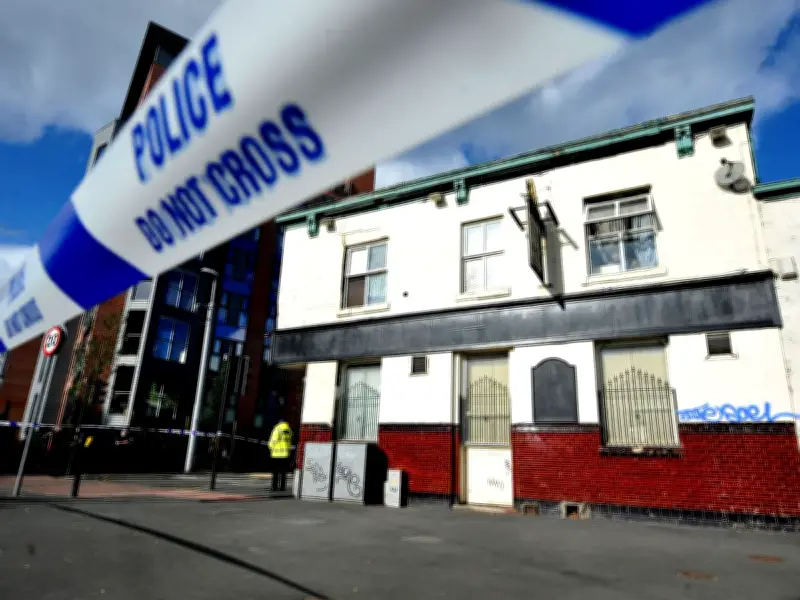
The Bank of England pub in Ancoats, a 200-year-old building at the centre of a notorious unsolved murder case, is set to be demolished due to safety concerns. The pub, which has stood empty since around 2012, was once owned by Jimmy 'The Weed' Donnelly, a member of Manchester's Quality Street Gang. In 2016, it became the focus of a high-profile murder investigation when police searched for the body of missing Martin Joyce.
Background of the Unsolved Case
Martin Joyce, then 29, of Gorton, was last seen at the Pollard Street pub in September 1999. Seventeen years later, police dug up the cellar of the Bank of England after receiving 'credible' information that Mr Joyce had been killed during a fight and his body buried there. However, the Manchester Evening News revealed that Greater Manchester Police (GMP) had been informed three years earlier about the possibility of Mr Joyce's body being in the pub and did not act.
Nothing was found during the two-week police excavation. The disappearance of the father-of-one remains unsolved, and the case is with GMP's cold case unit. In 2018, a reward of £20,000 was offered for information leading to a resolution. Detective Chief Inspector Stuart Wilkinson told the Manchester Evening News that police had made exhaustive 'proof of life' inquiries, including checks with health authorities, HMRC, passport control, and retail loyalty cards, without finding any indication that Mr Joyce was still alive. They also investigated several possible sightings, as far away as Scotland, which turned out to be false.

Statements from Family and Pub Owner
In 2016, Mr Joyce's sister Helen McDonagh recalled visiting him a week before he disappeared. 'I gave him a drink in a steel cup and a roll-up cigarette, and he made a comment saying he was better off in Strangeways,' she said. 'We were all having a laugh and I remember it as a great time. He was fine. He had no intention of disappearing.'
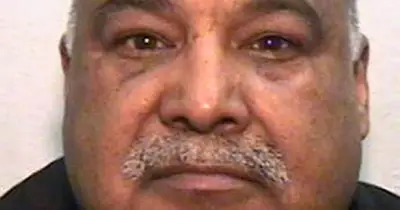
Jimmy Donnelly, who was the licensee of the Bank of England pub when Mr Joyce disappeared, said there were 'violent' but short-lived problems with the traveller community around that time. 'When Martin Joyce came in he always seemed to be on his own,' said Mr Donnelly, who died in August last year aged 84. 'I do not recall seeing him with any other people. He was one of many members of the travelling community that came into the pub and I knew them very well.'
Structural Decline and Demolition Plans
Standing on the corner of Carruthers and Pollard Street, the Bank of England opened in 1830 as one of Ancoats' first beer houses. Over the decades, it served mill workers and football fans heading to the Etihad Stadium after Manchester City moved there. Today, the pub is boarded up, covered in graffiti, and has trees growing from its masonry. Concerns about safety were reported to the council when parts of the building began collapsing.
Local councillor Chris Northwood posted a video on Facebook stating that the pub's interior structure had 'started collapsing' and questioned whether barriers in place were 'safe enough' to protect passing pedestrians and motorists. She added, 'It's a real shame to see these old buildings in Ancoats, part of its history, fall into wrack and ruin and now the whole building is going to be demolished. There is a developer who owns this land, they have planning permission to build some flats here.'
Council Action and Future Development
A Manchester council spokesperson said: 'Manchester council's building control team responded to reports in May that the former public house property presented a threat to public safety due to falling debris. The site owner has cordoned off the adjacent footpath to limit risk to the public. Building control officers have since met with owners to undertake a structural report and a section 78 order was issued requiring them to demolish the remaining structure in line with the council's responsibility for public safety.'
In 2022, planning permission was sought to demolish the pub and surrounding industrial units to make way for 193 new flats in a pair of eight and four storey blocks. The application is still under consideration. GMP and the developers, Kamani Property, have been approached for comment.