
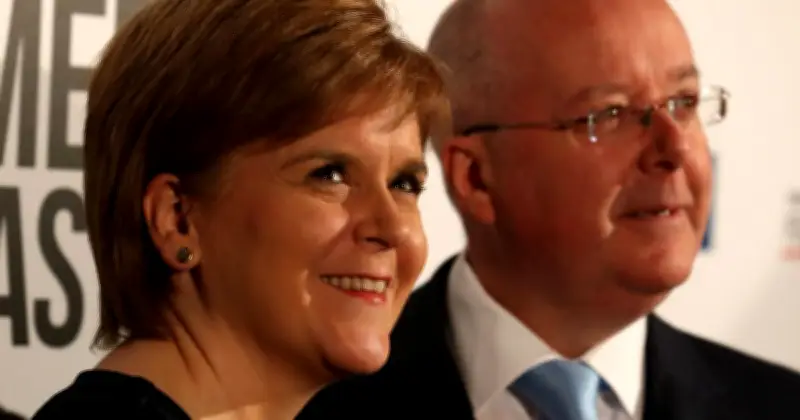
The Scottish National Party has become a brake on independence, as the scale of the betrayal of supporters is exposed by the Peter Murrell embezzlement scandal. SNP First Minister John Swinney faces the challenge of persuading Scots who cherish the dream of independence to campaign and stump up cash, in the wake of revelations that the ex-chief executive spent more than £400,300 on items including games consoles, Le Creuset dishes, a home weather station, lawn seed and a luxury motorhome.
Murrell's Spending Spree and Prison Sentence
Nicola Sturgeon's estranged husband Peter Murrell is now starting a prison sentence for embezzlement. Citizens battered by the cost of living crisis watched in disgust as the details of his spending spree were revealed. The spectacle of Murrell being led away in handcuffs is far from the end of this crisis. For decades, the SNP has been the engine of the independence movement, but now its reputation for discipline, good governance, integrity and transparency is wrecked.
Impact on Independence Campaign
SNP stalwarts may complain that their party is held to a higher standard than others, but it has the task of showing the world what an independent Scotland would be like. The Scottish Government is already entrusted with a raft of powers, and the challenge for the SNP is convincing voters to move from devolution to an independent nation state. It is hard to persuade voters to take this leap of faith when the stench of corruption hangs over the party that runs the government.
Polling and Electoral Setbacks
In May, polling by Ipsos showed a narrow majority of voters opposed independence (52% v. 48%). The SNP has led the Scottish Parliament since 2007 but has failed to convince a thumping majority of the electorate of the case for breaking away from the UK. The loss of the Westminster constituency of Aberdeen South last week to the Tories is an SOS message from voters dismayed at the collapse of the North Sea energy sector on Labour and the SNP's watch.
Internal Party Conflicts
First Minister Mr Swinney will hope he can avoid the fate of Sir Keir Starmer. The SNP succeeded in returning to Holyrood as the biggest party in May, but with just 38% of the constituency vote. It is not that Scottish voters are excited by the SNP's offering, but that there is no alternative party of government the nation can unite around. As the years roll by towards the next Scottish Parliament election, extreme familiarity may breed contempt.
Mr Swinney can expect bitter conflict within the party if independence grows less likely on its watch. Generations of campaigners did not trudge the streets delivering leaflets just so a new class of politicos could pocket generous salaries and claim expenses in Edinburgh; they want independence in their lifetime. The high command can expect fury if they are blamed for sabotaging the party's ultimate mission.
Geopolitical and Economic Realities
The world has changed radically since Scots voted by 55% v. 44% to reject independence in the 2014 referendum. Russia had launched its first invasion of Ukraine before that vote, but Europe is now on a war-footing. Scotland plays an indispensable role in the defence of the UK, with Britain's nuclear submarines based at Faslane. Unionists will warn there will be rejoicing in the Kremlin if the UK fractures.
Scots also appreciate the difficulty of rejoining the European Union and negotiating an open border with the rest of the UK. Brilliant minds devised a fix to avoid customs posts between Northern Ireland and the Republic, but nobody would pretend the present arrangements represent perfection. Scottish businesses would be dismayed at obstacles to trade with England in this era of non-growth.
Everyone still living with the consequences of the turmoil following Liz Truss's mini-Budget will steer clear of any constitutional change that could trigger financial chaos. Falling North Sea revenues meant Scotland ran a deficit of £26.2 billion in 2024-25 – 11.6% of GDP, compared with a UK figure of 5.1%.
The Dream Fades
Devolution has not unlocked a utopia in Scotland. Scots know that an independent Scotland would not be a paradise; the question is whether the potential benefits justify the risk. There is no automatic link between independence and more virtuous government. The Murrell scandal shows that a party committed to independence is not immune to the temptations of power.
The dream of an independent Scotland once united Leftish progressives such as Nicola Sturgeon and social conservatives like Kate Forbes in a single party. But people who still believe independence would unlock a fairer, kinder, healthier, richer and happier nation will increasingly ask whether they would be better off investing their time, money and hope in an institution other than the SNP.




