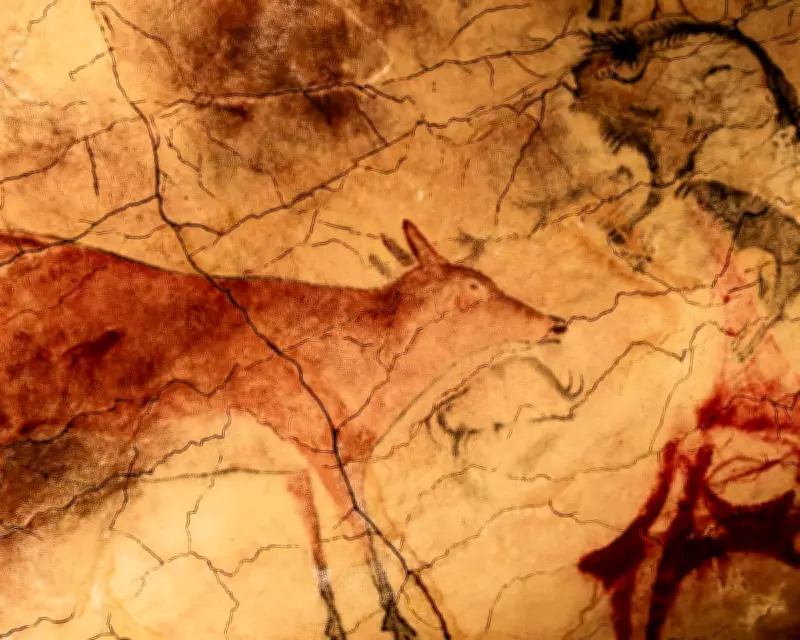
For tens of thousands of years, the magnificent Palaeolithic artworks of Altamira cave remained hidden from human eyes. When rediscovered, onlookers marvelled at their vivid beauty. One of the world's leading experts recently took a journalist on an exclusive journey into this prehistoric sanctuary.
Meeting the Expert
Diego Garate Maidagan, a professor of prehistory and Palaeolithic art at the University of Cantabria, is among the very few humans allowed to enter Altamira. He told the journalist he had been inside the cave just the week before, furthering his lifelong investigation of the techniques used by early Homo sapiens painters.
The History of Altamira
About 34,000 years ago, our ancestors began creating frescoes with chiaroscuro effects in the subterranean vaults. The cave remained in use for millennia until a rockfall sealed the mouth. In 1868, a curious gun dog clawed its way across the threshold, leading to the rediscovery of the first such prehistoric gallery seen by modern eyes.

The sophistication of the art led some experts to declare it a hoax, but similar finds in France later proved them wrong. Pablo Picasso is said to have remarked, "After Altamira, all is decadence." The site opened to the public in 1917, but closed permanently in 2002 due to damage from visitors' breath. A replica cave was created nearby, and today only select scholars have access to the original.
The Art and Its Preservation
Garate's specialism focuses on the etching technique used by artists, who employed flint blades to outline figures before applying ochre and charcoal. The colours at Altamira remain remarkably vivid, preserved by the near-quarantine conditions imposed by the ancient landslide.
Recent thinking suggests that our ancestors painted across western Europe, and what survives as "cave art" is only what remained on the deepest, darkest surfaces. Luck and geology left a few great sanctuaries like Altamira, while others lost their pigments to bacteria, calcite, or erosion.
Exploring Basque Caves
In the Basque Country, Garate has led a "little revolution" by training speleologists to spot barely visible engravings. Using angled head torches and adjusted gazes, they have revealed ghost portraits of prehistoric animals all over the region. Garate himself has found two bison and a horse at Mount Lumentxa.
The journalist visited a "clean" cave called Isuntza, used as a laboratory for field experiments. Here, researchers test theories on prehistoric image-making, measuring luminous intensity and radius of action from burning different woods and fats. One experiment involved handprints made using bird bones as blowpipes to spray ochre.
The Meaning of Cave Art
Belgian PhD candidate Olga Spaey believes rock art was "kind of religious," a widely held view among researchers. However, the quest for meaning remains elusive. "We keep gathering more information, and I sometimes think we're losing sight of what we're looking for," she said. "The quest for meaning, you could say."
Spaey added, "I love caves. They take you out of life, out of time, into this complete darkness. They are dangerous. You could die. But that's a very human feeling, to be cold, to be scared, to be listening out for noises."
Atxurra Cave: The Champions League of Rock Art
Garate led the journalist to Atxurra cave, where he discovered engravings that qualify for "the Champions League of rock art." The inward journey took about 40 minutes for stone age pioneers with torches and lanterns. The journalist's expedition moved faster, but still felt the temporal disruptions of spelunking.
Inside, Garate pointed out a forest bison, its shape traced from point to point like constellations. He showed where a flint blade was found, likely used to carve an ibex. The artists exploited pre-existing scratches from a bear claw to form a reindeer antler. Another bison looked directly at them, its face composed along dents and bulges in the rock.

At the Ledge of the Horses, three horses were etched above three fireplaces. Garate explained that flames would make the horses seem to run, like a theatrical performance. He said, "We know it was important, because they invested so much time, effort, risk, and resources to bring people here. But what they were saying, the significance of the message... we don't know, and we will never know."
The Broader Context
The journalist reflected on the meaning of cave art, influenced by books like The Dawn of Everything and The Humanoid Stain. The latter observed that animals were represented with reverential detail, while human forms were rare and looked like hapless stick figures. The author concluded that we have lost the ability to laugh at ourselves, and may not survive unless we get the joke.
Israeli prehistorian Ran Barkai, who visited Atxurra, believes that early Homo sapiens had it better than we do. "It was a picnic for them," he said. He thinks we have made more mistakes, losing the connection they had to the world. "They led the way quite nicely and successfully, and we got... distracted. We took another path, which is now leading us to a dead end, maybe."
Conclusion
Garate compares the art to Soviet propaganda posters or Egyptian hieroglyphics, governed by codes and systems of representation. He speculates that this activity required complex logistical preparation, implying surpluses and hierarchy, which might help understand the origins of inequalities in humanity.
"Whatever picture of Palaeolithic culture Garate had been composing in his own work, it did not seem much like an anarchistic picnic," the journalist wrote. "And if things have gone wrong for our species, he was inclined to think it started earlier than others would have it."