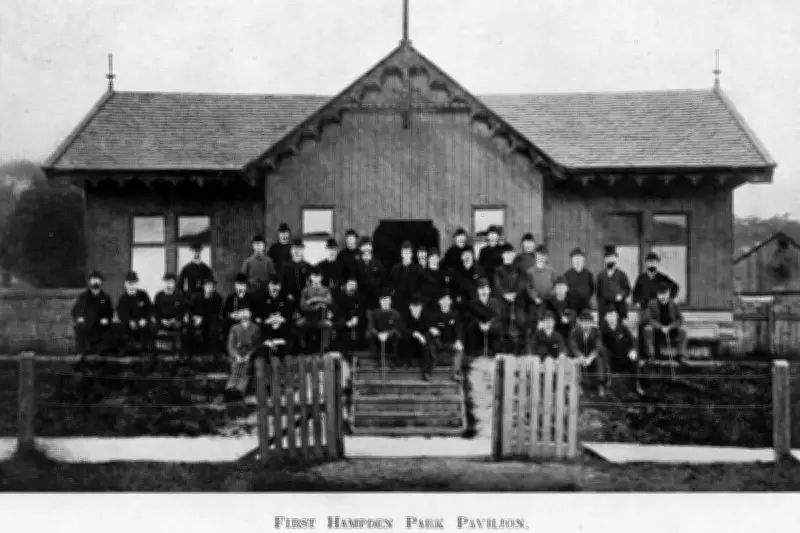
Historic Environment Scotland (HES) has designated the remains of the 19th-century pavilion at First Hampden in Glasgow as a scheduled monument. The site, often described as the "belly button of world football," is recognised as the world's first purpose-built international football ground.
Significance of First Hampden
The wider site served as the home ground of Queen's Park FC, Scotland's oldest football club, which played a pivotal role in the development of the sport. The first match at First Hampden took place on October 25, 1873, and it later hosted Scottish Cup finals. It became the national team's home in 1878 and was the venue for Scotland's 5-1 victory over England in 1882.
Archaeological Discovery
Archaeologists confirmed the pavilion's location through a ground-penetrating radar survey in 2021. The scheduling aims to preserve Scotland's most significant sites and monuments in their current form for future generations.

Public Support
The designation followed a public consultation that revealed clear support for the proposal. Early developments at First Hampden included fencing, pay gates, and a rope around the pitch. Terracing was added in 1876, and the pavilion was installed in 1878.
Expert Comments
Dara Parsons, head of designations at HES, said: "Football is Scotland's national sport, and a key part of the identity of communities all over Scotland. It feels timely to recognise the central role that Scotland played in the development of the sport, and the place of First Hampden within that story."
Ged O'Brien, football historian and founder of the Scottish Football Museum, added: "The First Hampden is the home of the world's first purpose-built international ground. Every stadium that hosts a World Cup game can trace its architectural roots back to that small corner of Glasgow."
Graeme Brown, engagement director of Football's Square Mile, which proposed the designation, said: "We are delighted that our designation application has been successful. We see it not as a lost stadium site, but as a living and breathing asset within Scotland's global footballing heritage."