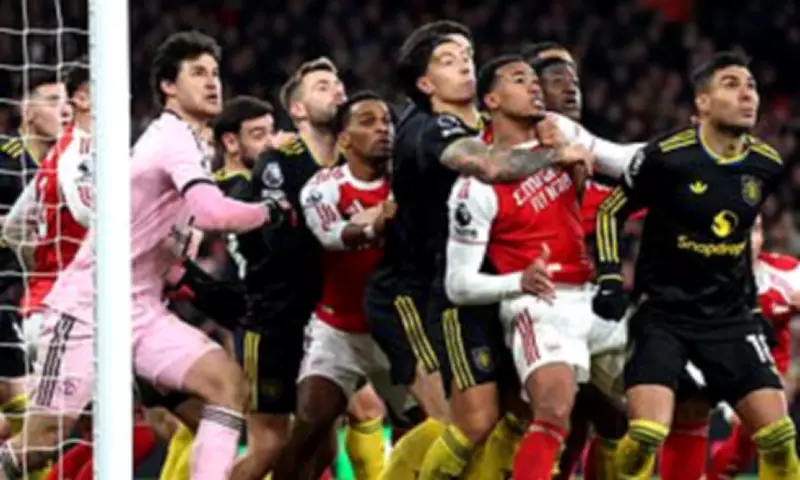
A groundbreaking regulation, informally dubbed the 'anti-Arsenal law', is set to be implemented at the upcoming World Cup, with an England goal serving as a case study for the type of play officials aim to eliminate. Set pieces have become increasingly pivotal in modern football, particularly in the Premier League, prompting FIFA and the International Football Association Board (IFAB) to clamp down on pushing and shoving during these situations.
New Rule Details
The new rule will penalise players who obstruct or prevent an opponent from playing the ball during free kicks and corners. Originating from basketball, this law effectively prohibits players from acting as blockers. Crucially, players can be penalised for this offence before the ball is even kicked. The changes will come into effect for the World Cup and all major leagues starting from the beginning of July.
England's goal against Uruguay in a friendly match in March, scored by Ben White, was highlighted as a goal that would have been disallowed under the new regulations. In that instance, players such as Adam Wharton and Harvey Barnes were seen blocking defenders from the corner. The rule is expected to significantly impact Premier League sides, with Arsenal's physical approach to set pieces this season being particularly noted; the Gunners have scored 25 set-piece goals in the Premier League.

Additional World Cup Rule Changes
The new blocking rule is just one of several changes introduced for the World Cup, which begins on June 11. Players who cover their mouths with their hand, arm, or shirt during a confrontation will now receive a red card. This follows the alleged racism storm involving Benfica's Gianluca Prestianni and Vinicius Jr, which Prestianni denied. However, the rule does not apply to all scenarios; players covering their mouths during 'friendly' conversations will not be disciplined.
Competitors who leave the field of play to protest a refereeing decision, as happened with Senegal in the Africa Cup of Nations final, will now be shown a red card. If a team leaves the field of play entirely, they will forfeit the match. Additionally, players being substituted will have 10 seconds to leave the field; otherwise, the substitute can only enter at the first stoppage after a minute of play has passed.
For goal kicks and throw-ins, players will have five seconds, indicated visually by referees, to return the ball to play. Failure to do so will result in the opposition being awarded a corner or throw-in, respectively. Teams are also no longer permitted to have a timeout with coaches if a goalkeeper is receiving treatment for an injury during a game.