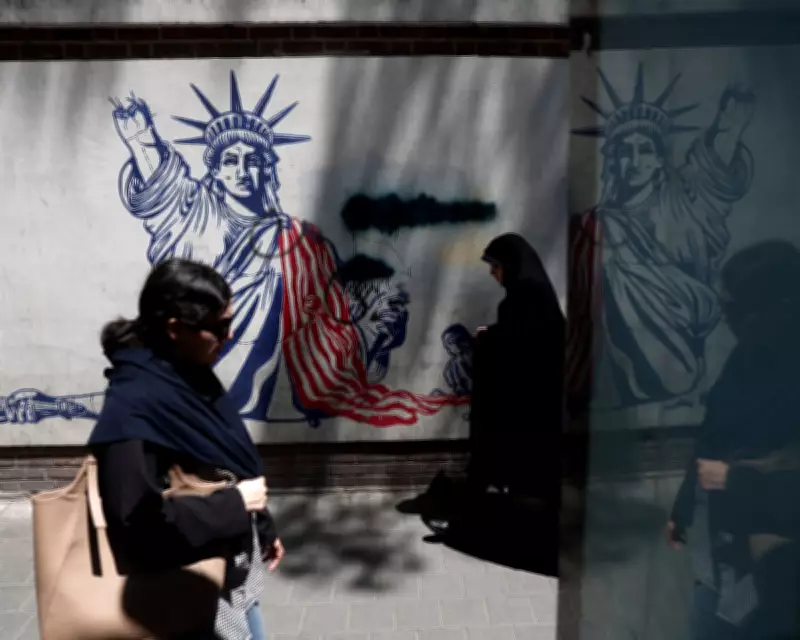
Donald Trump claims to have mastered the Art of the Deal, but his approach to Iran has been a master class in negotiating incompetence. His unprovoked war of choice has accomplished nothing and cost the world greatly. Now, Trump is back at square one, reviewing a proposed memorandum of understanding (MOU) drafted by American and Iranian diplomats with the aid of Pakistan and Qatar. This MOU would continue the current ceasefire for 60 days while a more permanent peace accord is negotiated. However, its gist is a profound embarrassment for Trump, as his war has achieved none of its stated goals.
The Failure of Trump's War Strategy
Trump's war on Iran was based on the hope of bombing and sanctioning the regime into submission. With the urging of Israeli Prime Minister Benjamin Netanyahu, American and Israeli bombers targeted Iranian leaders, hoping for a more pliant successor or a popular uprising. Trump even demanded 'unconditional surrender.' But the killing of leaders, including former Supreme Leader Ayatollah Ali Khamenei, only strengthened hardliners in the Islamic Revolutionary Guards Corps. The Iranian dictatorship, which had survived years of sanctions and suppressed protests, was not deterred by bombardment. The Iranian people, fearing death from the sky, were not eager to revolt.
Trump had no plan B. He claimed to have destroyed Iran's missile and drone capacity, but instead, he depleted US arms stockpiles while leaving most of Iran's arsenal intact. He turned the Strait of Hormuz from a theoretical into an actual weapon, with one-fifth of the world's oil and LNG supply passing through before the war. The economic consequences of closing the strait are far-reaching, and Iran has compounded the effect by attacking oil and gas facilities in Gulf Arab states.

The Nuclear Question
The best way to assess Trump's quandary is by comparing it with what a less bellicose approach might have secured. Barack Obama's 2015 Joint Comprehensive Plan of Action (JCPOA) curtailed Iran's nuclear program subject to intrusive international inspections. It allowed Iran to enrich uranium only to 3.67%, far from the 90% needed for a bomb, and Iran sent 11 tonnes of low-enriched uranium to Russia. Trump withdrew from the JCPOA in 2018, vowing to pressure Iran into a better deal. That didn't work. Iran now has nearly half a tonne of highly enriched uranium at 60% purity, a short hop from bomb-grade.
Trump is now trying to persuade Iran again to limit enrichment and export or dilute its enriched uranium—exactly what it agreed to with Obama. The MOU reportedly includes Iran disavowing its intention to build a nuclear bomb, but the key issue of denying the means—limiting enrichment and neutralizing highly enriched uranium—is kicked down the road. Other issues like Iran's ballistic missile program and support for regional armed groups are absent from the preliminary accord.
Worse Off Than Before
US negotiators are now worse off. Knowing Trump is desperate to reopen the Strait of Hormuz, Tehran has upped the ante. Iranians reportedly want frozen assets released and sanctions lifted before nuclear negotiations begin. They also seek an 'investment fund' for postwar reconstruction, far larger than what Trump criticized Obama for allowing. The MOU likely requires 'unrestricted' passage through the strait, but Iran may impose surrogates like an 'environmental fee.' None of this was on the table before Trump's war.
Tehran also insists that a new ceasefire extend to Israel's operations in Lebanon. In the name of fighting Hezbollah, Israel has forced 1 million people from their homes in southern Lebanon. Israel has honored the current ceasefire in the breach, bombing periodically, and Netanyahu reserves the right to respond to 'threats.' As in Gaza, Israel is likely to insist that a ceasefire not include withdrawal from occupied Lebanese territory.
Lessons and the Way Forward
There are lessons to be learned. Trump should repudiate Netanyahu's preference for endless armed conflict—'mowing the grass.' He should prioritize negotiation and drop saber-rattling, like his illegal threat to destroy Iran's civilization. Military force should be a last resort, permitted only under the UN Charter. Iran has shown it can impose enormous costs on the world's most powerful country.

Iranian officials are tough negotiators, but Trump has leverage through frozen assets and sanctions. He can engage in incremental give-and-take to achieve an acceptable solution. The focus should be on denying Iran the means to secure a nuclear weapon, pairing modest enrichment with intrusive inspections. Trump may need to accept creative solutions to neutralize Iran's highly enriched uranium—dilution, monitoring, and export.
Most importantly, Trump must put the nation's and world's interest above his own. His ability to spin reality is impressive, but even he will have a hard time selling this debacle as a victory. Tehran may not give him a face-saving way out. We must insist he accept a deal anyway, even if it reveals the Master Dealmaker to be a Master Bungler.
Kenneth Roth is a Guardian US columnist, visiting professor at Princeton's School of Public and International Affairs, and former executive director of Human Rights Watch. He is the author of Righting Wrongs: Three Decades on the Front Lines Battling Abusive Governments.