
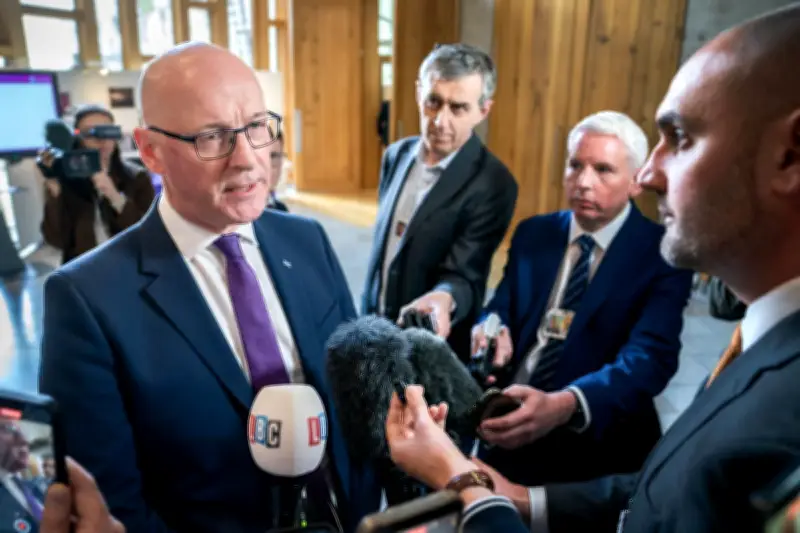
Scottish First Minister John Swinney has described further protests following the Belfast stabbing as “ill-advised”, urging Scots not to take to the streets after violent clashes in Glasgow on Tuesday night. Two police officers and three members of the public were injured in the disorder, with police stating that individuals were attacked because of their skin colour.
Violence in Glasgow
The unrest saw Glasgow Central Mosque forced to lock worshippers inside as a protest marched down Buchanan Street, believed to be heading towards the mosque. Three men, two aged 18 and one aged 31, were arrested, and Mr Swinney indicated that more arrests could follow. The protests were sparked by a knife attack in Belfast on Monday, for which Sudanese national Hadi Alodid, 30, appeared in court charged with the attack that left victim Stephen Ogilvie, 44, with a lost eye.
Swinney's Statement
Speaking to the Press Association, Mr Swinney said: “What I would say to people this evening is that under no circumstances should they take part in protests or in violent disorder within our society. There is, of course, a democratic right to protest, but at this particular moment, it is ill-advised because of the circumstances perpetrated last night by violent thugs. That type of behaviour has no place in Scottish society and will be tackled by Police Scotland, who have my full support.”
The First Minister commended the police for their effectiveness in maintaining public order and expected further arrests. He pledged to provide “political leadership” to tackle those who “incite hatred and division and now violence on the streets of Scotland”. He also blamed figures like Nigel Farage for stirring racial tension, stating: “I do blame the Nigel Farages of this world, who stir up racial tension and stir up animosity within our society, when we should be working to bring people together for the common good within Scotland.”
Political Reactions
Thomas Kerr, deputy leader of Reform UK in Scotland, encouraged peaceful protests but urged against violence. He told the BBC: “We have a fantastic tradition in this country of freedom of speech and freedom of expression. Go out there and make sure the Government hears your voice, but do not vandalise, do not incite racism and do not show violence. Because as soon as you do that, you play into the hands of John Swinney and of Keir Starmer, who do not want to speak about massive, uncontrolled illegal migration.”
Scottish Labour leader Anas Sarwar described the scene at Glasgow Central Mosque, where worshippers were locked inside as marchers approached. He said many marchers were clad in balaclavas and black hoodies, behaving in an “intimidating” manner, particularly towards minority backgrounds. He stressed that the public had nothing to do with the attacker in Belfast and would be “equally horrified by the attack”.
Scottish Green co-leader Ross Greer labelled the marchers as “scumbags”, recounting reports of grown men screaming at non-white children to “send them home”. Assistant Chief Constable Alan Waddell condemned the racism and violence, stating that Police Scotland have an “appropriate policing plan in place” to deal with any escalation. Other peaceful but disruptive demonstrations occurred in Edinburgh, Falkirk, Perth, Ayr, and Paisley, with no arrests made.




