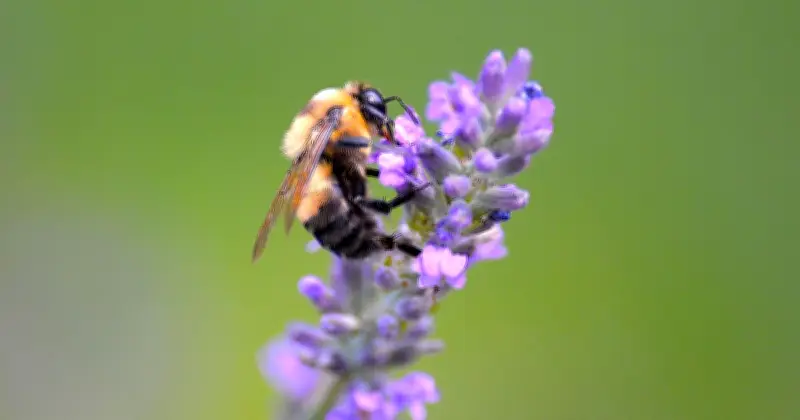
The Royal Horticultural Society (RHS) has urged households to plant lavender in their gardens during July to attract more bees and butterflies. Lavender is particularly appealing to bees due to its vibrant purple blooms, which stand out in their UV-sensitive vision, and its strong scent that acts as a beacon. Bumblebees are especially fond of lavender, but honeybees and other pollinators also visit regularly.
Why Lavender Helps Bees
Bees are essential for pollinating food crops and wildflowers. In the UK, there are over 230 species of wild bees, but populations have declined by about a third over the past 30 years. By planting lavender, homeowners provide a rich, easily accessible source of nectar over a long period, which matches a bee's nutritional needs. Gardens can serve as rest stops, food sources, and sheltered spots for bees, butterflies, birds, hedgehogs, and other wildlife.
How to Propagate Lavender
RHS Horticulturist Paul shared a method for propagating lavender from cuttings on the society's TikTok account. He explained that semi-ripe cuttings should be taken using a sharp knife, cutting just below a leaf node, where rooting hormones are concentrated. The cuttings are then inserted into a pot filled with compacted soil, leaving space between each one. After watering, the pot is covered with a plastic bag tied with an elastic band to create an enclosed environment.

Paul advised: "To care for your cuttings, you want to take the bag off on a regular basis, and that just replenishes the air around them, and stops any rotting off." He added that roots typically develop within four to six weeks, and cuttings can be potted individually after about eight weeks. By propagating in July, the new plants are ready for individual potting in early autumn, allowing roots to establish before winter.
Additional Gardening Tips
While lavender is ideally planted in mid-to-late spring after the last frost, July is the perfect month for propagation. The RHS also recommends other plants to support pollinators, such as hydrangeas and roses, which require specific care during heatwaves. For those with limited space or time, focusing on lavender is a simple and effective way to create a bee-friendly habitat.