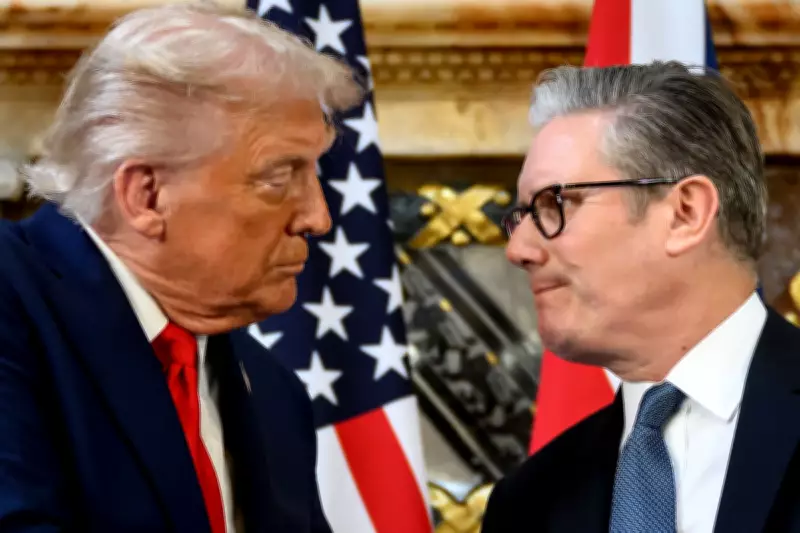
Prime Minister Sir Keir Starmer has declared that Britain's "Brexit years" are definitively over, urging world leaders to forge closer security ties with Europe while reducing reliance on the United States under President Donald Trump. The Labour leader's remarks come amid heightened transatlantic tensions following Trump's repeated threats to annex Greenland from Denmark, which have rocked diplomatic relations across the continent.
A Call for European Autonomy
In a major speech at the Munich Security Conference, Starmer will outline a vision for enhanced European security cooperation and greater autonomy, emphasising that this does not signal American withdrawal but rather answers calls for more equitable burden-sharing. The prime minister praised Europe as a "sleeping giant" whose combined economic and military power significantly outstrips that of adversaries like Russia.
"Our economies dwarf Russia's, ten times over. We have huge defence capabilities," Starmer will state. However, he will caution that these strengths have often amounted to less than the sum of their parts, with persistent gaps in some areas and "massive duplication" in others.

Surviving Political Tumult
The address follows the most tumultuous week of Starmer's premiership to date, which included an attempted ousting from office. Against this backdrop, the prime minister will warn that turning inward, as the UK did during the Brexit process, would constitute "surrender" in an increasingly dangerous global landscape.
Starmer's message arrives less than three months after negotiations for Britain to join the EU's €150 billion Security Action for Europe rearmament fund collapsed due to financial disagreements. The prime minister will advocate for closer UK-EU defence cooperation to "multiply our strengths and build a shared industrial base across Europe that can turbocharge our defence production."
Criticism of Political Extremes
In his speech, Starmer will also launch a pointed critique of both Reform UK and the Green Party, describing them as "peddlers of easy answers on the extreme left and the extreme right." He will assert that these parties share concerning similarities, being "soft on Russia and weak on NATO—if not outright opposed" to the alliance.
"The future they offer is one of division and then capitulation," Starmer will declare. "The lamps would go out across Europe once again. But we will not let that happen." This chilling reference echoes the warning made by Foreign Secretary Sir Edward Grey before the outbreak of the First World War.
Transatlantic Tensions Escalate
The Munich conference occurs against a backdrop of significant strain in US-European relations. Last year, US Vice President JD Vance stunned delegates by accusing Europe of "retreating from some of its most fundamental values" and claiming the continent's greatest threat came from within rather than from external powers like Russia or China.
Since then, President Trump has sent shockwaves through European capitals with his Greenland annexation threats and insults directed at various leaders. He has also falsely accused European NATO allies, including Britain, of avoiding frontline combat during the war in Afghanistan.
As he departed for Munich, US Secretary of State Marco Rubio, representing the Trump administration at this year's conference, warned of a "new era" in geopolitics. Rubio is scheduled to address the conference alongside German Chancellor Friedrich Merz.
Trilateral Talks and Security Imperatives
Upon arriving in Munich, Starmer immediately engaged in trilateral discussions with Chancellor Merz and French President Emmanuel Macron, emphasising the critical need for defence cooperation. "There's no UK security without European security. There's no European security without UK security. So we have to work together," the prime minister stated.
World leaders gathering for the annual security conference are being presented with the Munich Security Report 2026, titled "Under Destruction." The report delivers a scathing critique of Trump's policies, warning that global security structures risk being reduced to rubble through "wrecking-ball politics."

"Sweeping destruction—rather than careful reforms and policy corrections—is the order of the day," the report reads. It notes that more than eighty years after its establishment, the US-led post-1945 international order is now "under destruction," primarily due to the current American administration's actions.
Political Opposition Responds
Dame Priti Patel, the shadow foreign secretary, criticised Starmer's approach, accusing him of "handing away sovereignty" and "rolling the pitch for greater EU integration and less control for the UK." She argued that Britain should instead leverage its unique position to bridge the gap between the US and Europe, strengthening NATO without becoming overdependent on America.
"We must not be overdependent on America, but neither should we offer Europe a blank cheque, prepared to accept any and all costs, as Labour are," Patel stated. "Starmer's repeated surrenders to China show he lacks the backbone to stand up for Britain on the international stage. His weakness has undermined the special relationship and put our country in danger."
Despite these criticisms, Starmer's speech represents a significant shift in Britain's post-Brexit foreign policy orientation, emphasising European solidarity and strategic autonomy while acknowledging America's continued importance as a key ally in an increasingly fractured global order.