
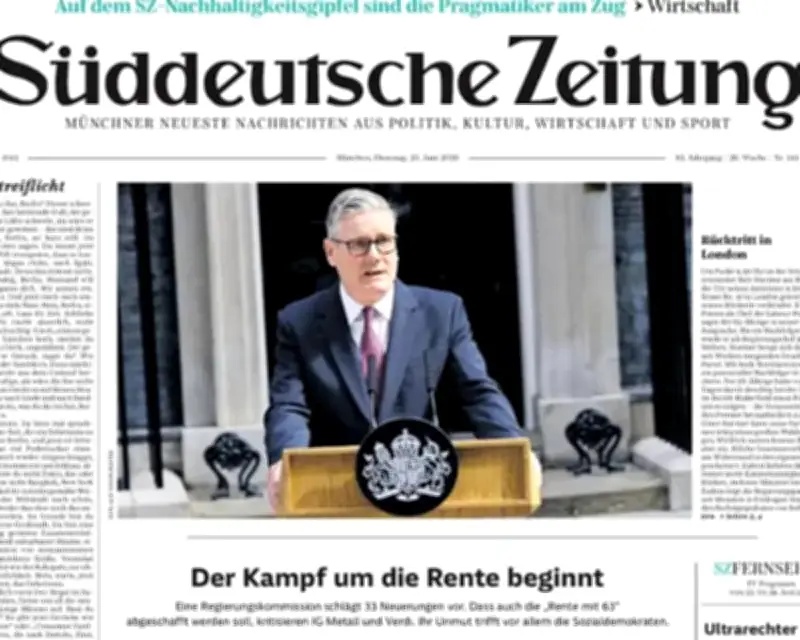
European media outlets have reacted with bemusement and criticism to the resignation of UK Prime Minister Keir Starmer, marking the sixth prime minister to leave office since the 2016 Brexit referendum. German magazine Der Spiegel likened Downing Street to a transit station, while Spanish newspaper La Vanguardia remarked that No 10 appears to have a revolving door.
Brexit Blamed for Chronic Instability
An analysis in Germany's Frankfurter Allgemeine Zeitung posed the question often reserved for England football managers: "An impossible job? Even before a successor for Keir Starmer has been chosen, it's clear: many fail at the task." The newspaper explicitly cited Brexit as a factor, stating that "discontent within his party and the consequences of Brexit made the office difficult for Starmer."
Spain's El País ran a special feature on "the political crisis in Britain" with the blunt headline: "The broken promises of a Brexit that made everything worse." The article noted that "neither the economy nor the welfare state are better off, but the same political right that drove it is stronger than ever." An accompanying commentary observed that "only a century ago [the UK] was competing with the United States for global hegemony. Today its economy languishes. Its politics are in tatters."
European Press Highlights 'Revolving Door'
France's Libération published a piece detailing "10 years of Brexit and an immense waste." Denmark's Børsen noted that Starmer had been "chased down by both the recent and the distant past," adding that "this week marks 10 years since Britons voted to leave the EU – and they are now getting their seventh head of government since the referendum."
Der Spiegel's headline "Downing Street transit station" compared the prime ministerial residence to a bustling railway interchange, recounting the departures of recent incumbents: "A gambler [David Cameron], a populist [Boris Johnson], a head of government for six weeks [Liz Truss]: Even in the years before Keir Starmer, the position of British prime minister was a hot seat."
Speed of Starmer's Decline Astonishes
Germany's Süddeutsche Zeitung found novelty in the pace of Starmer's decline. "The British yearn for someone who gives them hope," it read. "Keir Starmer was honest with them. It's not uncommon for things to go wrong between the people and the government. But the speed with which the prime minister became a villain is astonishing."
Libération concluded that Starmer had been brought to power "more by voters' rejection of the Conservatives than by support for his own programme," with his leadership collapsing under its own controversies and contradictions.
Sympathetic Takes and Future Outlook
There were some sympathetic views. Trouw, the Dutch newspaper, argued that Starmer's achievements went unnoticed due to poor political communication. "After Starmer, Labour needs a prime minister who pats himself on the back more," an analysis stated, adding that "his successor must be in office before September. That new Labour leader will need to be better able to claim credit for successes."
However, a comment piece for Frankfurter Allgemeine Zeitung did not expect much change with Andy Burnham's imminent elevation. Its headline read: "New head, old problems."




