
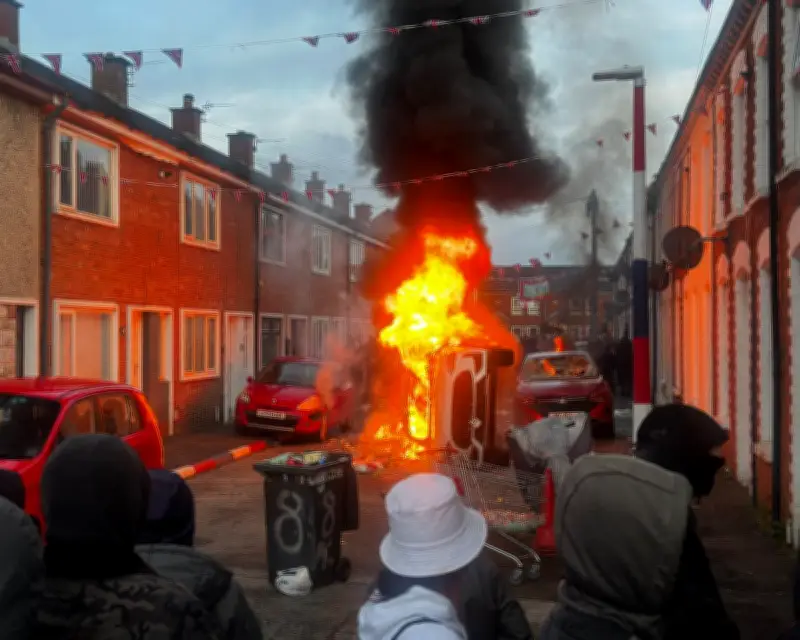
A car set on fire by protesters in Belfast, as disorder flared following a knife attack in the city, has reignited talk of civil war across the UK. The incident, captured in photographs showing vehicles ablaze, comes amid a broader pattern of unrest and inflammatory rhetoric from politicians and online commentators.
The Return of Civil War Predictions
In the summer of 2024, after the horrific murders in Southport and nationwide violence, Elon Musk declared a British civil war 'inevitable.' A year later, flags on lamp-posts, protests outside asylum hotels, and constant predictions of riots that never materialized dominated the news. Now, after the murder of Henry Nowak and violent arson in Belfast, civil war predictions are escalating once more.
A YouGov poll from August 2024 found that 32% of people thought a UK civil war was likely. Dominic Cummings later warned the UK was 'only random viral posts away from riots and prairie fires getting out of control.' Labour's Lisa Nandy even suggested the north of England 'could go up in flames.'
Key Figures Fanning the Flames
Nigel Farage remains the king of civil war rhetoric, using terms like 'societal collapse' and 'civil disobedience on a vast scale.' He has predicted Britain is 'not far from major civil disorder,' fueled by what he calls 'pure, cold rage.' Similar predictions come from populist politicians across Europe, often tied to immigration and Islam.
Kemi Badenoch, in a BBC Radio 4 interview, warned that political conflict could lead to civil war. She blamed 'identity politics' for social fragmentation, saying, 'In the long term, that's how you end up with civil war.'
Academic Predictions and Online Echo Chambers
David Betz, a Canadian academic at King's College London, puts the chance of UK civil war at 18.5% over four years, with 23,000 deaths annually. He envisions society breaking into three zones: urban enclaves dominated by non-natives, mixed regions of fiercest instability, and native-dominated areas forming bases for counter-mobilisation. His ideas, though dismissed by some economists, gain traction on rightwing podcasts and YouTube.
Online algorithms amplify dystopian content—fighting, riots, angry altercations—fostering a sense of living in a crisis. Nigel Farage's online call after the Belfast stabbing, demanding the suspect's identity and immigration status, exemplifies how such narratives are weaponised.
The Political Utility of Fear
These civil war narratives serve a political purpose: convincing voters that unprecedented times require unprecedented choices, such as making Farage prime minister. Meanwhile, mundane realities like social housing shortages and stagnating wages are ignored by the 'civil war' merchants. As John Harris notes, a stable country with solvable problems is being recast as a dystopia to smooth the path to power for some of the most terrifying politicians Britain has ever seen.




