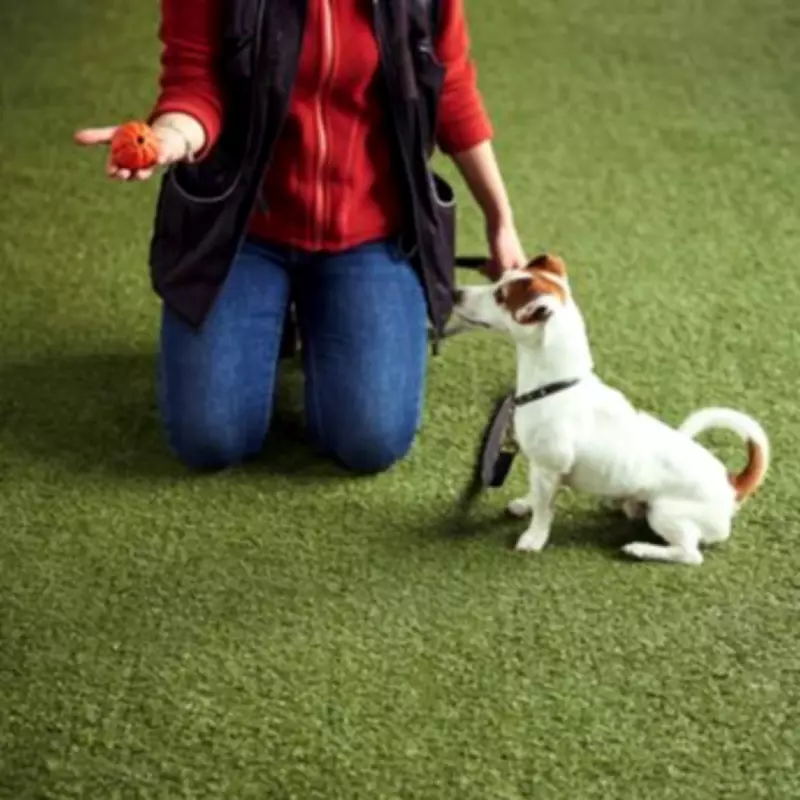
Expert Dog Trainer Reveals Simple Tactile Method for Reactive Dogs
A leading dog trainer has shared a remarkably straightforward technique that she claims will "always" elicit a response from reactive dogs, even when traditional verbal commands completely fail. The method, which involves using physical touch instead of spoken words, can reportedly be introduced in just ten minutes and promises to transform frustrating walks and training sessions.
The Verbal Command Problem with Reactive Dogs
Kit The Dog Trainer, who works with canines and their owners throughout the United Kingdom, explained that reactive dogs present a unique challenge. When these animals become hyperfixated on triggers—whether squirrels in the park, other dogs, or environmental stimuli—they often enter a state where auditory processing essentially shuts down. "If I, as with most reactive dogs, use a verbal cue in the moment that they are hyperfixating on something, they're not going to listen to me," Kit stated emphatically.
This common scenario leaves many owners feeling helpless as their pets ignore recall commands, leash pulls intensify, and potentially dangerous situations develop. The trainer noted that this frustration often leads owners to wish they had discovered alternative methods much sooner in their dog's training journey.

The Game-Changing Tactile Cue Solution
The breakthrough came when Kit realized that not every single cue has to be spoken. Some instructions can be delivered through touch—what trainers call "tactile cues." These are physical signals that dogs learn to associate with specific requests or commands.
"What changed the entire game for me," Kit revealed, "was understanding that when working with reactivity, the best approach isn't always verbal. Some cues can be tactile." For the uninitiated, a tactile cue involves training your dog to respond to physical contact rather than spoken words. A prime example is teaching your dog that two gentle taps on their hindquarters means you want their attention redirected back to you.
Implementing the Double-Tap Technique
Kit demonstrated her preferred method: the double tap. When her dog becomes fixated on a trigger or begins engaging in undesirable behavior, she doesn't raise her voice or repeat verbal commands. Instead, she gives two distinct taps on the dog's rear end, immediately followed by a reward when the dog disengages from the distraction.
"What this looks like for me is a double tap," she explained. "If I want my dog's attention back, I'm going to double-tap and pay him." The immediate treat reinforcement helps the dog associate the physical signal with both compliance and positive outcomes. Essentially, that trained double tap communicates: "Hey, can you refocus on me please?" without adding to the auditory overload that often overwhelms reactive dogs in stimulating environments.
Practical Application and Community Response
The trainer emphasized that this technique requires just ten minutes of initial training to establish the association between the tactile cue and the desired response. Once ingrained, it becomes an invaluable tool for interrupting unwanted behaviors before they escalate.
In response to her advice, one dog owner commented: "My Labrador has suddenly started reactive behaviors so I'm definitely going to try this." Another sought specific guidance for their challenging rescue situation, describing a Chihuahua cross who becomes too overwhelmed outdoors to respond to treats or verbal commands.
Kit responded with comprehensive advice, stressing foundational elements before advanced training: "Whenever I've got a dog who is completely over threshold and won't eat outside, I'd always start with a full vet check to rule out pain. We can't train on shaky foundations, so pain, sleep, nutrition, and removing any triggers at home are always my starting place."

Broader Training Philosophy and Professional Guidance
The trainer's approach extends beyond just the tactile cue method. She advocates for building resilience through addressing fundamental needs—ensuring the dog isn't experiencing pain, gets adequate sleep, receives proper nutrition, and has a calm home environment free from unnecessary stressors. These foundations make dogs more responsive during walks and training sessions.
For owners struggling with particularly challenging cases, Kit and other professionals strongly recommend consulting with a veterinarian or certified dog behaviorist. While tactile cues can be remarkably effective for many reactive dogs, some situations require individualized assessment and intervention from qualified experts who can address underlying medical or behavioral issues.
This simple yet profound shift from verbal to tactile communication offers renewed hope for owners of reactive dogs, transforming what often feels like an impossible task into a manageable training challenge with clear, actionable solutions.