
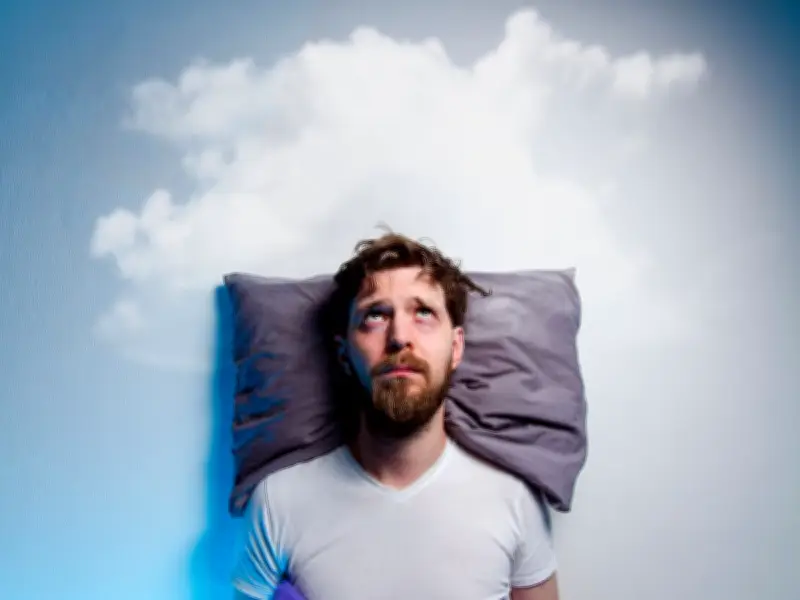
Waking in the night because of work stress is a major problem for most people over 50, and a third of us have sleep problems at least once a week. Sleep is vital throughout life: it helps heal tissues, strengthens the immune system, clears waste from the brain and locks in the previous day's memories. Lack of sleep can contribute to depression, heart attacks, dementia and obesity.
A year-long study by Edinburgh University looked at older workers and found that regular sleep disturbances - rather than short sleep duration - are what make people feel poorly rested. The researchers tracked 45 workers aged 50 to 66 using wearable sensors and regular wellbeing and workplace assessments. More than 70% had persistent, clinically significant sleep problems even though most were getting the recommended 7 to 9 hours in bed and had no diagnosed history of sleep disorders. An uninterrupted couple of hours of deep sleep, usually soon after nodding off, is crucial for the restorative health benefits of sleep.
Exercise cuts the risk of insomnia
Research shows that exercising at least twice a week lowers the risk of insomnia. People who do regular keep-fit sessions are 42% less likely to have difficulty falling asleep and 22% less likely to report insomnia. Imperial College London reviewed data on 4,339 people from nine European countries over ten years and found that those who kept exercising long term were 55% more likely to be good sleepers.
The study, published in BMJ Open, also found that people who had not exercised before but took it up during the study were 21% more likely to be good sleepers than those who stayed inactive.
Weight lifting and tai chi are best
One review of 24 clinical trials looked at which types of exercise are best for sleep. It scored sleep quality in 2,045 people aged 60 after aerobic exercise (cycling, dancing, swimming, brisk walking, hiking), resistance exercise (lifting weights, arm curls, wall push-ups, gym machines), balance training (sideways walking, heel-to-toe walking, one-leg standing) and flexibility work (gymnastics, yoga, dance, pilates). Aerobic exercise or a mix helped with insomnia, but not as much as resistance exercise such as heavy lifting.
A separate study in the British Medical Journal found tai chi was just as effective for sleep as the NHS's current gold standard treatment, cognitive behavioural therapy (CBT).
Exercising at the right time for your body
Researchers have also looked at the circadian rhythm and whether someone is an "early bird" or a "night owl". A trial in the journal Open Heart assigned 150 middle-aged participants to exercise either at times matching their chronotype or at times that did not. Workouts were scheduled between 8am and 11am or 6pm and 9pm. Improvements were greater when exercise time matched chronotype - so morning people benefitted from going to the gym before work, for example - with bigger reductions in blood pressure and greater gains in heart rate, aerobic capacity and sleep quality.
The researchers suspect that exercising at the time best suited to your body works muscle and fat tissue more effectively and reduces harmful inflammation.
How sleeping position affects your eyes
Sleeping with your head and neck raised on high pillows increases the risk of glaucoma. A trial showed that sleeping on stacked pillows changes the neck position, compressing the jugular vein and preventing natural drainage of fluid from the eye. This raises internal eye pressure, which can damage the optic nerve and lead to glaucoma. More than a million Britons have glaucoma; the condition is a risk for people over 40 and can cause blindness if untreated.
The study, published in the British Journal of Ophthalmology, found eye pressure increased by two thirds when participants lay with their heads raised by 20 to 35 degrees on two pillows, compared with lying flat.
How much sleep do you need?
The NHS says adults need an average of seven to nine hours of sleep, while children need about nine to thirteen hours. Sleeping too much can sometimes be a sign that you are unwell. Different people need different amounts, but one study of 23,000 Americans looked at the optimum for blood sugar control. Published in the British Medical Journal, it concluded that sleeping seven hours and 19 minutes on average was optimal for avoiding insulin resistance, the precursor to type 2 diabetes.
A separate study covering one million people in six countries showed that less than seven hours' sleep a night was linked to a 7% higher risk of high blood pressure.
Keep a regular bedtime
Going to sleep at the same time each night reduces the risk of a stroke. A study by the University of Ottawa tracked the sleeping habits of more than 72,000 volunteers using activity trackers, grouped them into regular, moderately irregular and irregular sleepers, and monitored their health for eight years. Irregular sleepers were 26% more likely to suffer a stroke, heart failure or heart attack than regular sleepers - even if they got the recommended seven to nine hours.
Emily McGrath, senior cardiac nurse at the British Heart Foundation, said: "Research suggests that disturbed sleep is associated with higher levels of a protein called CRP. This is a sign of inflammation."
A weekend lie-in can help
A 14-year study found that people who caught up on sleep at the weekend were a fifth less likely to develop heart disease. Researchers tracked 91,000 Britons using wearable devices and found that 20,000 regularly got less than the recommended seven hours. Those who got at least an extra one hour and 17 minutes of sleep over the weekend were 20% less likely to develop conditions such as ischaemic heart disease, heart failure, atrial fibrillation and stroke.
Even participants who usually slept more than seven hours a night during the week were 19% less likely to develop a heart condition if they got at least one hour and 17 minutes of extra weekend sleep. Prof James Leiper, associate medical director at the British Heart Foundation, said: "While a weekend lie-in is no replacement for a regular good night's rest, this large study suggests that it might help reduce risk of heart disease."
What the NHS advises
The NHS says a few sleepless nights are usually nothing to worry about, but it can become a problem if lack of sleep starts affecting your daily life. Its recommended measures include avoiding caffeine or a big meal late in the evening, and not using phones, tablets or computers for an hour before bed because blue light from screens can make it harder to fall asleep. Talking to someone you trust or writing down worries can also help manage them.
Current NHS guidelines advise GPs to treat insomnia by managing issues such as anxiety, offering short-term courses of sleeping pills, and using CBT counselling for more severe cases.




