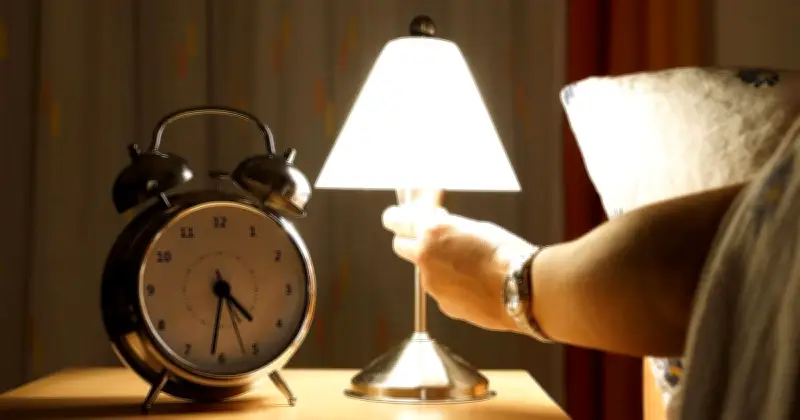
UK households are being urged to go to bed 15 minutes earlier each night in the week leading up to Sunday, October 25, when the clocks will go back by one hour at 2am. The change marks the end of British Summer Time and the return to Greenwich Mean Time.
Why the clocks change
The twice-yearly clock changes bookend different stages of the year. The first takes place in early spring to mark the start of British Summer Time, and the second occurs in autumn to signal the return to Greenwich Mean Time.
The practice was first introduced in the Summer Time Act 1916, providing farmers with an extra hour of sunlight during the summer months as part of efforts to boost the agricultural sector. It was later formalised following a campaign led by British builder William Willett in 1907, who hoped the move would stop people from wasting valuable daylight hours and help save energy.
How to adjust your sleep
The shift backwards signals the start of shorter days with darker evenings, but it can also cause major disruption to your body clock and mood. To help avoid this, experts recommend adjusting your bedtime routine by 15 minutes each night in the week leading up to the change to allow your body to get acclimatised.
Bed and mattress specialist Sleepeezee said: “One of the best ways to ease into the clock change is to adjust your sleep schedule beforehand.
“In the week leading up to the change, try going to bed 15 minutes earlier each night to allow your body to adjust gradually to the lost hour of sleep. This small change will help minimise the shock to your internal body clock and make the transition smoother.
“Consistency is key when it comes to maintaining a good sleep schedule. Going to bed and waking up at the same time each day, even on weekends, will help reinforce your body’s natural circadian rhythm.
“Your body will then naturally know when it’s time to wind down, making it easier to fall asleep, even when the clocks shift.”
Other tips for better sleep
Experts also recommend making other small lifestyle changes to help aid sleep through the clock change, including moving meal times to slightly later in the day, limiting caffeine intake, taking a warm bath before bed, and reducing alcohol.
If you do opt for a bath or shower before bed, avoid having the water too hot, as this can raise your core temperature too much, leaving you feeling more alert and making it harder to drift off. Spending too long in very hot water can also keep your body temperature elevated for longer, delaying the natural cooling process that helps signal to the brain that it’s time to sleep.
Sleep experts advise taking a cool shower first thing in the morning to promote alertness and help you feel more energised. Tracy Hannigan, insomnia therapist at the Sleep Coach, said: “Showering and bathing can have both a physical and psychological impact that can be helpful for sleep. If you are showering, bathing, or hot-tubbing in the evening, you'll want your body to cool as you get into bed.
“Our body temperature drops when we sleep, and being overly warm can lead to poorer-quality sleep. You may feel relaxed if you get into bed very warm, but that may not translate into sleep.
“One of the strongest ways to anchor our circadian rhythms in the morning is to get light, food, and movement first thing. If you take a shower and give yourself a bit of cool water, that can be another strong alertness-promoting signal.
“In addition to helping shake off any physical sleep inertia, many people find it mentally energises them too. The more solidly we begin our morning with our circadian anchoring, the more we set ourselves up for better sleep in the evening.”