
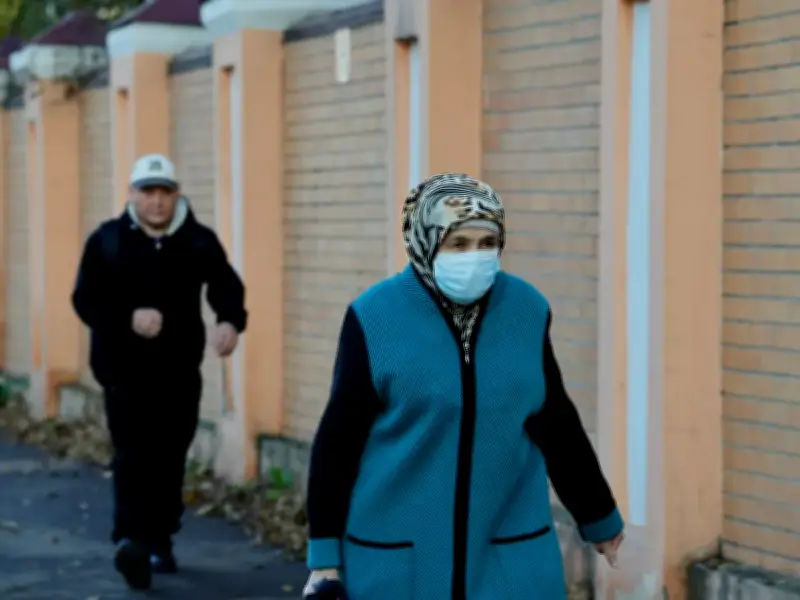
A former top US health official has claimed that the mysterious “Russian plague” is a Kremlin bioweapon. Dr Robert Redfield, former director of the US Centre for Disease Control and Prevention, questioned Moscow's narrative surrounding the death of 28-year-old researcher Darya Shipilova at the Irkutsk Anti-Plague Research Institute on October 2.
Conflicting reports on researcher's death
Unconfirmed reports suggest Ms Shipilova died after dropping a test tube containing lethal Yersinia pestis bacteria, or after contracting pneumonic plague on a trip to Mongolia. Russian officials have denied that a plague was responsible, attributing her death to “pneumonia of unknown origin”.
However, Irkutsk authorities reportedly placed 200 close contacts into strict quarantine and shut five hospitals. Dr Redfield expressed doubts over the official claim and suggested authorities are concealing the truth.
Expert doubts official explanation
“I think it's very likely that the Russian officials know what the cause of death was,” he said. “I'm sceptical that it's plague...but clearly, I think they have a better understanding of what this young lady died from, and they have not been transparent with it.”
Noting that wild-type plague is easily treated with antibiotics and rarely spreads between humans, Dr Redfield said the drastic containment measures did not add up. “It's a very difficult pathogen to go human to human,” he said, adding that the reported Russian response “causes me (to) pause”.
Bioweapons program suspicion
The former CDC chief theorised the extreme protocols could indicate an antibiotic-resistant or genetically modified strain, drawing comparisons to a 1970s Soviet-era anthrax leak hidden from the public. “This is what makes me suspect that maybe the underlying cause has something to do with their bioweapons program,” he said. “And this is not something they want in the public domain.”
While no verified evidence confirms an engineered pathogen or weapons research, Moscow's silence has triggered cross-border panic. In China, online rumours of a spread and Covid-style lockdowns have sparked panic buying, with broadcaster FTV reporting residents scrambling for "rice, sugar, eggs, canned food and other daily necessities".
Global response and investigation
Global vigilance has also increased after four confirmed and five suspected plague cases were identified in Madagascar, where 200 contacts received preventative medication, while South Korea introduced enhanced screening for travellers from Russia.
The World Health Organisation (WHO) is investigating the Siberian incident, stating that while there is no evidence of ongoing transmission, "a laboratory-associated exposure" cannot be excluded. University of Edinburgh public health professor Devi Sridhar warned in the Guardian that Moscow's refusal to share investigation details with the WHO threatens global health security, concluding that without transparency on pathogen outbreaks, scientific advances result in "one step forward, two steps back".




