
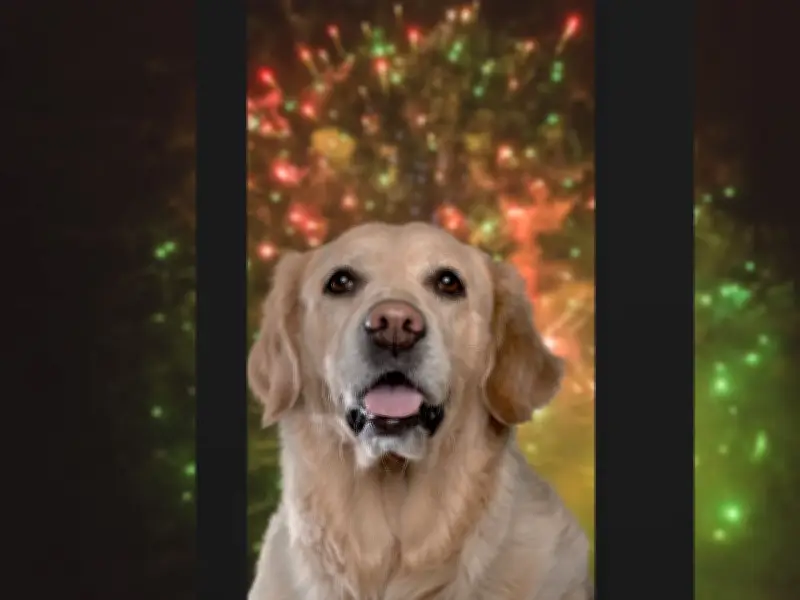
British dog owners spend an average of £145.90 a year to help their anxious pets cope with fireworks, according to new research by Guide Dogs. Nearly two-thirds of the nation's dogs - an estimated 9.9 million - are affected, with owners collectively footing a £1.4 billion bill.
Additional spending on calming products and vet visits
Those who resort to additional support spend an average of £59.10 on calming products, £134.60 on vet appointments and £99.30 on medication, the research found.
Guide Dogs is today launching the first National Fireworks Archive training video, a desensitisation tool which owners can use with their pets. Created using real footage filmed in streets, gardens and public displays across the country, the video allows people to gradually introduce dogs to the sounds that make some so anxious.
Call for public to donate footage
The charity is asking people to donate fireworks footage to expand the resource, including clips of Catherine wheels, screechers, rockets and public displays filmed from different distances and locations. The call out comes as the average UK adult has an estimated seven minutes of forgotten firework footage saved on their phone, with one in five admitting they have never watched the clips again.
Guide Dogs experts say starting desensitisation early is key to helping animals cope with fireworks season - with three months in advance being the ideal time. But despite this being the best way to help anxious pets, 35% didn't know dogs could be desensitised to fireworks and 37% had never investigated training. Instead, 43% admitted doing nothing to prepare their pet beyond “hoping for the best.”
Emotional and physical toll on owners
There is also an emotional and physical toll for owners with 89% experiencing weeks of disrupted plans, 45% avoiding leaving their dog alone and 12% losing sleep. Last year 44% stayed home on Bonfire Night so they comfort their pooch.
Haley Andrews, a Guide Dogs expert, said: “Fireworks night doesn't sound like a clean audio track - it’s messy and unpredictable, which is why so many dogs struggle with them. Different fireworks create different sounds and effects, from high-pitched whistles and prolonged crackles to sudden bangs and flashes.
"That’s why we’re asking the public to donate a wide variety of footage to help us build a more realistic and useful training resource. Nearly half of owners (46%) weren’t aware that this type of training may need to begin months before the fireworks season.
“Desensitisation can take some time, so August - not the end of October - is the time to start. By introducing the sounds gradually, at a level their dog can cope with, owners can give their pet the best possible chance of having a calmer Bonfire Night.”
How to get involved and top tips
You can donate fireworks footage to the National Fireworks Archive, including clips of Catherine wheels, screechers, rockets and public displays, via press@guidedogs.org.uk. To watch the free National Fireworks Archive training video with advice from Guide Dogs' experts visit - www.guidedogs.org.uk/fireworks
Guide Dogs’ top tips to prepare your pet for fireworks season:
- Start early: Desensitisation takes time, so begin in August to give your dog the best chance of being comfortable before fireworks season kicks off.
- Being at the lowest level: Play firework footage at the lowest possible volume - low enough that your dog doesn't react - and offer a treat a couple of seconds after the sound begins.
- Build up gradually: Keep sessions short, at around two to five minutes, once or twice a day. Increase the volume only when your dog remains relaxed. If they show signs of fear, drop volume back down and rebuild slowly.
- Introduce sounds carefully: Different fireworks can create very different noises, from sudden bangs and sharp whistles to repeated crackles. Once your dog is comfortable with one type of footage, gradually introduce other sounds and effects, returning to a lower volume or intensity if they show signs of fear.
- Create a safe space: Set up a quiet, cosy den with blankets, toys and familiar scents. Hide treats in there throughout the day so your dog learns to associate it with feeling safe
- Make training realistic: Practice in different rooms and at different times. As your dog becomes more comfortable, recreate elements of Fireworks Night itself by dimming the lights, closing the curtains, playing louder sounds and preparing rewards.
- Plan for the night itself: Take your dog out for a final toilet break before dark, close the curtains, turn on the TV or radio, prepare a food enrichment item, stay calm, and let your dog choose where to settle.
- Don’t wait for a sign: Many dogs develop firework anxiety later in life, so desensitisation training can help prevent this from becoming an issue as well as helping dogs who experience signs of anxiety from a young age




