
In the US, sunscreen is regulated by the Food and Drug Administration (FDA) as an over-the-counter drug, not a cosmetic. Active ingredients are judged by the standard of "generally recognized as safe and effective" (GRASE). Terms like "nontoxic," "clean" or "natural" are not legally defined for sunscreen labels; they are essentially marketing language, and any brand can use them without meeting a specific standard.
Currently, only three sunscreen ingredients meet the GRASE standard: the mineral filters zinc oxide and titanium dioxide, plus bemotrizinol (BEMT), a chemical filter new to the US market. Watch out for parabens, preservatives that can cause skin irritation and endocrine disruption, and phthalates, which may mimic estrogen and disrupt hormones, affecting fertility or child development. Look for "paraben-free" labels, avoid acronyms such as DEHP, DBP or DEP, and keep in mind that phthalates are often listed as "fragrance."
Dermatologists Michael Girardi, MD, FAAD, of Yale School of Medicine; Sapna Palep, MD, FAAD, MBA, founder of Spring Street Dermatology and Journelle Skin in New York; and Divya Shokeen, MD, FAAD, founder of OSVI Dermatology and Surgery Institute in Los Angeles, shared their favorites.
Best sunscreens for face
Tinted sunscreens offer protection with a touch of makeup coverage, but shade ranges can be limited. The Skin Cancer Foundation recommends SPF 30 or higher, and SPF 50 or higher for a day outdoors, with reapplication every two hours; tinted moisturizers or foundations with SPF may not meet those standards.
Palep picks Colorescience Sunforgettable Total Protection Face Shield Flex SPF 50 (from $40.60): "It provides UVA and UVB protection, as well as blue light protection from screens, and contains zinc oxide and niacinamide." Niacinamide may help reduce inflammation and improve skin elasticity.
For a mineral-only option, Girardi recommends Neutrogena Ultra Sheer Mineral Dry Touch Sunscreen SPF 30 (from $9.89), which contains only mineral active agents and leaves a minimal whitish hue. For deeper skin tones, he suggests tinted mineral sunscreens such as EltaMD UV Clear Deep Tinted SPF 46 ($24.50 travel size), CeraVe Hydrating Mineral Sunscreen Sheer Tint SPF 30 in Deep (from $13.97), and ISDIN Eryfotona Ageless Ultralight Tinted Mineral SPF 50 (from $46), which Shokeen says "evens tone and fights photoaging."
For pale skin, Palep likes La Roche-Posay Anthelios Melt-in Milk SPF 60 (from $25.97), calling it lightweight, not sticky or greasy, and fast-absorbing with antioxidant protection.
Best sunscreens for kids
Shokeen uses only mineral formulations on her own children. Girardi also opts for zinc oxide and titanium dioxide only, and says BEMT, once available, is expected in pediatric formulas. He recommends hats and sun-protective clothing: "Use a hat early and often to get them used to it."
Stream2Sea Every Day Active Mineral Sunscreen (from $26.22) contains zinc oxide, aloe vera and vegetarian glycerine, and is EWG verified.
Best sunscreens for sensitive skin
Shokeen says fully mineral sunscreens can be better for sensitive skin. She likes EltaMD UV Skin Recovery Red Color-Correcting Face Sunscreen SPF 50 (from $52) because "it negates a lot of the red in the skin, especially if you have rosacea."
Palep recommends EltaMD UV Skin Recovery Broad Spectrum Sunscreen SPF 50 (from $50) for sensitive skin, citing zinc oxide and centella asiatica, which has anti-inflammatory properties.
Best sunscreens for acne-prone or oily skin
Palep picks Shiseido Urban Environment Oil-Free Sunscreen SPF 40 (from $39) for oily skin: the formula is oil-free and non-comedogenic, adds hydration with hyaluronic acid, and layers well under makeup.
A budget-friendly alternative is La Roche-Posay Anthelios Clear Skin Sunscreen SPF 60 (from $20.99), which is oil-free, matte and fragrance-free. Shokeen's own brand, Oathology Inzincable Untinted Sunscreen SPF 50+ ($62), contains azelaic acid, an ingredient that claims anti-inflammatory, antimicrobial and antioxidant benefits.
Best spray sunscreen
Dermatologists are cautious about sprays. Shokeen says most people don't rub them in enough, and Girardi warns sprays go on inconsistently, leaving gaps in protection, and carry the added risk of inhalation. "I much prefer creams and lotions," he says.
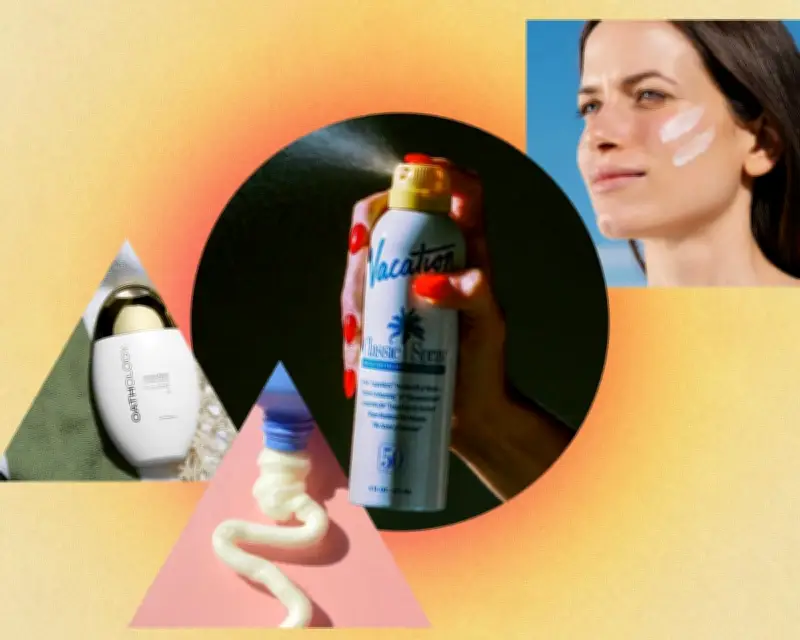
If you must spray, Palep likes Vacation Classic Spray Broad Spectrum SPF 50 (from $13.30): "The spray is powerful to evenly disperse sunscreen all over the body (you still need to rub it in though), and has the classic scent the brand is known for. It smells like a vacation!" The brand describes the scent as notes of coconut, banana, pool water, pool toy and swimsuit Lycra.
Best stick sunscreen
Girardi says CeraVe Mineral Sunscreen Stick SPF 50 (from $8.19) is helpful for noses, ears and around the eyes, and easy to keep in a bag for quick reapplication. He doesn't recommend sticks as your only sunscreen option.
Best reef-safe sunscreen
Palep says mineral sunscreens using zinc oxide or titanium dioxide are generally considered reef-safe. She recommends Blue Lizard Sensitive Mineral Sunscreen SPF 50 ($10.99), plus Thinksport Safe Sunscreen Stick SPF 30+ and Project Reef's SPF 50 Sheer Mineral Sunscreen.
Best sunscreen for sports
Girardi picks Blue Lizard Sport Mineral Sunscreen (from $9.99), which is water-resistant and dries clear on the skin, avoiding any white cast.
Best sunscreens for dry skin
Palep says Beauty of Joseon Day Dew Sunscreen SPF 50 (from $16.20) "would trick you into thinking it's a moisturizer instead of a sunscreen."
Best sunscreen for many skin tones
Palep recommends Supergoop! Protec(tint) Daily Skin Tint SPF 50 (from $44) for skin of color, noting the brand offers many shades, the formula is heavily pigmented and applies easily with fingers or a brush, and coverage is buildable, so it covers uneven skin tone and acne marks without feeling heavy or greasy.
Frequently asked questions about sunscreen
Chemical sunscreens such as avobenzone, oxybenzone, octinoxate and homosalate absorb UV radiation and release it as heat. FDA-commissioned studies between 2019 and 2021 found these filters are absorbed into the bloodstream at detectable levels after typical application. Girardi says the FDA required further toxicity testing after several chemical agents exceeded a certain blood level, and proposed new toxicology testing in 2019; none of the disputed ingredients have been removed from shelves while waiting for new data.
In June 2026, the FDA added bemotrizinol (BEMT) to the list of permitted active sunscreen ingredients. It is the first new active ingredient added to the OTC sunscreen safety monograph since the late 1990s. BEMT has been used in Europe for years, is broad spectrum against UVA and UVB rays, and has low skin absorption, making it generally recognized as safe and effective for adults and children six months and older. Girardi says BEMT sunscreens are less shiny than mineral formulas. US products with BEMT should hit store shelves in September under the brand name Parsol Shield.
Mineral options are zinc oxide and titanium dioxide, which create a physical barrier on the skin that scatters and absorbs UV rays. Both have long safety records, though higher concentrations can leave a white tone on deeper skin. Micronization reduces particle size and lessens that cast. Nano particles don't penetrate healthy, intact skin in significant amounts, but this may not apply if the skin barrier is severely compromised.
Sunscreens from Europe and Asia are treated as cosmetic products, not OTC drugs, allowing more UV filters and faster approvals. You can order them from sites like yesstyle.com or frenchpharmacy.com. Popular brands include Beauty of Joseon (Korean), Anessa Perfect UV Sunscreen (Japan) and La Roche-Posay Anthelios UVmune 400 (France).
Parabens such as methylparaben and propylparaben are preservatives used in many cosmetics; the FDA considers them safe at permitted concentrations in topical products. Phthalates improve texture and fragrance; many are considered safe within regulatory limits. The Environmental Working Group calls phthalates "still widely used chemicals that pollute almost everyone's bodies."
Are "toxic" sunscreens really a thing? The experts say the most toxic sunscreen is the one you don't use. Palep puts it plainly: "I wouldn't consider any sunscreen that is sold in the US to be toxic, so they are all 'nontoxic.' There is more of a health risk of not wearing sunscreen and getting skin cancer, versus using a chemical sunscreen and having health issues stem from using the chemical sunscreen. Most patients are not using enough of a chemical sunscreen to cause an issue."
Girardi says the term "nontoxic" is double-edged. "People should keep in mind that 'nontoxic' here is a double-edged term since UV radiation from the sun is very toxic. It causes mutations and is the biggest risk factor for these deadly skin cancers. And, of course, many like that using sunscreen also decreases signs of skin aging."
Shokeen, who performs skin cancer surgeries, calls the "toxic" label a scare tactic: "I do skin cancer surgeries all day long. Calling sunscreen 'toxic' is 100% a scare tactic – no ifs, ands or buts. So many things we put on topically get into the bloodstream, like retinols. That doesn't mean it's bad." She finds her millennial clients are "faring the best" because they are diligent about self-care routines, including anti-aging potions and wrinkle-fighting lasers such as Fraxel and UltraClear, and says, "They are very good about using sunscreen to protect their investment."




