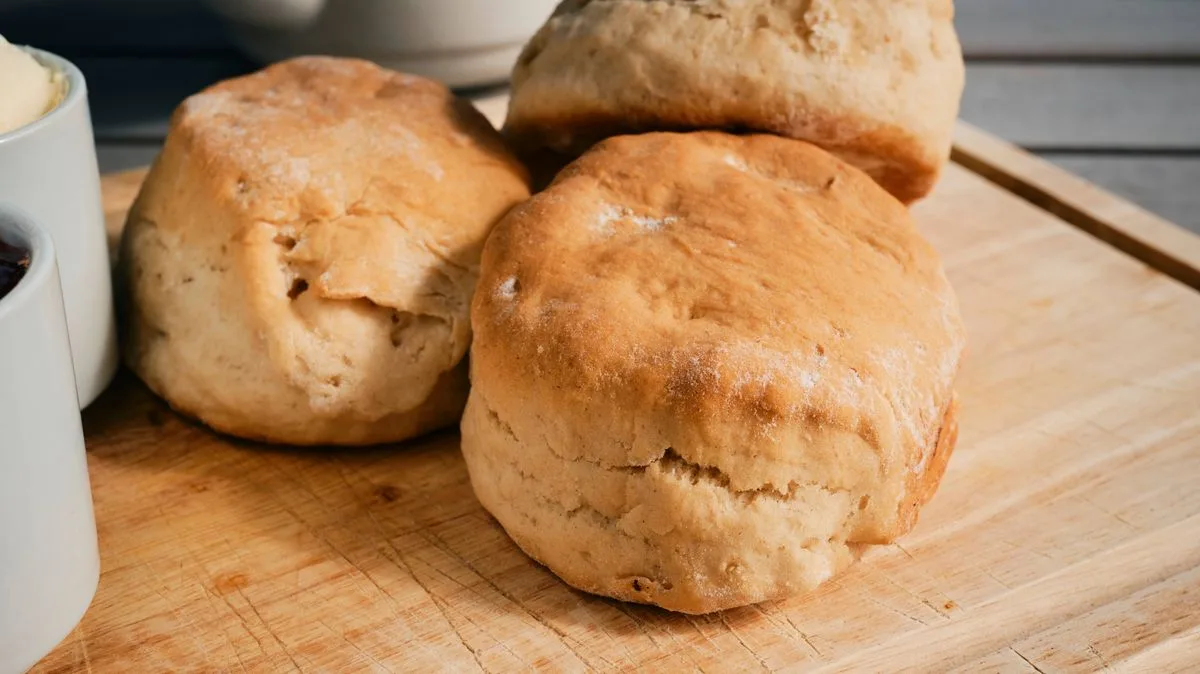
Chef Reveals Secret Ingredient for Perfect Fluffy Scones
Chef's Secret Ingredient for Perfect Fluffy Scones

While supermarkets stock plenty of delicious-tasting scones, nothing quite matches up to those made at home. There is no shortage of scone recipes that are simple to follow, even for those who lack confidence in the kitchen.

The wonderful thing about baking scones from scratch, beyond their straightforwardness, is that you can create them with whatever fruits and flavours take your fancy. Some prefer the sweet route with raisins and sultanas, while others opt for the savoury option with added cheese.

To achieve “the best scones you will ever have”, Chef Alina has revealed her recipe, insisting you must replace two main ingredients with just one to get that coveted “crunchy edge with a soft, tender and fluffy interior”.

Wide Pickt banner — collaborative shopping lists app for Telegram, phone mockup with grocery list

Unlike traditional scones, Chef Alina’s recipe requires no butter or eggs whatsoever in the mixture. She declared: “These are not only easy to make, but they are also the best scones you will ever have – crunchy edges with a soft, tender and fluffy interior. They were one of the first and most popular breakfast items I sold in my bakeries and restaurant. These always sold out at Sturbridge Baking Company.”

As a substitute for butter and eggs, the chef suggests using double cream instead. The elevated fat content of cream offers a brilliant way to eliminate butter entirely. It also delivers a buttery taste and provides scones with a soft, delicate texture that crumbles in your mouth.

How to make the best scones

Ingredients (makes 16)

  • 500g of plain flour
  • 224g of brown sugar
  • One tablespoon of baking powder
  • Half a teaspoon of salt
  • 364 to 400g of double cream, cold

Method

Begin by mixing the flour, brown sugar, baking powder and salt in a large bowl. Whisk everything together to remove any lumps and combine thoroughly. At this stage, fold in any mix-ins. If you are adding dried fruit, the chef noted you will need slightly more cream.

Pour in half the cream, stir a few times, then add the remaining cream and mix until a largely cohesive dough comes together. Finish bringing the dough together by hand until there are no dry patches left, taking care not to overwork it. It is vital not to over-knead the dough – avoid using a mixer, and do not mix until it becomes smooth; a clumpy consistency is exactly what you are after.

Transfer the dough to a lightly floured surface and split it into two equal portions. Using your hands, pat the dough into two circles roughly six inches wide and three-quarters of an inch thick. Use a round cutter to stamp out your scones.

Preheat your oven to 180°C/160°C Fan/Gas Mark 4 and line a baking tray with parchment paper. Space the scones out evenly on the lined tray and leave them to rest for 20 to 30 minutes while your oven heats up. If your kitchen tends to run particularly warm, pop them in the fridge to rest instead.

Bake for 25 minutes, turning the tray halfway through. The scones are ready when the bases are golden brown, and they have developed a light, golden crust.

Pickt after-article banner — collaborative shopping lists app with family illustration