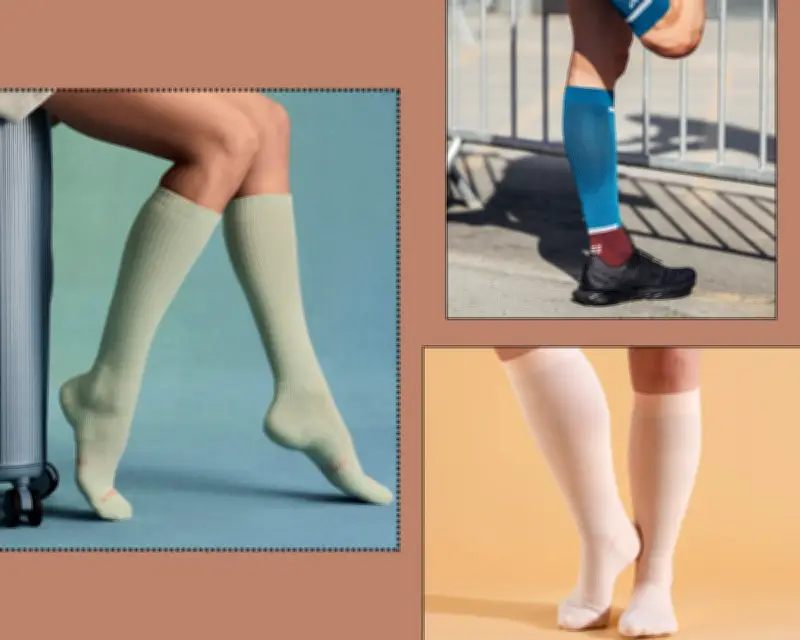
Compression socks provide relief during long flights, hours on your feet or after surgery. Doctors recommend these five pairs for different uses.
Best overall: Physix Gear Compression Socks 20-30 mmHg
Dr Miguel Cunha, DPM, a board-certified foot surgeon, recommends Physix Gear as the best overall option for anyone who spends a lot of time on their feet. Made from nylon and spandex, these socks alleviate leg stress, improve circulation, reduce swelling and decrease leg pain. They are machine-washable but should be air-dried.
Best for everyday wear: Bombas Everyday Compression Knee-High Socks 15-20 mmHg
Dr Ebonie Vincent, DPM, MBMS, recommends Bombas for daily wear with a moderate compression level of 15-20 mmHg. Made from a cotton blend, they look like regular socks and come in multiple colors. The brand also offers a merino wool blend and performance options.
Best for physical activity: CEP Tall 4.0 Compression Running Socks
The CEP Tall 4.0 socks offer 20-30 mmHg compression, leg and ankle support, a breathable mesh material, air channels, and Smart Dry Technology. They are made mostly of nylon and spandex.
Best for travel: Comrad Knee-High Compression Socks 15-20 mmHg
Comrad knee-high socks provide 15-20 mmHg compression with ankle support. Cunha recommends them for frequent flyers and aviation workers. Customers praise their effectiveness and comfort.
Best for standing all day: Sockwell Moderate Graduated Compression Socks
Cunha recommends Sockwell for prolonged standing. Made from merino wool, bamboo, nylon and spandex, they offer 15-20 mmHg compression, cushioned sole and arch support.
Benefits of compression socks
Compression socks reduce lower-leg fatigue, swelling, muscle soreness, and help with varicose veins. “They consistently apply gentle pressure to the feet and legs, and when worn correctly, they efficiently promote blood flow movement up from your ankles through the veins in your legs and back towards your heart,” says Cunha.
Compression levels
Compression is measured in mmHg. Mild (8-15 mmHg) is for general use; moderate (15-20 mmHg) for varicose veins or prolonged standing; higher levels (20-30 mmHg) for medical conditions under supervision.
How long to wear
Vincent recommends wearing compression socks for about eight hours at a time and not while sleeping. “As soon as you wake up in the morning, put on those compression socks.”
Comfort and material
Socks made from soft, moisture-wicking materials like spandex, nylon and lycra are durable and comfortable. A seamless design reduces friction. “Compression should feel supportive, not painfully tight or numbness-inducing,” says Cunha.