From heart rate to sleep score, it's now common to constantly monitor your health through smart technology. While useful for some, for others it becomes more anxiety-inducing than motivating—which can itself have counterproductive physical consequences. By focusing on what's wrong, these devices can also mean you don't recognise when things are going well.
But if you take a step back and listen to your body's signals, from how you feel to what you can do, you may see that you're not doing too bad after all. As Dr Donald Grant, GP and senior clinical advisor at The Independent Pharmacy, highlights, there's no single 'pass or fail test for how healthy you are,' and regular medical checkups are important for everyone. That said, there are certain indicators that can provide a reassuring reminder you're on the right track—provided you're able-bodied and don't have underlying conditions which impact your mobility or bodily functions.
Signs that signal good health
After TikTok creator Josh Fraser Young shared his now-viral list of health signals, Metro asked medical professionals which ones they agree with, and what they also recommend looking out for.

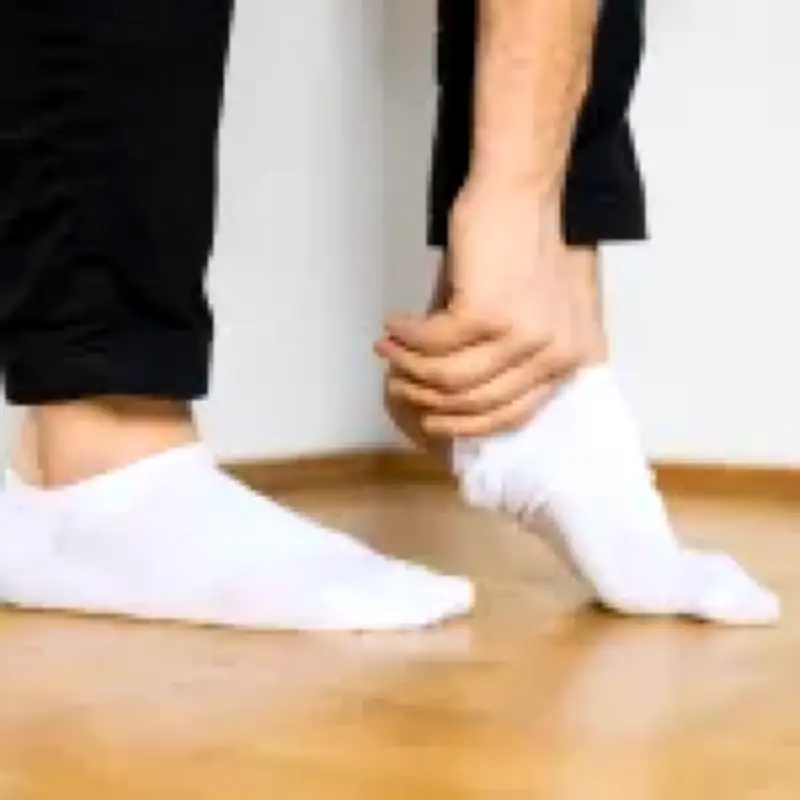
One sign is being able to put your socks on while standing up. This may sound basic, but single-leg balance is one of the strongest predictors of longevity. As Josh explains, a 2022 study found older people who couldn't stand on one leg for 10 seconds had an 84% higher risk of dying within 10 years.
Dr Grant calls this 'a genuinely useful marker rather than just a party trick,' adding: 'Balance relies on a combination of muscle strength, joint stability, and the nervous system, all working together. That combination tends to decline gradually with age or inactivity before people notice it in daily life.'
But Kelly Fisher, health and wellbeing Nurse at Benenden Health, notes that not being able to do this doesn't mean you are unhealthy. 'There could be lots of reasons stopping you such as muscle tightness or joint stiffness, and many of the people in the study mentioned also had other health conditions such as obesity and heart disease,' she tells Metro.
If you're struggling, she advises gentle stretching exercises like yoga to help build flexibility, as well as working on your balance by incorporating single-leg balances into your daily routine. She adds: 'Try practicing for 30 seconds on each leg while you brush your teeth or waiting for the kettle to boil.'
Other indicators worth noting
Another sign is being able to get up from the floor without using your hands. 'Try it, without using your hands, knees, or furniture,' says Josh in his video. 'It requires strength, balance, mobility, coordination, and power all at once. Studies show that people who can do this tend to live longer than those who can't.'
Kelly agrees, explaining: 'This movement can be a really great indicator of your aerobic fitness, muscle and core strength, stability, flexibility and balance which are all key thing we need to age healthily and reduce the risk of injuries from falls.'
As with the sock exercise though, Dr Grant says: 'Finding this harder than it used to be is common as people become less active, and on its own isn't a cause for alarm. If it's become consistently difficult, or is accompanied by joint pain or stiffness, it's worth having checked, since it can sometimes point to reduced muscle mass or an underlying joint issue.'
Having a firm grip is also a reliable indicator. According to Dr Grant, 'grip strength is one of the more reliable indicators on [Josh's list].' 'It reflects overall muscle strength and neurological function, and research has linked weaker grip strength to a higher risk of frailty and even cognitive decline in later life, which is more than can be said for most quick physical tests,' he continues.
However, Kelly highlights that while it 'may give a useful indication of overall health,' it's 'important that it's not used as a standalone value and that individual circumstances are also considered.'

Daily habits and their health meanings
Getting hungry at regular times is another sign. 'Consistent hunger signals mean your metabolism and hunger hormones are well regulated,' says Josh. Dr Grant echoes this, explaining that it 'can reflect settled blood sugar and eating patterns.' Kelly caveats: 'Sometimes they can appear when we are bored or stressed, sometimes referred as emotional eating, or they may become supressed if you have a high caffeine intake.'
Being able to hold a deep, flat-footed squat is also noted. 'Being able to hold a flat-footed squat does say something about hip and ankle mobility, but is shaped by habit and lifestyle as much as underlying health,' explains Dr Grant. Kelly adds: 'Tightness in your ankles and hips can make this a difficult manoeuvre along with spending long periods of the day sitting down. Practicing deep squats can help with these issues, and a great way is to do the squat with your legs either side of a sturdy doorframe. The doorframe can help you to maintain your balance while your build up to being able to do the movement unsupported.'
Although not included on Josh's list, Dr Grant says being able to climb a few flights of stairs without becoming breathless can 'prove useful in measuring health.' The four-flight stair climb test is recommended by the European Society of Cardiology to help determine overall heart health alongside risk of cardiac conditions. In studies, those who could climb four flights (about 60 steps) at a brisk, steady pace with no stopping and minimal breathlessness in less than 90 seconds were deemed to be at lower risk. Those who needed to stop or experienced significant shortness of breath or chest pain had a higher chance of developing coronary artery disease—so if that's the case, it could be time to visit your doctor.
Waking up feeling rested is also important. Although Josh highlights waking up before your alarm as a marker of good health, Kelly says it's more nuanced, as 'if you feel groggy when you wake up this can be a sign that you have had a poor quality sleep.' Numerous studies have linked long-term lack of quality rest to a range of issues, from heart disease and type 2 diabetes to cognitive decline and mental health disorders.
These aren't hard and fast rules; they're designed to help you take a broader, more positive look at your health rather than worrying about every little fluctuation. Even if you tick all these boxes, you should still be mindful of other potential symptoms. 'It can be easy to ignore those niggling signals, but these are messages our body is using to tell us something is wrong,' adds Kelly. 'Make sure during those busier times you spend a few minutes each day checking in with yourself so the messages don't go unanswered.'