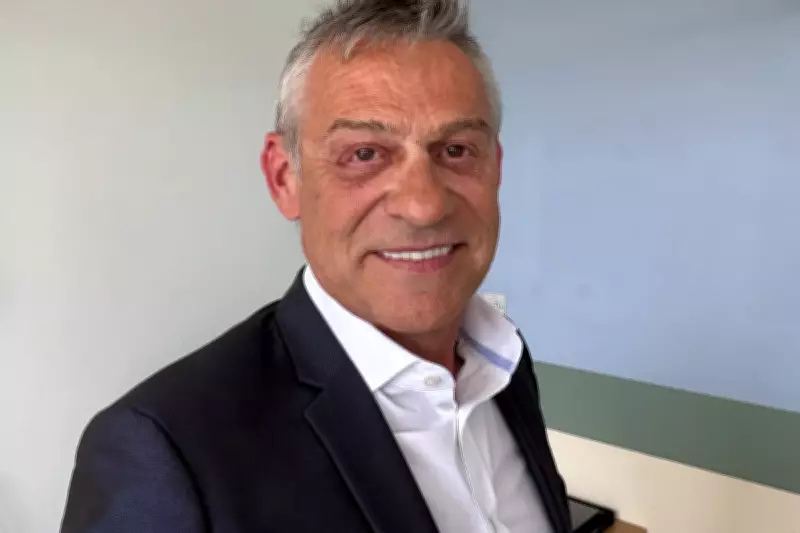
A groundbreaking surgical procedure has been performed in the United Kingdom for the first time, offering a minimally invasive alternative to traditional brain surgery for treating life-threatening aneurysms. Andrew Wood, a 61-year-old builder and grandfather, underwent the pioneering operation at Leeds Teaching Hospitals NHS Trust, where surgeons accessed a brain aneurysm through his eye socket, completely avoiding the need to touch or retract the brain.
Innovative technique spares patient major surgery
Traditionally, patients with brain aneurysms require a craniotomy, which involves removing a section of the skull to access the brain. This major surgery often necessitates a week-long hospital stay and a lengthy recovery period. However, Mr. Wood was discharged after just one night in hospital and returned to work within weeks, thanks to the innovative keyhole approach.
Consultant neurosurgeon Asim Sheikh explained that the technique significantly reduces the drawbacks of conventional surgery. 'By accessing the aneurysm through the eye socket, we were able to avoid retracting or touching the brain, which minimizes trauma and speeds up recovery,' he said.

3D-printed models enable precise planning
The surgical team, which included consultant maxillofacial surgeon Jiten Parmar, used bespoke 3D-printed models of Mr. Wood's anatomy to plan and rehearse the complex procedure. This allowed them to simulate the operation beforehand, ensuring precision and safety during the actual surgery.
Mr. Wood expressed his gratitude for the treatment, stating that he was back to his normal routine much sooner than expected. The success of this UK-first operation marks a significant advancement in neurosurgery, offering hope to other patients with similar conditions.