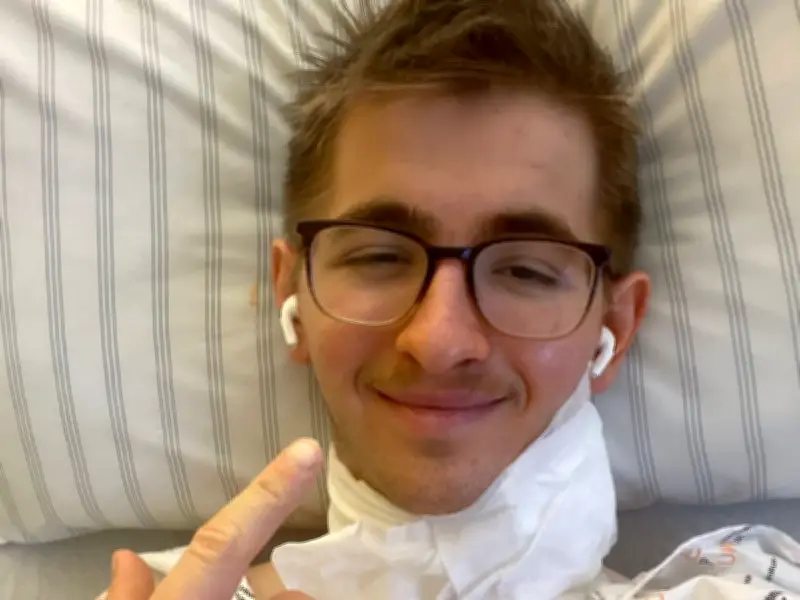
A 27-year-old man diagnosed with an ultra-rare cancer affecting fewer than one in 100,000 people has described being left “literally radioactive” after treatment. Ben Wagenmann, a German student living in Switzerland, underwent radionuclide therapy – radioactive drugs that target cancer cells from inside the body – in an underground isolation ward in Aachen, Germany. The treatment successfully prevented further spread of his cervical paraganglioma, but did not shrink existing tumours. Now, his care is aimed at prolonging his life rather than curing his cancer, and he has come to terms with the fact his life will likely be shorter.
Discovery of the lump
In April 2023, after a ski trip that led to a chest infection, Ben noticed a lump on the side of his throat. While the infection cleared within a week, the lump – which felt “uncomfortable” when pressed – persisted. By November, he had a 3D ultrasound and an MRI, revealing a tumour up to 6cm behind a lymph node in his carotid artery. Doctors initially reassured him it was likely a slow-growing tumour and almost always benign.
But just before Christmas, a PET scan showed around eight “tiny glowing bubbles” in his spine – metastases. This led to his diagnosis of cervical paraganglioma at age 25. “Everything went very quickly because this shouldn’t have been the case… it was extremely rare,” he said.
Treatment and isolation
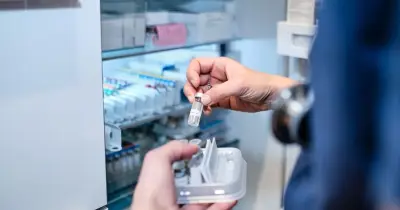
In January 2024, Ben underwent a 10-hour surgery to remove the tumour, described as “extremely difficult” because it involved a major artery. For three months afterward, he was not allowed to exercise due to concerns his carotid artery “may blow”. A follow-up PET scan then revealed the cancer had spread to his bones, including his spine, ribs and hip. Doctors decided on radionuclide therapy, with six cycles of the radioactive compound lutetium injected into him in an underground isolation ward in Aachen, about six hours from his home in Bern.
“You’re not allowed to be near anyone because you’re literally radioactive,” Ben said. “I was so radioactive that there was no shower in the hospital room because every bit of water that I would either digest or touch would be contaminated with radiation.” After each cycle, he had to spend a week at home avoiding close contact with others. Scans after the third cycle showed the cancer had not shrunk, but the spread had stopped. “It is still a win in my situation,” he said.
Living with the disease
Ben has since undergone two other forms of radiotherapy, often with side effects such as an inflamed oesophagus that made eating, drinking and speaking painful. Due to the rarity and unpredictability of his cancer, doctors consider it incurable and cannot give a precise prognosis. He visits hospital at least once a month. “Every time you get the (scans), there’s always the question: is it staying the same or does it get worse?” he said.
Despite persistent pain in his back and legs, managed with physiotherapy and medication, Ben remains active. He has completed the Bern Grand Prix, a 16km race, for two consecutive years and plans to cycle roughly 700km from Copenhagen to Oslo to visit a friend. “I want to show the world that you can do all these things even when you’re sick. I really deny cancer (the ability) to take away my day-to-day life,” he said.
Ben shares his story as part of World Cancer Research Fund’s Every Step Tells a Story campaign, which highlights people whose lives have been shaped by cancer and the volunteering they undertake.