
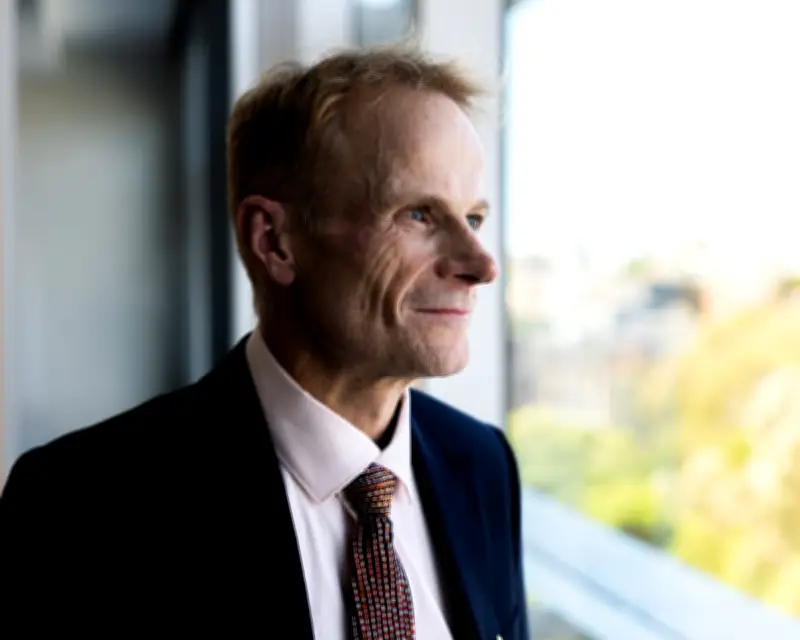
Richard Scolyer, a celebrated melanoma researcher and pathologist who became Australian of the Year in 2024, has died at the age of 59. He gained international attention after applying an experimental immunotherapy treatment to his own aggressive brain cancer, glioblastoma, following a devastating diagnosis in May 2023.
A Bold Experiment
At the height of his career and physical fitness, Scolyer received a diagnosis of grade-four IDH-wildtype glioblastoma, a type of brain cancer with a median survival of 12 to 14 months. Rather than accept standard treatment, he and his colleague Professor Georgina Long, co-director of the Melanoma Institute Australia, devised a novel approach. Drawing on their expertise in melanoma immunotherapy, they aimed to harness Scolyer's immune system to fight the tumor.
Scolyer agreed to become patient zero in this risky experiment. "Devising this world-first experimental treatment for my type of brain cancer was bold," he said. "Here was an opportunity for us to crack another incurable cancer and make a difference, if not for me then for others."
Treatment and Results
Initial treatment involved a combination of three immunotherapy drugs administered before surgery to stimulate his immune system. After the tumor was surgically removed, pathology showed a tenfold increase in activated immune cells. Follow-up therapy included a personalized vaccine targeting his specific tumor. In early 2025, his case was published in the journal Nature Medicine, providing scientific evidence that the approach warranted further exploration.
Scolyer documented his journey publicly on social media, initially to keep a record for his children. His updates garnered a large following and highlighted the significance of his experiment.
Life and Career
Born in Launceston, Tasmania, on 16 December 1966, Richard Anthony Scolyer grew up in a supportive family. His mother's health struggles inspired him to pursue medicine. He completed his medical training at the University of Tasmania, specialized in pathology at Royal Prince Alfred Hospital in Sydney, and became a clinical professor at the University of Sydney at age 39.
By 2022, Scolyer was ranked the world's leading melanoma pathologist and the most published expert in the field. He was appointed an Officer of the Order of Australia in 2021 and, with Long, was named Australian of the Year in 2024.
An Active Life
Scolyer was an avid runner, cyclist, and swimmer, representing Australia at multiple World Triathlon Championships. Even during treatment, he maintained his fitness, once running 5 km with an undiagnosed neck fracture after a cycling accident.
Legacy and Impact
Scolyer remained well for nearly two years, far exceeding the typical six-month recurrence period for his tumor type. However, in March 2025, he announced the tumor had returned. He died on 7 June 2026, three years after diagnosis, surpassing median survival expectations.
A clinical trial based on his case has been launched at Duke University in the US. Long and colleagues hope his experience will drive further research into immunotherapy for brain cancer. "I hope that when I'm gone, other brain tumour patients will live longer because of what we've tried," Scolyer wrote.
He is survived by his wife, Dr. Kate Nicoll, and their three children, Emily, Matthew, and Lucy.




