
Scientists have identified 1,121 previously unknown marine species in one year, including several unusual deep-sea animals, as part of the largest coordinated effort to document ocean life. The discoveries, announced by the Nippon Foundation-Nekton Ocean Census, represent a 54% increase in the annual rate of species identification.
Expeditions and Notable Finds
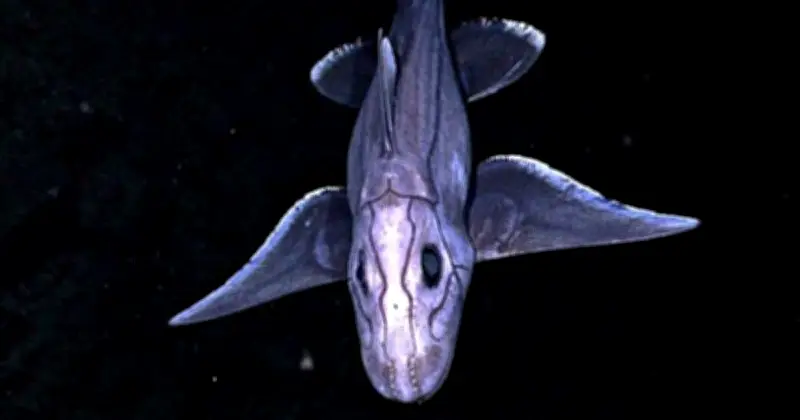
Specimens were collected during 13 expeditions and nine species-discovery workshops conducted with partners including Japan’s JAMSTEC, Australia’s CSIRO and the Schmidt Ocean Institute. Some were taken from depths of up to 6,575 metres. Among the finds is a new species of chimaera, commonly known as a ghost shark, from the Coral Sea Marine Park off Queensland, Australia.
The animal was collected at depths of 802 to 838 metres and identified by taxonomist Dr William White. Chimaeras are distant relatives of sharks and rays that diverged into a separate evolutionary line nearly 400 million years ago. Roughly one-third of sharks, rays and chimaeras are currently listed as vulnerable to extinction.
Other New Species
Another notable species is Dalhousiella yabukii, a polychaete worm discovered living inside the silica skeleton of a glass sponge on a volcanic seamount in Japan’s Shichiyo Seamount Chain at 791 metres. The worm was collected during a 2025 Ocean Census expedition using JAMSTEC’s Shinkai submersible and named after the mission’s principal investigator, Dr Akinori Yabuki. It was described by Dr Naoto Jimi.
Additional discoveries include a brightly pigmented ribbon worm from shallow waters off Timor-Leste and a new shrimp species with distinctive orange banding found in a sea cave near Marseille, France. The broader haul also includes previously undescribed corals, crabs, shrimps, sea urchins and anemones.
Accelerating Discovery
Dr Michelle Taylor, Head of Science at Ocean Census, said: "Many species risk extinction before they are formally documented." Historically, the average time between discovery and scientific description has been 13.5 years. To address this delay, the programme has launched NOVA, an open-access digital platform that can make species data available within weeks. More than 1,400 scientists from 660 institutions in 85 countries contribute to the network.
Mitsuyuki Unno, Executive Director of the Nippon Foundation, noted: "The year’s results demonstrate what global scientific collaboration can achieve across polar, tropical and deep-sea environments." Oliver Steeds, Director of the Ocean Census, emphasised: "Up to 90% of ocean species remain undiscovered."
The organisation is seeking further funding to support its longer-term target of identifying 100,000 new marine species and supplying data relevant to international agreements on biodiversity and the high seas. The discoveries cover the period from April 1, 2025 to March 31, 2026.




